


Stainless Steel Tripod Turnstile: Grade, Build, and Buyer's Guide

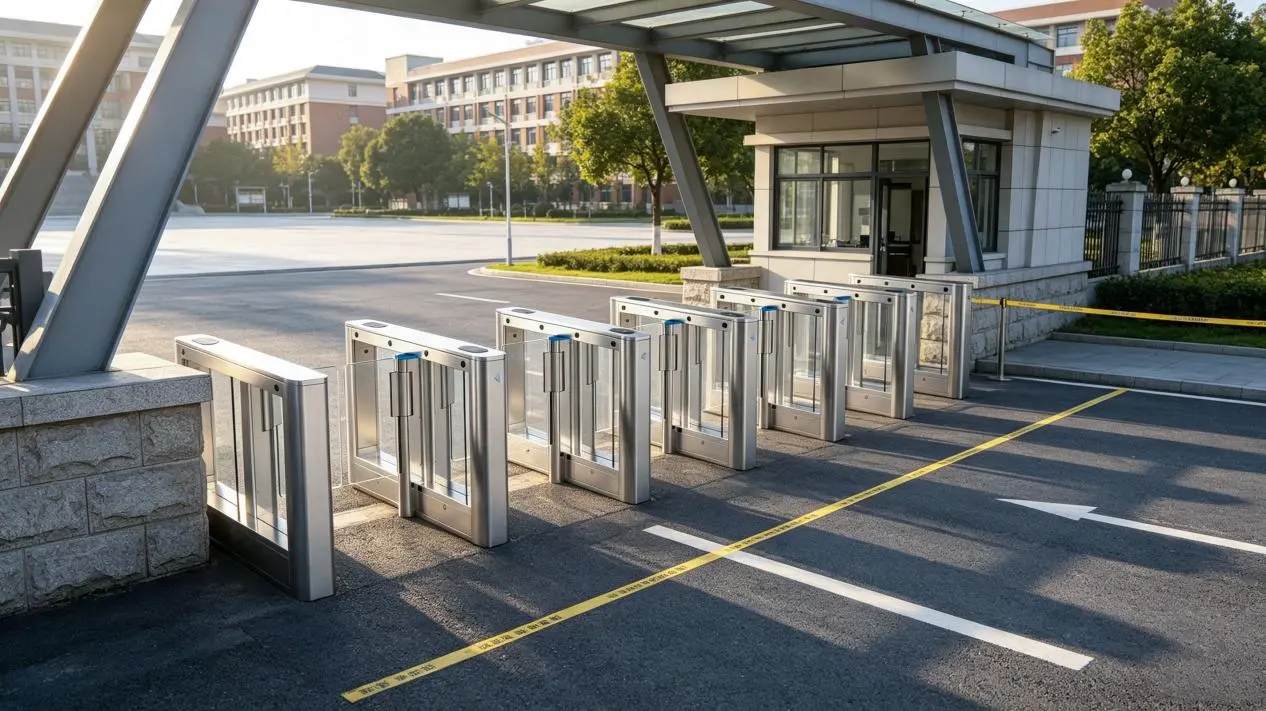
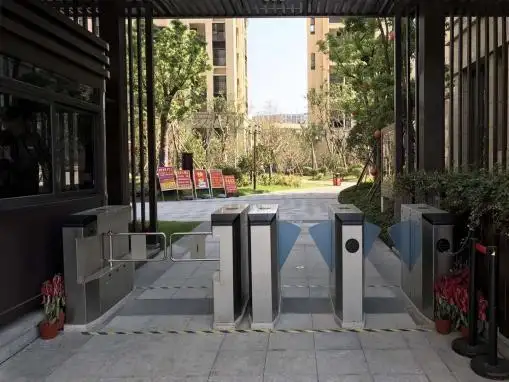
A stainless steel tripod turnstile is the industry standard for pedestrian access control — and for good reason. Stainless steel handles high daily traffic, resists corrosion in demanding environments, and maintains a professional appearance after years of continuous use. But not all stainless steel is equal. The grade, wall thickness, and construction method determine whether your gate lasts two years or twenty.
This guide cuts through the confusion — explains which steel grades actually matter, what construction quality looks like, and which Turboo models deliver the right combination for your installation.
Why Material Grade Matters in a Stainless Steel Tripod Turnstile
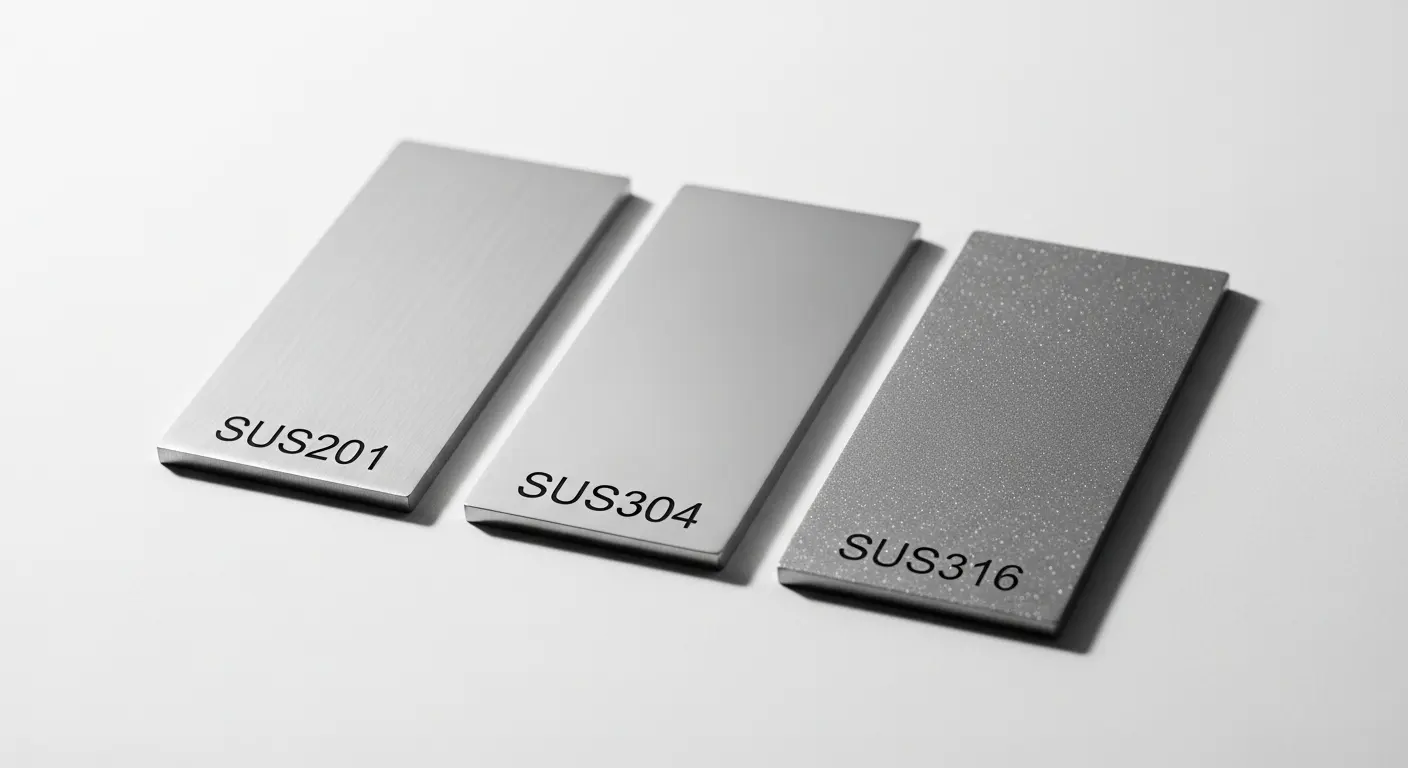
Most buyers assume all stainless steel is the same. It is not. The three grades you will encounter in stainless steel tripod turnstile procurement are SUS201, SUS304, and SUS316. Each performs differently under environmental and mechanical stress — and choosing the wrong one for your environment is one of the most common and costly mistakes in turnstile procurement.
SUS201 Stainless Steel
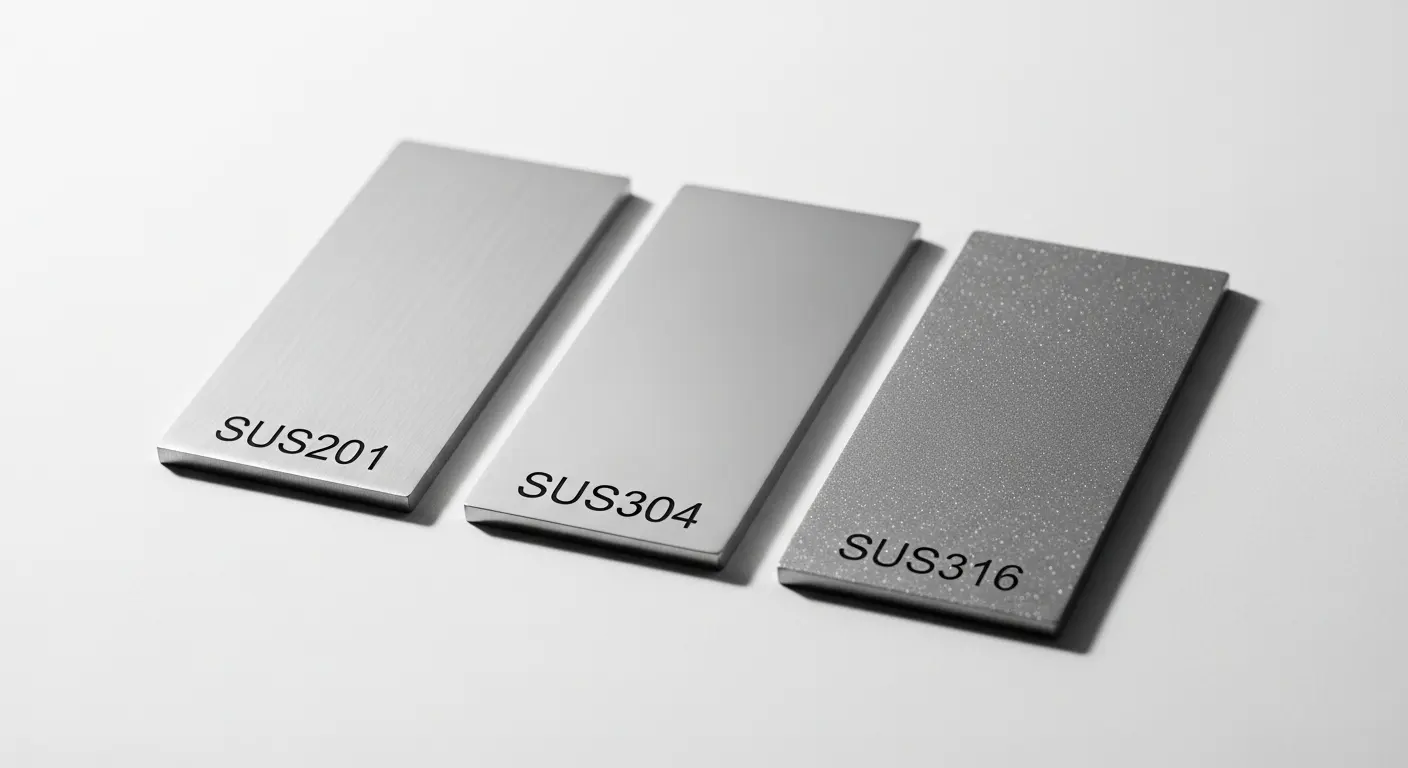
SUS201 contains higher manganese and less nickel than SUS304. It is harder and slightly more resistant to surface scratching, which is why many manufacturers use it for the rotating arms — where contact and friction are highest. However, SUS201 has lower corrosion resistance than SUS304. For arms and internal components in indoor environments, SUS201 is acceptable and widely used. For outdoor cabinets in humid or coastal environments, it is not the right choice.
SUS304 Stainless Steel
SUS304 is the commercial standard for tripod turnstile cabinets. It contains 18% chromium and 8% nickel, giving it strong resistance to rust, staining, and oxidation in most atmospheric conditions. It withstands cleaning agents, light chemical exposure, and temperature variation from -20°C to +70°C without degradation.
For any commercial-grade stainless steel tripod turnstile, SUS304 is the minimum cabinet material you should accept. Turboo's bridge tripod turnstile K149 uses δ=1.5mm SUS304 — the cabinet wall is 1.5mm thick, which is above the standard commercial grade minimum.
SUS316 Stainless Steel
SUS316 adds molybdenum to the SUS304 formula, dramatically increasing resistance to chloride-induced corrosion. This makes it the correct choice for coastal installations, industrial environments with airborne chemicals, or food processing facilities. It is more expensive, but in the right environment, the additional cost prevents premature failure that would far exceed the price difference.
For a complete range of stainless steel turnstile configurations across all deployment types, explore Turboo's stainless steel turnstile overview page.
Wall Thickness: The Spec Most Buyers Overlook
After material grade, wall thickness is the most important structural specification of a stainless steel tripod turnstile — and almost no product listing mentions it prominently enough.
Commercial-grade cabinets use a minimum of 1.0mm wall thickness on the body panels and 1.2mm on the top panel, which takes the most daily contact and weight from users leaning or resting against the gate. Entry-level and budget units often use 0.8mm panels. The difference feels negligible in a catalog, but it shows up clearly after 12–18 months of high-traffic use — dents, flex under impact, and accelerated joint wear are all downstream effects of thin cabinet walls.
Turboo's benchmark:
- Tripod Turnstile Bridge K149: δ=1.5mm SUS304 cabinet — above standard commercial grade
- Heavy-duty range: full-weld construction with NEMA-rated enclosure for extreme environments
Furthermore, thicker walls provide better electromagnetic shielding for internal electronics, which reduces interference with RFID and biometric readers in high-density installation environments.
Full-Welding vs. Assembled Cabinet Construction
This is the construction detail that separates a genuine heavy-duty stainless steel tripod turnstile from a standard commercial unit.
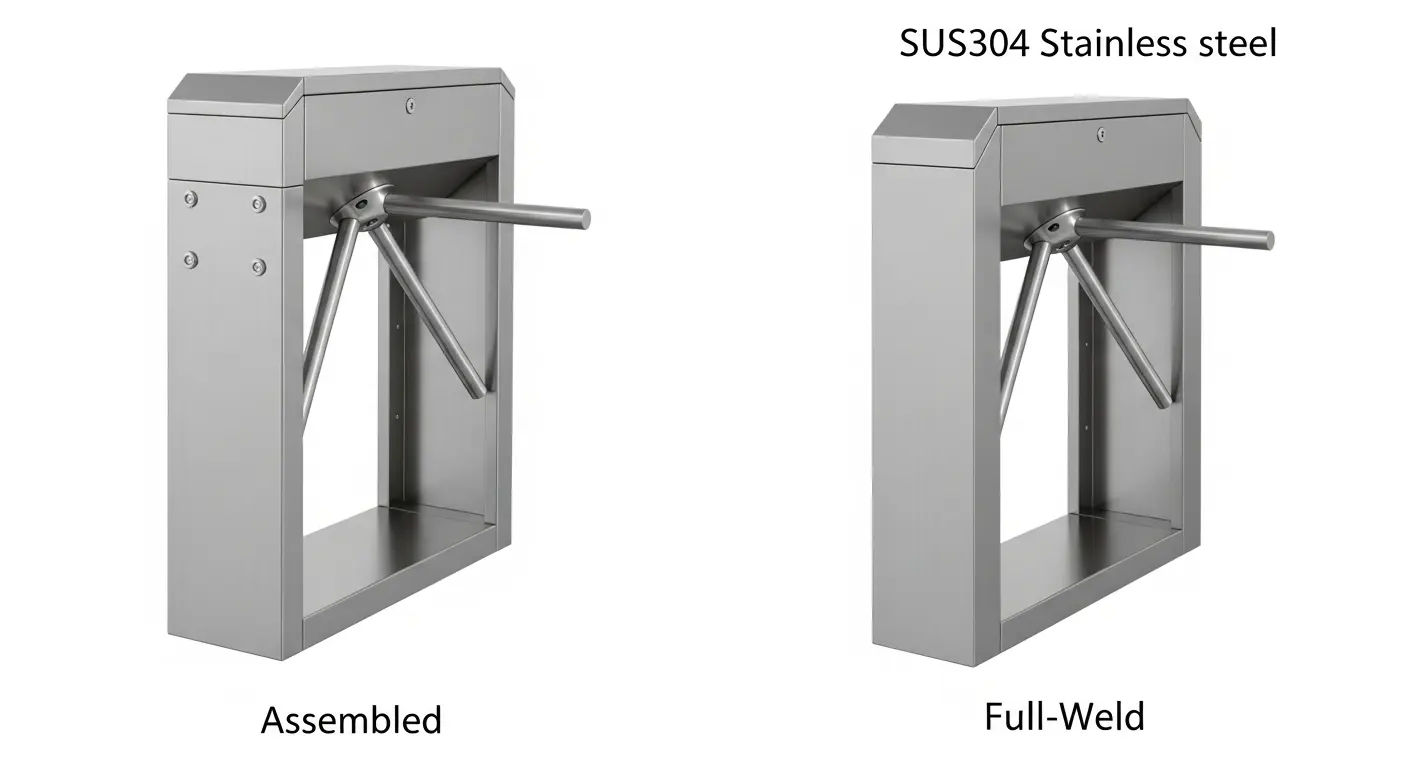
Assembled construction uses fasteners, brackets, and bolted joints to hold cabinet panels together. This is acceptable for indoor, controlled environments with moderate daily traffic. However, under continuous vibration, thermal expansion and contraction cycles, and repeated mechanical impact, bolted joints loosen over time. Water and dust enter through seam gaps, affecting internal electronics.
Full-welding construction forms the cabinet as a continuous structural unit. There are no fasteners to loosen, no seam gaps for water ingress, and no flex between panels under load. Consequently, the cabinet maintains its geometry, sensor alignment, and internal protection rating across years of heavy use in outdoor or demanding environments.
Turboo's bridge tripod turnstile K149 uses full-welding SUS304 construction — a clear choice for any installation where long service life and outdoor exposure are both requirements. For projects where extreme-cycle industrial or transit-grade deployment is the priority, Turboo's heavy duty tripod turnstile range takes full-welding construction a step further with NEMA-rated enclosures rated for outdoor continuous use.
IP Ratings and Outdoor Deployment
Material grade and construction quality connect directly to IP rating performance. An IP rating only holds over time if the material and build method can maintain the enclosure integrity it was tested with.
| IP Rating | Protection Level | Suitable Deployment |
|---|---|---|
| IP4X | Protection against solid objects >1mm | Indoor, climate-controlled |
| IP54 | Dust protected + water splash from any direction | Covered outdoor, semi-exposed |
| IP65 | Dust-tight + low-pressure water jets | Fully exposed outdoor |
| IP66 | Dust-tight + high-pressure water jets | Harsh outdoor, industrial |
Turboo's standard stainless steel tripod turnstile models carry IP4X for indoor and canopy-covered outdoor use. For exposed outdoor environments, the heavy-duty range reaches IP54 and above.
A critical point: An IP54 rating on a thin-walled assembled cabinet degrades faster than the same rating on a full-weld SUS304 unit. The rated protection only lasts as long as the cabinet maintains its seal integrity. Therefore, material and construction quality are prerequisites for the IP rating to remain meaningful across the product's service life.
Turboo's Stainless Steel Tripod Turnstile Models
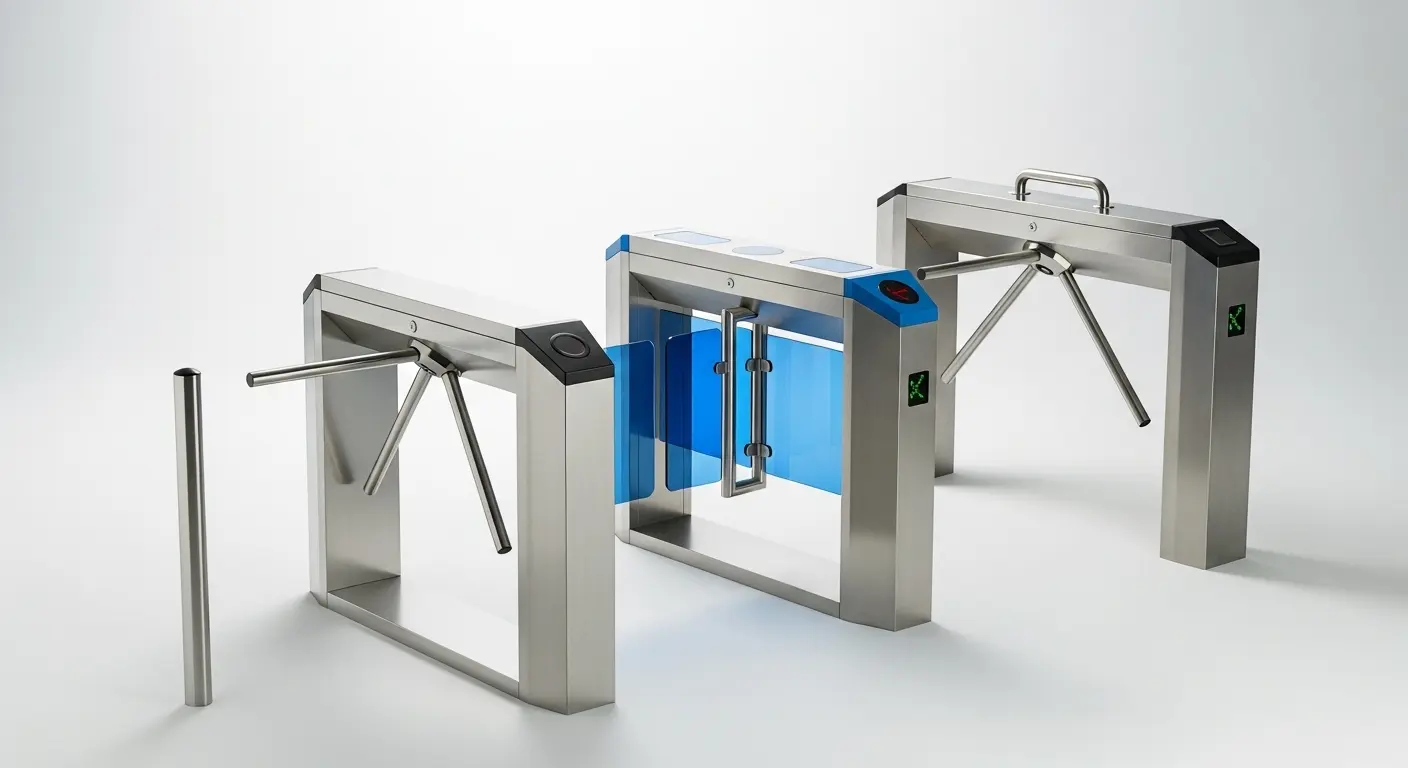
Turboo manufactures a full range of stainless steel tripod turnstile configurations, each built to specific installation and performance requirements:
Tripod Turnstile Bridge K149
The flagship commercial model. δ=1.5mm SUS304 full-welding cabinet at 1400×280×980mm. Semi-automatic movement with anti-pass back function. RGB status indicator. Compatible with IC/ID cards, QR codes, face recognition, and temperature detection. Pass rate: 35–50 persons/minute. For installations that need premium build quality in a bridge lane configuration, explore the tripod turnstile bridge K149 product page.
Full Automatic Tripod Turnstile LB123
Brushless DC motor-driven automatic arm rotation. Blue tempered glass cover on a SUS304 cabinet. RGB indicator, face recognition compatible, dry contact and RS485 interfaces. The premium choice for corporate lobbies and high-image entry points. View full specs on the full automatic tripod turnstile LB123 page.
Heavy Duty Tripod Turnstile Range
Full-weld SUS304 construction with NEMA-rated enclosure. Designed for 5 million+ arm cycles in outdoor or industrial high-traffic environments. This is the correct model for construction sites, logistics centers, transit applications, and any installation where failure would cause operational disruption. The heavy duty tripod turnstile range page covers load ratings, outdoor specs, and application scenarios in detail.
For a complete view of the product range, Turboo's full tripod turnstile page lists all current models with specifications.
What to Check Before You Buy Any Stainless Steel Tripod Turnstile
Use this checklist before confirming any order. These are the questions that separate a professional procurement decision from one you'll regret after installation:
- What steel grade is the cabinet? SUS304 minimum for commercial. SUS316 for coastal or chemical environments.
- What is the cabinet wall thickness? 1.0mm body / 1.2mm top panel minimum. 1.5mm is better.
- Is the cabinet full-welded or assembled? Full-weld for any outdoor or high-cycle deployment.
- What is the IP rating, and what is it certified under? Verify the IP rating covers the specific unit, not just a product family.
- What steel grade are the arms? SUS201 is acceptable for arms. SUS304 arms are premium.
- What are the operating temperature and humidity ranges? Confirm they match your installation environment.
- Does the cabinet maintain its IP rating after bolt holes are drilled for reader mounting? Outdoor models should have sealed reader mounting provisions from the factory.
For first-time installers, Turboo's turnstile installation guide covers pre-installation site checks, floor preparation, cable routing, and commissioning steps in full detail.
Stainless Steel Tripod Turnstile vs. Other Gate Types
When evaluating which gate to deploy, material grade and build quality matter most within the tripod category. However, some buyers also need to compare tripod gates against alternative gate types.
| Feature | Stainless Steel Tripod Turnstile | Flap Barrier | Full Height Turnstile |
|---|---|---|---|
| Security level | Waist-height moderate | Waist-height moderate | Full body high |
| Material standard | SUS304 cabinet standard | SUS304 standard | SUS304 / SUS316 |
| Cost | Lowest | Mid-range | Higher |
| Outdoor suitability | IP54 (heavy-duty range) | IP54 (select models) | IP65 (many models) |
| Maintenance frequency | Low | Low to moderate | Moderate |
| Best environments | Factories, schools, offices, gyms | Corporate lobbies, hospitals | Prisons, stadiums, restricted zones |
For facilities that need premium aesthetics at lobby reception areas, Turboo also manufactures flap barriers in SUS304. The flap barrier specifications page covers material grades, motor types, and integration specs for that product category.
Buyers looking for a regional purchasing channel rather than direct procurement can access Turboo's verified turnstile dealer network across key international markets.
FAQ: Stainless Steel Tripod Turnstile
What stainless steel grade is best for a tripod turnstile?
SUS304 is the commercial standard for tripod turnstile cabinets. It offers strong corrosion resistance, handles temperature variation from -20°C to +70°C, and withstands cleaning agents without degrading. For coastal, marine, or industrial chemical environments, SUS316 provides significantly higher chloride resistance. SUS201 is acceptable for rotating arms in indoor environments but should not be used for outdoor cabinets.
What wall thickness should a stainless steel tripod turnstile cabinet have?
Commercial-grade units should have a minimum of 1.0mm on body panels and 1.2mm on the top panel. Turboo's K149 bridge tripod uses δ=1.5mm SUS304 — above standard commercial grade. Thinner walls dent under impact, flex under repeated mechanical stress, and degrade IP sealing faster in outdoor installations.
What is the difference between full-welding and assembled cabinet construction?
A full-welding cabinet forms a continuous structural unit with no bolted joints, fastener points, or seam gaps. This maintains cabinet geometry and seal integrity over years of heavy use, particularly outdoors. An assembled cabinet uses fasteners and brackets that can loosen under vibration, thermal cycling, and repeated impact — leading to water ingress, dust contamination, and accelerated internal component wear.
Can a stainless steel tripod turnstile be installed outdoors?
Yes — but check the IP rating and construction method first. Standard models carry IP4X for indoor and canopy-covered outdoor use. Fully exposed outdoor installations require IP54 minimum, achieved through full-weld SUS304 construction with sealed cable entries. Turboo's heavy-duty range is built specifically for fully exposed outdoor deployment.
How long does a stainless steel tripod turnstile last?
Quality SUS304 full-welding models are rated for 5 million or more arm rotations. At 500–1,000 passes per day in a factory or school, that represents well over 10 years of continuous service. Routine lubrication of the mechanism every 6 months and periodic inspection of the control board connections maintain performance across that full service window.
Does the steel grade affect the turnstile's integration with access control systems?
No — integration is determined by the control board, not the cabinet material. SUS304 or SUS316 cabinets perform identically in terms of RFID, QR, biometric, and face recognition reader compatibility. However, full-weld construction does improve electromagnetic shielding, which marginally reduces reader interference in dense multi-lane installations.