


Heavy Duty Tripod Turnstile: Look Beyond Unit Price To Lifecycle Value

Entrance control in modern facilities rarely collapses without warning. More often, performance weakens over time as cabinets loosen, moisture affects internal components, reader alignment shifts, and maintenance needs increase. For overseas buyers, this is where procurement risk becomes real.
A Heavy Duty Tripod Turnstile should be judged as a long-term operating asset rather than a low-cost barrier. In high-use entrances, the key question is not which unit costs less upfront, but which one will remain stable, integration-ready, and serviceable after years of daily use.
Why Structural Construction Matters More Than Expect
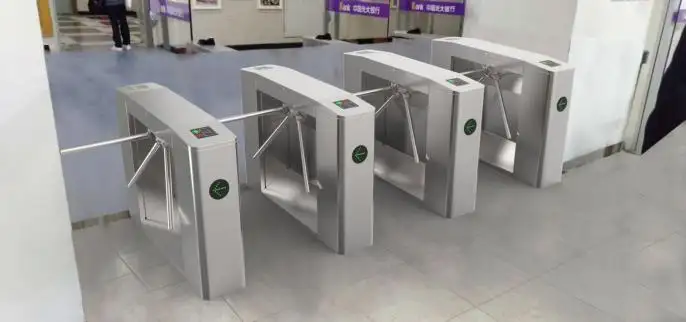
Many turnstiles look similar in photographs, yet their long-term behavior differs sharply once they are installed. The key distinction often lies in how the housing is built.
A conventional assembled cabinet relies on fasteners, brackets, and multiple connection points. That format can reduce initial manufacturing cost, but it also creates more potential movement over time. Under repeated use, vibration, temperature fluctuation, and environmental exposure can gradually affect joint stability. By contrast, a Heavy Duty Tripod Turnstile with fully welded construction forms a more continuous body, reducing weak points where looseness, water ingress, or distortion may begin.
For project buyers, this difference affects more than appearance. It influences:
•Structural rigidity during repeated passage
•Internal alignment of sensors and drive components
•Resistance to moisture accumulation in seams and joints
•Long-term consistency in outdoor or semi-exposed installations
This is one reason enclosure quality deserves closer review. NEMA states that enclosure types are intended to protect electrical equipment against defined environmental conditions, and its guidance also notes that enclosure considerations extend beyond simple dust or water exposure.
Material Choice and Welding Quality Work Together
Material grade alone does not guarantee durability. Stainless steel performance depends on both the alloy and the service environment, including atmospheric conditions. AMPP notes that atmospheric corrosion resistance in stainless steel depends on material-related parameters as well as environmental exposure. In practical terms, a well-selected stainless steel housing performs best when the fabrication method does not create unnecessary points of weakness.
That is why a Heavy Duty Tripod Turnstile should be reviewed as a combination of material selection and structural process. A stronger welded body can help preserve cabinet geometry, protect internal electronics, and reduce the likelihood of gradual misalignment caused by repeated stress.
For buyers comparing suppliers, the more useful checklist includes:
•Stainless steel grade suited to the installation environment
•Weld consistency and cabinet finish quality
•Protection of internal electronics against dust and moisture
•Stability of the housing under frequent daily operation
•Maintenance access for service teams and spare-part replacement
•Stable Structure Supports Better Access Control Performance
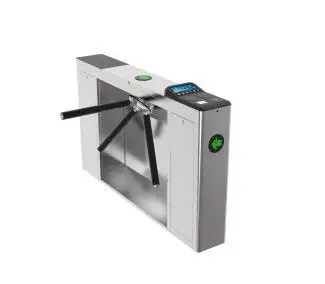
Turnstile performance is not defined only by whether the arms rotate. It also depends on how reliably the unit works with the access control system over time. UL explains that UL 294 provides a standardized framework for testing and certifying access control devices, reflecting the importance of reliability and function in these systems.
For that reason, a Heavy Duty Tripod Turnstile should support stable installation of readers, controllers, indicators, and detection components. When the cabinet remains rigid, the system is better positioned to maintain consistent operation across repeated cycles. This becomes especially relevant in sites that require:
•RFID, QR code, or biometric integration
•Anti-tailgating logic linked to sensor input
•Controlled reset after incomplete passage
•Reliable visual indication for approved or denied entry
•Connection to attendance, visitor, or ticketing platforms
This is also where procurement decisions become operational decisions. A lower-cost unit may satisfy a short-term budget target, yet it can create a higher service burden when alignment, sealing, or component stability begins to degrade.
Outdoor Use Requires More Than a Basic Indoor Design
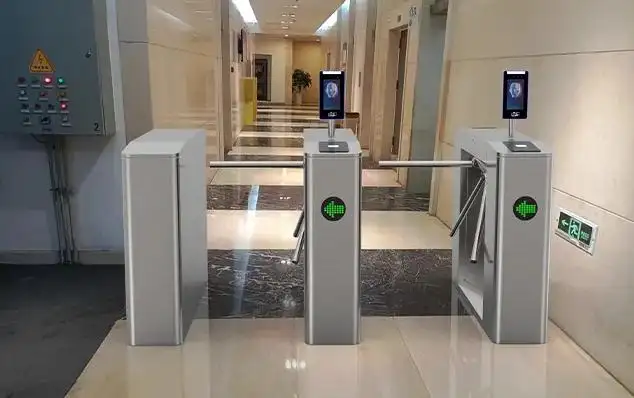
Many buyers now want one turnstile platform that can be used across lobbies, perimeters, factories, campuses, and transport-related entrances. That requires more than a presentable finish. It requires a cabinet and enclosure strategy suited to exposure.
NEMA notes that enclosure ratings designate protection for equipment under specific environmental conditions, and its publications emphasize that protection considerations may include corrosion-related factors as well as water and dust.
A Heavy Duty Tripod Turnstile intended for outdoor deployment should therefore be evaluated for:
•Resistance to rain and airborne contaminants
•Structural integrity during temperature shifts
•Protection of internal electronics and wiring
•Long-term finish quality in exposed environments
•Consistent operation in high-traffic external lanes
For overseas procurement teams, this matters because outdoor failure is rarely inexpensive. Replacement costs, downtime, installation labor, and user disruption can quickly outweigh any savings secured at the quotation stage.
A Better Buying Standard for Overseas Projects
A well-specified Heavy Duty Tripod Turnstile is not simply a passage device. It is part of a site’s broader physical protection and operational workflow. ASIS research and standards guidance both reinforce that access control should be treated as a core layer within the protection system.
That is why the stronger procurement question is not, “What is the lowest unit price?” A better question is, “Which turnstile will deliver the most dependable service life, the lowest avoidable maintenance burden, and the best long-term integration value?”
From that perspective, fully welded construction becomes more than a manufacturing detail. It becomes a purchasing advantage. For buyers who need dependable entrance control, lower lifecycle disruption, and stronger long-term value, a properly engineered Heavy Duty Tripod Turnstile is often the more responsible investment.