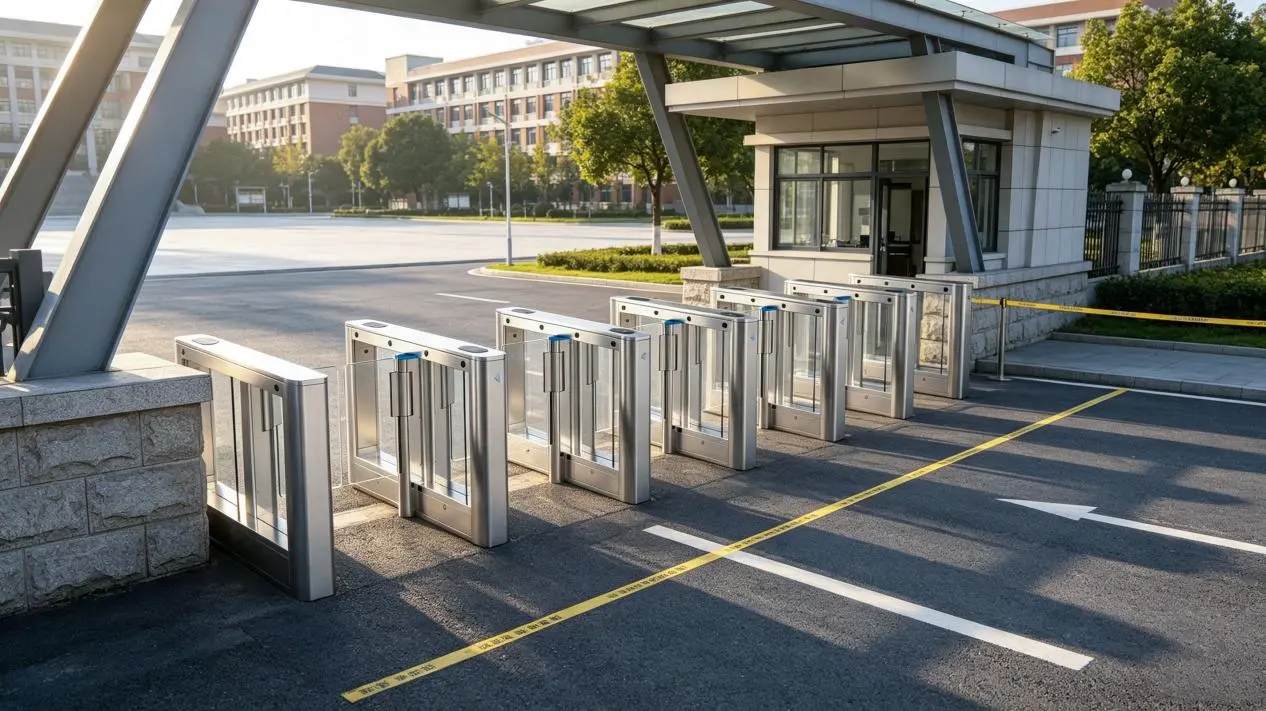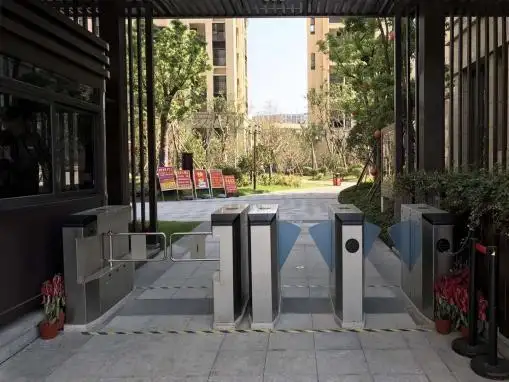



Turnstiles Gate Installation: What To Review Before Work Begins On Site

Entrance projects rarely fail because a gate suddenly breaks. More often, problems begin earlier with poor lane planning, weak trade coordination, incomplete fire-alarm integration, or layouts that look fine on paper but work poorly in daily use. For overseas buyers and integrators, this often leads to rework, added cost, and operational friction. That is why Turnstiles Gate Installation should be treated as a complete access-control process involving design, wiring, code review, traffic flow, and maintenance, rather than as a simple equipment setup.
Start With Traffic Logic, Not Product Images
Many projects begin too late in the process, after aesthetic preferences have already shaped the lane count and cabinet style. That approach often creates an attractive entrance that does not support real operating conditions.
Before selecting a model, project teams should confirm:
• Peak entry and exit periods
• Staff, visitor, and contractor routing
• Whether the site needs bidirectional control
• Credential types already in use
• Delivery, wheelchair, and stroller access needs
• Emergency release expectations under alarm or power loss
For Turnstiles Gate Installation, the first question is not which cabinet looks more modern. The better question is whether the selected lane arrangement can support the actual movement pattern of the site without creating bottlenecks or uncontrolled passage.
Accessibility Must Be Planned Into the Lane Layout
Accessibility should never be added as an afterthought. The ADA’s 2010 Standards identify key clearance benchmarks, including a 36-inch accessible route in many conditions and a 32-inch minimum clear opening at certain door conditions. For practical planning, buyers should ensure at least one compliant accessible passage strategy is built into the entrance concept and verified against the local code path for the project.
This has direct implications for Turnstiles Gate Installation:
• Standard lanes may support routine staff passage efficiently
• Wider passages are often required for accessible entry and service equipment
• Reader position, barrier timing, and side-clearance all affect usability
• A visually clean design does not guarantee compliant circulation
For procurement teams, this means the lane plan should be reviewed with accessibility in mind before fabrication begins. Correcting width or approach-clearance problems after installation is far more expensive than resolving them at design stage.
Match the Turnstile Type to the Operating Environment
Not every project requires the same structure, enclosure level, or barrier logic. Optical lanes may suit premium corporate lobbies, while more robust motorized or full-height solutions may be appropriate for outdoor perimeters, industrial sites, or higher-security applications.
Material and enclosure decisions should be based on real exposure conditions:
• Indoor projects often use 304 stainless steel where corrosion pressure is limited
• Outdoor projects may require stronger weather protection and tighter enclosure sealing
• Dust and water resistance should be reviewed through the relevant IP rating framework
• Coastal, humid, or temperature-variable sites should be specified more conservatively
The IEC explains IP ratings as the classification system for enclosure resistance against dust and liquids, which makes them highly relevant when Turnstiles Gate Installation is planned for unsheltered or semi-exposed entrances.

Foundation and Cable Planning Determine Long-Term Stability
A turnstile that is poorly anchored or badly wired may still pass an initial demonstration, but long-term performance usually reveals the underlying problem. Cabinet movement, sensor drift, nuisance alarms, and shortened motor life often trace back to avoidable installation mistakes below floor level.
A reliable Turnstiles Gate Installation plan should address:
• Slab condition and anchoring method
• Floor finish protection during drilling and routing
• Separation of power and signal lines
• Drainage risk in outdoor or washdown areas
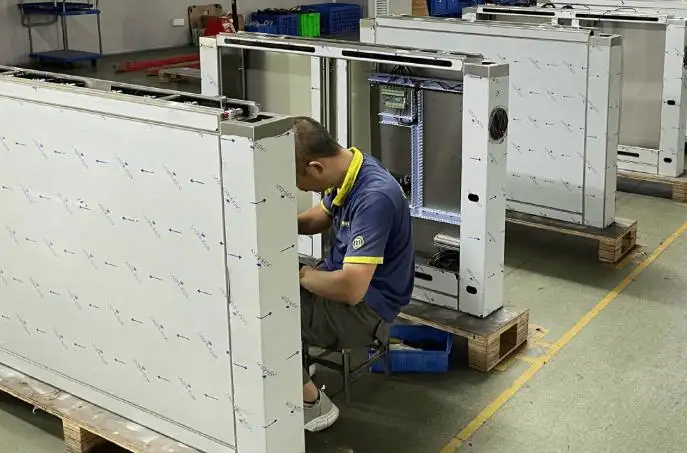
• Maintenance access to control boards and drive modules
• Spare conduit capacity for future reader or sensor upgrades
This stage is where many buyers benefit from choosing a supplier that can support drawing review, wiring logic, and integration coordination rather than shipping equipment only.
Safety Integration Is Not Optional
Entrance control must never conflict with egress requirements. UL explains that access control and automated gate systems are evaluated against standards such as UL 294 and UL 325, while life-safety codes require appropriate release behavior in defined conditions, including alarm events and power issues in certain applications.
NFPA materials also show that turnstiles are addressed within means-of-egress discussions and must not be placed or configured in ways that compromise safe exit.
In practical terms, Turnstiles Gate Installation should include verification of:
• Fire alarm interface logic
• Fail-safe or approved release behavior
• Emergency unlocking or free egress conditions where required
• Sensor response to obstruction or reverse movement
• Local authority review where code interpretation is project-specific
This is particularly important for international buyers, because life-safety expectations vary by jurisdiction even when the hardware looks identical across markets.
Commissioning Should Test Real Use, Not Only Basic Movement
A gate that opens and closes during factory demonstration is not yet a finished site solution. Proper commissioning should evaluate the whole lane under realistic operating conditions.
A stronger acceptance checklist includes:
• Peak-flow testing with real users
• Credential read speed and rejection handling
• Tailgating detection response
• Alarm logic and reset behavior
• Noise and vibration under repeated cycles
• Recovery after power interruption
• Communication with access control software
This final stage turns Turnstiles Gate Installation from a construction milestone into an operational system.
The Best Projects Are Designed For Serviceability
Buyers often focus on cabinet finish, reader compatibility, and opening speed. Those points matter, but service access matters just as much. A system that is difficult to inspect, diagnose, or repair can become costly within the first year of operation.
A procurement-focused checklist should therefore ask:
• Are motors, boards, and sensors easy to access?
• Are spare parts standardized across lanes?
• Can firmware, readers, or credentials be upgraded later?
• Is there a documented preventive maintenance schedule?
• Can the supplier support integration after handover?
That is the commercial value of a well-managed Turnstiles Gate Installation project. It lowers operational friction, protects uptime, and supports future adaptation rather than forcing early replacement.
Conclusion
In 2026, successful Turnstiles Gate Installation is no longer defined by whether a lane can be mounted and powered on. The stronger benchmark is whether the entrance remains accessible, code-aware, integration-ready, and serviceable after daily use begins. Buyers who plan around traffic, accessibility, safety, wiring, and lifecycle support usually achieve better outcomes than those who evaluate turnstiles as isolated hardware.
For brands such as Turboo, this creates a clearer positioning opportunity: not only as an equipment supplier, but as a project partner that helps reduce installation risk from design review through commissioning.