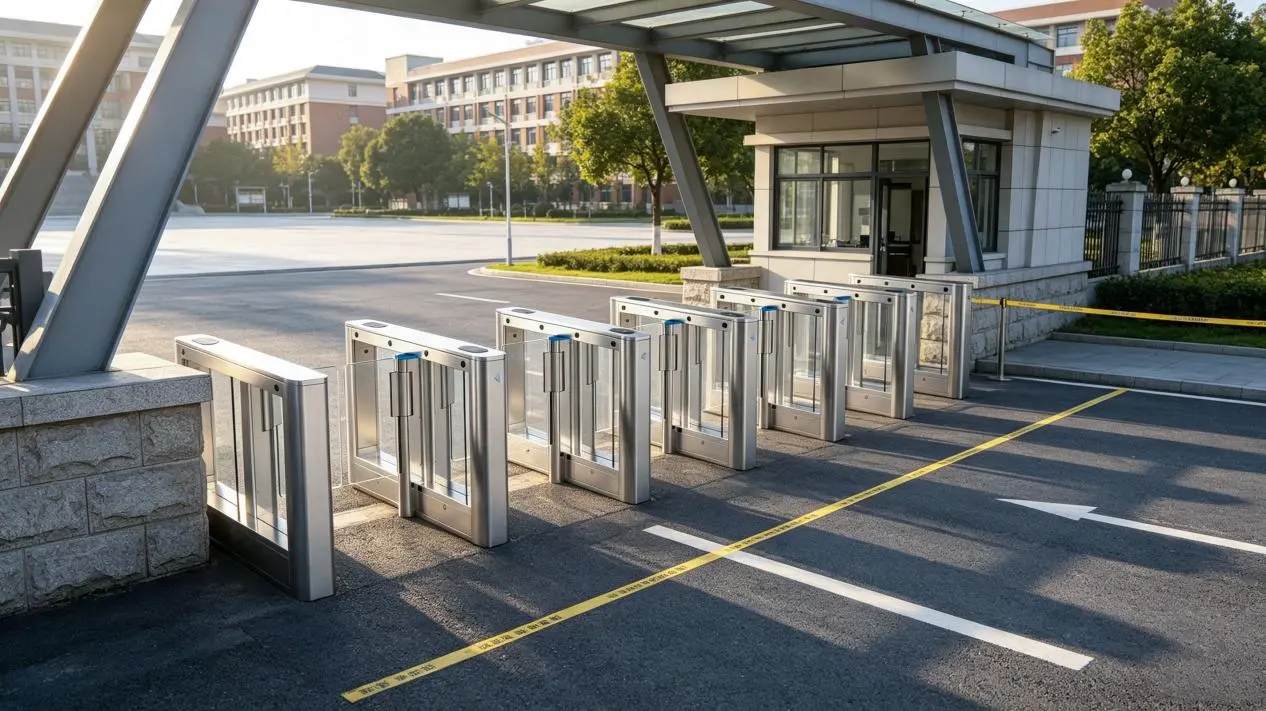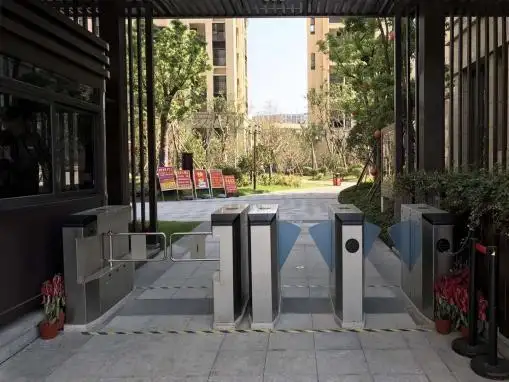



High-Security Flap Barrier Gate With Cybersecurity-Ready Controller Architecture

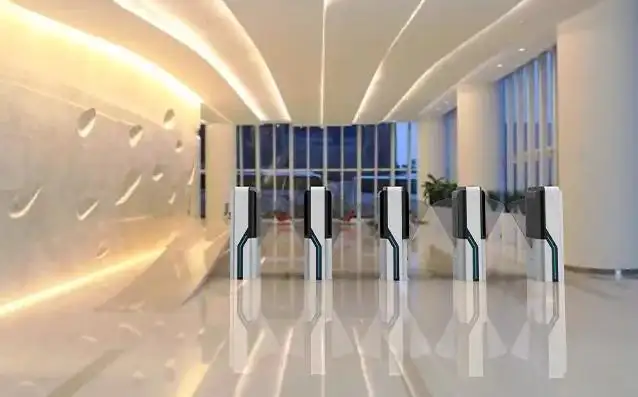
High-Security Flap Barrier Gate selection is no longer only about cabinet finish, lane speed, or basic anti-tailgating performance. For many overseas buyers, the harder question is whether the entrance system can fit into a modern access environment where physical entry, mobile credentials, building networks, and centralized software are increasingly connected. That is why controller architecture has become a more serious buying factor than many procurement teams expected a few years ago.
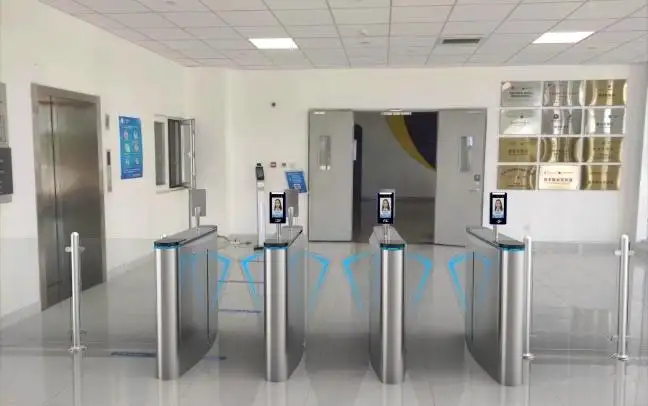
The Industry Challenge: The Gate Can Become the Weak Link
Many access projects fail to meet long-term expectations for one simple reason: the barrier lane looks modern, but the control layer is not ready for today's security model. A visually strong flap barrier may still create risk if its controller cannot support secure integration, stable event logging, flexible credential inputs, and dependable fault handling.
In practice, buyers are no longer just comparing passage width and motor response. They are asking whether a gate can work cleanly with hybrid-cloud access control, identity convergence, and stricter cybersecurity oversight from both security and IT teams.
This shift is not theoretical. Genetec's 2026 outlook says access control modernization, hybrid deployment, built-in cybersecurity, and connected platforms are all rising priorities.
HID's 2026 research also shows that organizations are reshaping physical access around identity governance, mobile credentials, and converged environments rather than isolated hardware decisions. In other words, the gate is now part of a larger digital trust chain.
Why Controller Architecture Matters More Than the Cabinet
The controller is the operational brain of a flap barrier. It receives signals from readers, decides whether passage should be granted, monitors sensor feedback, manages opening and closing logic, records events, and forwards information to the wider platform. When this architecture is weak, the lane may still open and close, but it will struggle with integration depth, diagnostics, and future upgrades.
A cybersecurity-ready controller architecture should help buyers solve several problems at once:
•Support more than one reader or credential path
•Handle secure integration with upstream access software
•Log entry, fault, and alarm events for traceability
•Maintain stable logic during heavy traffic
•Simplify maintenance through self-diagnostics and alarm reporting
Those are practical requirements, not marketing extras. NIST's building-systems cybersecurity work highlights that connected building services and cloud-linked infrastructure now require cybersecurity thinking across the full lifecycle, from design and deployment to operation and governance.
The Feature That Deserves More Attention: Multi-Protocol, Sensor-Rich Control Logic
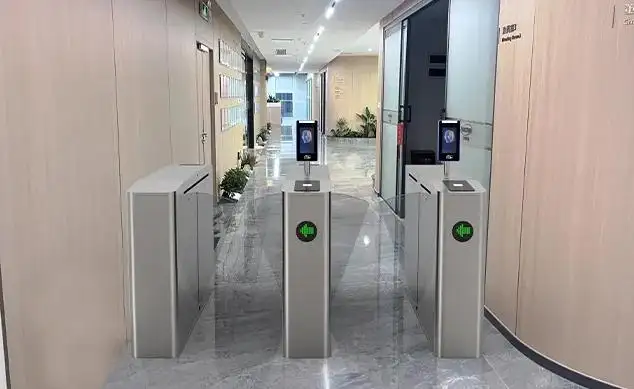
For a buyer evaluating a High-Security Flap Barrier Gate, one of the most valuable product features is not always visible from the outside. It is the control board's ability to process multiple protocols and sensor inputs with stability. Turboo's modern control board can manage inputs from up to 16 sensors and work with multiple reader protocols such as Wiegand, RS-485, and TCP/IP, while also supporting configurable logic, event logging, and remote access through software in advanced setups.
That matters because modern entry points rarely depend on one credential type anymore. HID's 2026 findings show that mobile credentials have reached mainstream adoption, with 74% of organizations already deploying or planning deployment, while 84% still maintain hybrid environments that include physical credentials. That means a barrier controller must be ready for mixed credential reality: card, QR code, fingerprint, facial recognition, and mobile access often need to coexist in the same project.
How Turboo Aligns With Current Market Demand
Turboo is well positioned in this direction because its flap barrier platforms are built around integration and operating logic rather than only mechanical movement. Across its published product and technical materials, Turboo supports IC and ID access control, QR code scanning, fingerprint verification, facial recognition, RS485 and dry-contact communication, anti-tailgating logic, automatic reset, self-diagnostic alarms, and event-based control functions. The technical overview further highlights aspects such as firmware compatibility, configurable logic, and the ability to forward events to central systems.
For these concerns, international customers will appreciate the following benefits.
•Reduced Integration Risk During Retrofitting
The barrier will be more easily integrated with existing reader and controller environments, reducing compatibility concerns during system upgrades.
•Increased Support for Incremental Upgrades
The site can be progressively enhanced with mobile credential, biometrics, and other forms of access without a full replacement of the entrance system.
•Increased Operational Visibility
Operational teams gain visibility into unaddressed faults, passage records, and attempts, enhancing response time and consistency in day-to-day management.
That is exactly the kind of flexibility now favored in hybrid and open physical security ecosystems.
What Buyers Should Ask Before Approving a Project
A strong procurement process should go beyond "Does the flap barrier open fast enough?" Better questions include:
•Which protocols does the controller support today?
•Can it connect cleanly with our access control software and reader mix?
•Does it provide event logging for entries, alarms, and faults?
•How does it handle anti-tailgating, anti-pinch, and abnormal passage events?
•Can the system support future mobile or biometric upgrades?
•Does the vendor offer self-diagnostic functions that reduce maintenance friction?
These questions match the direction of the market. Organizations want more open and connected architectures, stronger deployment flexibility, and access systems that contribute operational value rather than acting as isolated barriers.
A Better Way to Define High Security
In today's market, high security does not only mean stronger physical obstruction. It means the lane can authenticate accurately, communicate reliably, support policy enforcement, and remain manageable as enterprise identity systems evolve. A flap barrier that cannot keep pace with modern controller expectations may still look premium in a lobby, but it will age quickly once IT, compliance, and security teams ask for deeper integration and cleaner data.
For that reason, the more future-ready choice is a High-Security Flap Barrier Gate built around cybersecurity-ready controller architecture. Turboo's multi-protocol compatibility, sensor-based passage logic, self-diagnostics, alarm functions, and broad credential integration reflects where the industry is moving: toward secure, connected, and upgrade-friendly entrance control that works as part of a wider security platform, not apart from it.