


Access Control Tripod Turnstile: Complete Integration & Buyer's Guide

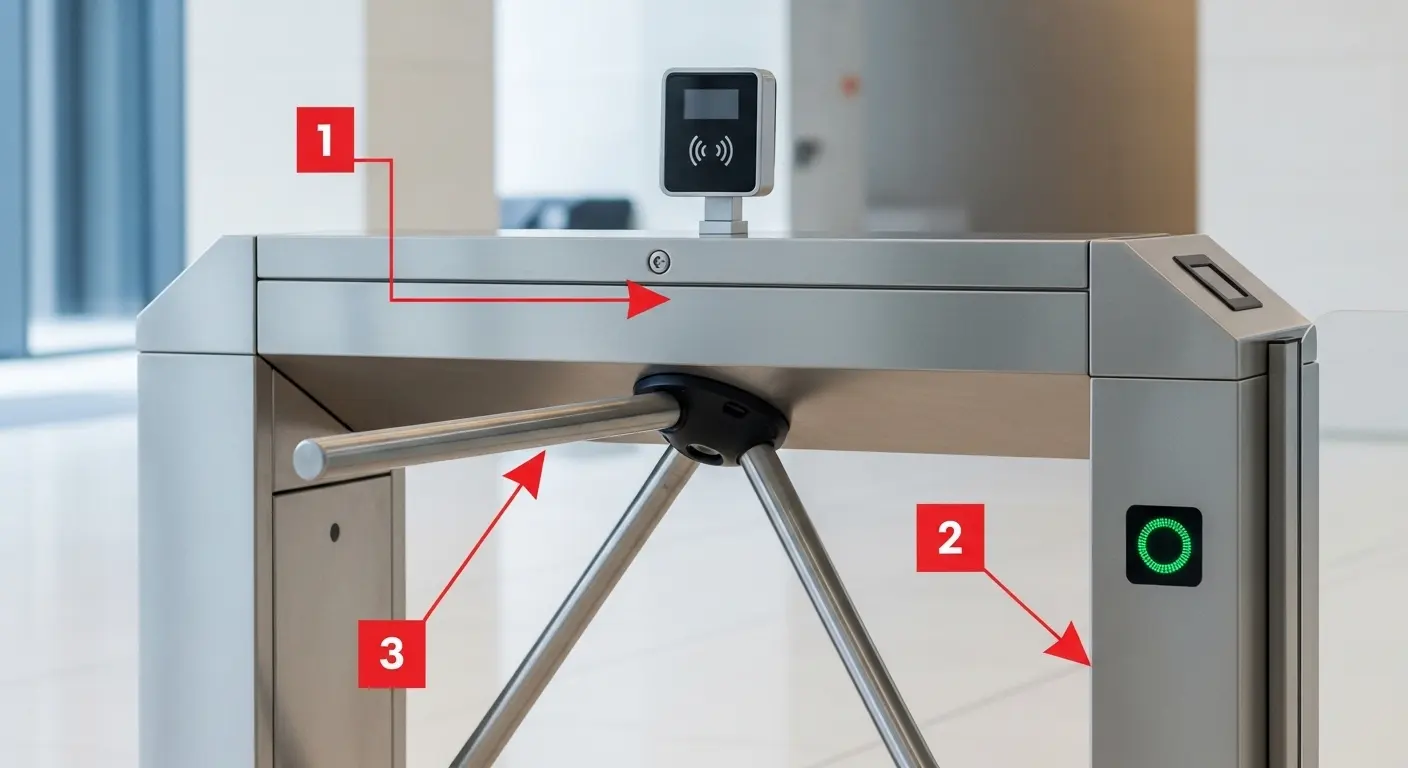
An access control tripod turnstile does two things at once — it physically controls who passes through a gate, and it feeds that data into your access management system in real time. It is not just a barrier. It is a connected security node. Understanding how these two layers work together is what separates a well-integrated installation from a frustrating one.
This guide covers the full picture — how the system works, which credentials and platforms connect, which configurations fit which environments, and which Turboo models belong on your shortlist.
What Is an Access Control Tripod Turnstile?
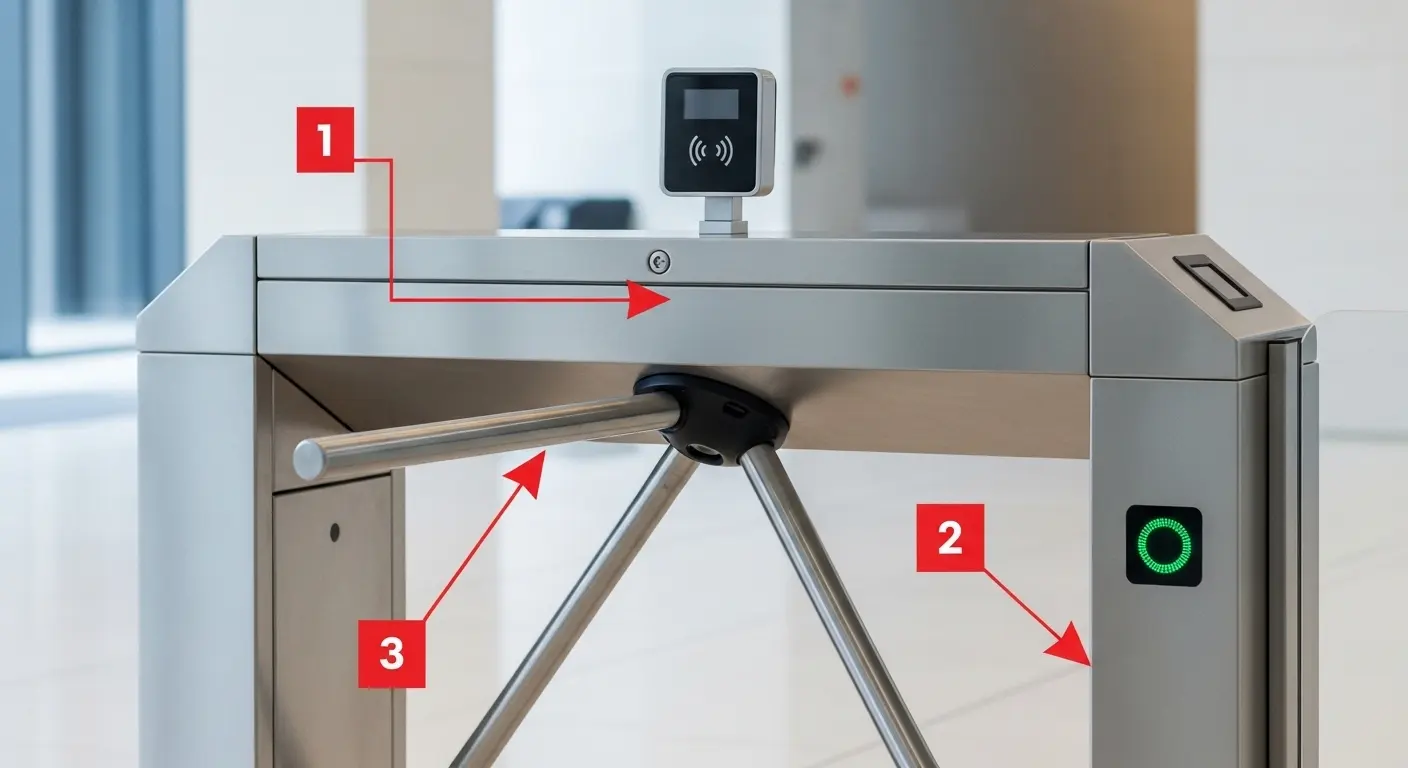
An access control tripod turnstile is a three-arm, waist-height gate that combines a physical passage barrier with an electronic control system to regulate individual pedestrian entry and exit. The "access control" component refers to the credential verification layer — the reader, controller, and software that decide whether the gate arms unlock.
When the system is idle, the arms remain locked. A pedestrian presents a credential — RFID card, QR code, fingerprint, or face scan. The access controller verifies the credential against its database. It then sends a signal to the turnstile control board. The board releases the solenoid (semi-automatic) or activates the motor (fully automatic). One arm rotates 120°. The person passes. The gate resets and locks.
The three-layer architecture of an access control tripod turnstile:
- Layer 1 — Physical gate: The tripod mechanism, cabinet, and arms. Controls physical passage.
- Layer 2 — Control board: The PCB that receives signals from the reader and manages gate behavior — timing, directionality, anti-tailgating logic, and status outputs.
- Layer 3 — Access management software: The platform that stores user credentials, logs pass events, generates reports, and manages permissions across multiple gates or sites.
All three layers must work together for the system to perform reliably. A high-quality gate with a poorly configured controller board, or a great controller paired with incompatible software, will produce problems.
For a detailed look at how Turboo designs this integration, visit the tripod turnstile access control page covering tight-space deployment scenarios.
How the Access Control Signal Works
This is the technical detail most buyers skip — and then regret during installation.
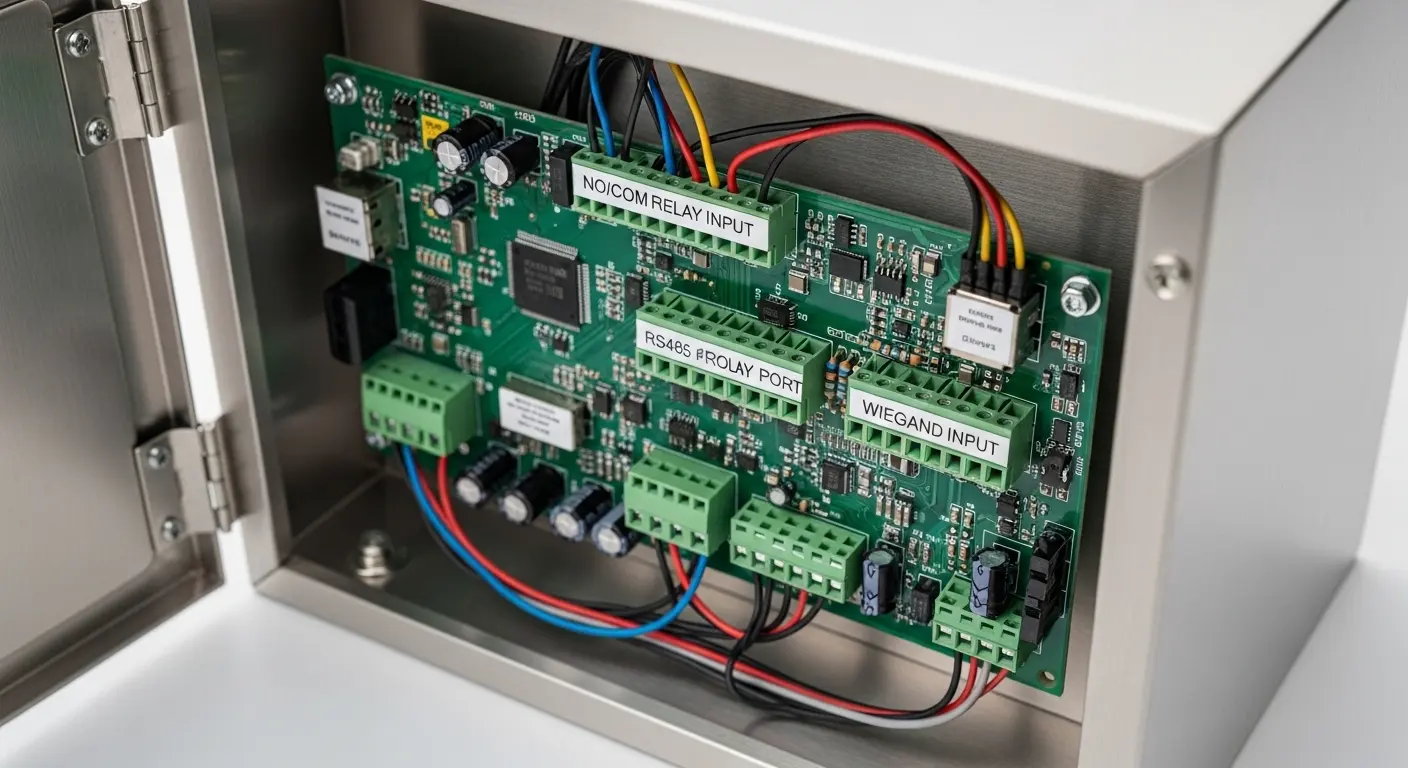
The reader (RFID, biometric, QR scanner) validates the credential and outputs a brief electronic signal to the turnstile control board. How that signal travels determines what is compatible with your existing infrastructure.
Dry Contact (Relay Output)
The simplest and most universal method. The reader sends a momentary relay closure — a brief short circuit across two terminals. The control board detects this and triggers gate unlock. Almost every third-party reader in the world supports dry contact output. This means an access control tripod turnstile with dry contact input is essentially reader-agnostic.
Critical detail: The relay trigger duration must be set to 1 second or less on the access controller. Longer durations cause the gate to remain unlocked beyond one rotation.
RS485 (Serial Communication)
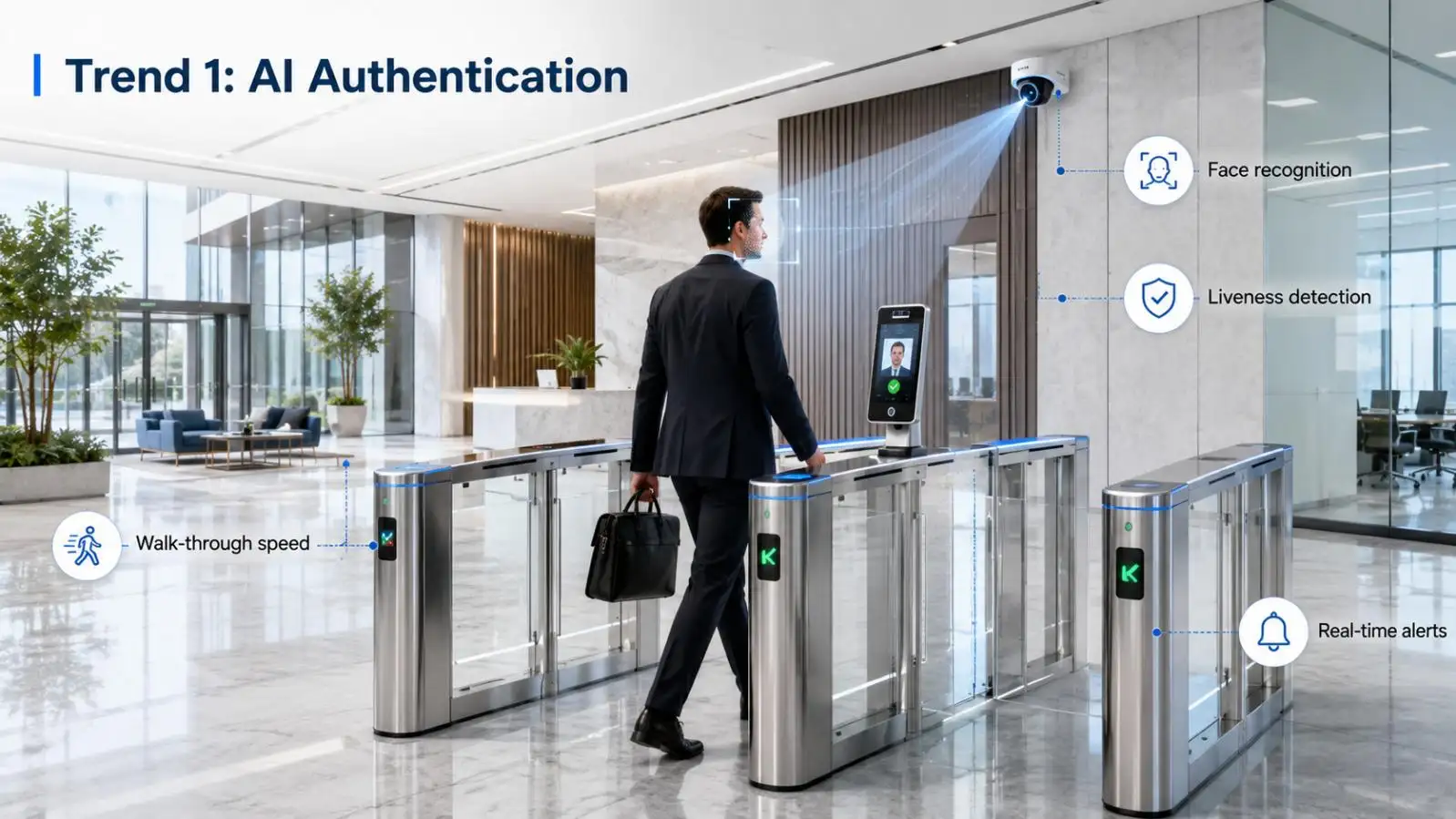
An RS485 interface allows the turnstile and the access management system to communicate two-way data — not just an open/close signal. Pass events, tailgating alerts, illegal entry attempts, and gate status all feed into the software platform in real time. This is the correct choice for any facility running centralized attendance management, multi-gate monitoring, or automated reporting.
Wiegand
Common in legacy access control systems. Many card readers output Wiegand format (26-bit or 34-bit). Some tripod turnstile control boards accept Wiegand input directly — Turboo's boards support this for systems where replacing the existing reader infrastructure is not practical.
Credential Compatibility: What Connects Out of the Box
A well-designed access control tripod turnstile should support every major credential format your site currently uses — or plans to use. Here is the full compatibility matrix:
| Credential Type | Interface | Notes |
|---|---|---|
| RFID card (IC/ID) | Dry contact / RS485 / Wiegand | HID, EM, Mifare all supported |
| NFC (mobile phone) | Dry contact / RS485 | Reader must support NFC output |
| QR code / barcode | Dry contact | Scanner outputs relay signal |
| Fingerprint | Dry contact / RS485 | Biometric reader sends validated signal |
| Face recognition | Dry contact / RS485 | Camera/terminal validates, sends signal |
| PIN keypad | Dry contact | Controller sends relay on correct PIN |
| Temperature detection | Dry contact | Thermal scanner sends pass/deny relay |
| Coin / token | Dry contact | Coin acceptor triggers relay |
Turboo's control boards support dry contact and RS485 as standard across all models. Furthermore, Wiegand input is supported for legacy system compatibility. This means your access control tripod turnstile works with your existing hardware investment — no forced reader replacement.
For RFID-specific deployment and multi-format card system integration, Turboo's RFID tripod turnstiles page covers reader compatibility and attendance software integration in detail.
Choosing the Right Access Control Tripod Turnstile for Your System
The access control integration requirements should directly influence which turnstile model you select. Here is how to match the two:
High-Security Sites With Centralized Monitoring
Choose a fully automatic model with RS485 communication and anti-tailgating plus anti-reverse logic. These sites need real-time event data, not just gate open/close control. Turboo's full automatic tripod turnstile (LB123) supports RS485, face recognition, and RGB status indicators — ideal for corporate campuses and government facilities with centralized access dashboards.
Attendance-Driven Commercial Sites (Factories, Schools)
Semi-automatic with RS485 and IC/ID multi-format support. Attendance systems need reliable event timestamps and credential logging per pass. Turboo's bridge tripod turnstile with RS485 integration connects to all major HR and attendance platforms.
Legacy Systems With Existing Wiegand Readers
Standard semi-automatic model with dry contact or Wiegand-compatible control board. You preserve your existing reader infrastructure and integrate without rewiring. Turboo's automatic tripod turnstile (EF1213) supports dry contact and RS485 with extensible integration for attendance, fees, and access control on the same control board.
High-Cycle Industrial or Outdoor Environments
Heavy-duty mechanical construction with NEMA-rated enclosure and IP54+ electronics. For these sites, mechanical reliability under extreme daily cycle counts is as important as integration flexibility. Turboo's heavy duty tripod turnstile range is rated for 5 million+ arm cycles with full access control integration support.
For a complete overview of available configurations, explore Turboo's full tripod turnstile product line.
Key Safety Functions in an Access Control Tripod Turnstile
A properly configured access control tripod turnstile does more than open and close. These safety behaviors are built into the system and should be verified at commissioning:
Anti-Tailgating
One credential unlocks one 120° arm rotation. The physical arm prevents a second person from passing immediately behind on the same authorization signal.
Anti-Reverse
The gate mechanism and control board detect and block any attempt to push through the arm in the unauthorized direction. This prevents reverse-flow entry, which is a common loophole in poorly designed systems.
Automatic Reset
If a user authenticates but does not pass within the preset time window, the gate automatically returns to the locked position. This prevents the gate from remaining open indefinitely after a valid credential is presented but not used.
Fail-Safe Drop-Arm
On power failure, all arms drop to horizontal, enabling unobstructed evacuation. This is the default mode for commercial and public buildings and satisfies fire safety regulations in most jurisdictions. Confirm this function during commissioning by testing with a deliberate power interruption.
LED Status Indicators
Green for valid access. Red for rejected credential. Visible from a distance, these signals reduce confusion and minimize delays at peak traffic periods.
For step-by-step commissioning, wiring, and safety testing guidance, Turboo's turnstile installation guide walks through each stage from floor anchoring through full system verification.
Access Control Tripod Turnstile Applications by Sector

Different sectors require different integration priorities. Here is how access control tripod turnstile deployment varies by environment:
Corporate Offices
Integration with visitor management software, employee RFID badge systems, and building management platforms. Real-time event logs matter for security audits and HR reporting.
Factories and Industrial Sites
Attendance-driven integration with payroll software via RS485. Anti-tailgating is critical for zone-access control inside production areas. Time-stamp accuracy directly affects payroll calculations.
Schools and Universities
Student ID card access, visitor QR code management, and optionally face recognition for no-card scenarios. Memory mode allows authorized pre-approval of small supervised groups.
Gyms and Recreation Centers
RFID membership card or app QR code integration with billing and membership management software. The gate enforces membership validity before each entry — no staff intervention required.
Construction Sites
Worker credential control by zone. Integration with safety management platforms to confirm only certified workers enter restricted areas. Heavy-duty outdoor models handle the environmental demands.
Metro and Transit Stations
Fare gate integration with transit management systems via RS485. High-cycle, vandal-resistant construction is mandatory. Turboo's heavy-duty range and standard tripod turnstile models both serve transit-grade applications at different throughput levels.
FAQ: Access Control Tripod Turnstile
What is an access control tripod turnstile?
An access control tripod turnstile is a three-arm, waist-height gate that combines a physical passage barrier with an electronic credential verification system. When a valid credential — RFID card, QR code, fingerprint, or face scan — is presented, the access controller sends a signal to the gate's control board, which releases or drives the arms to allow one authorized person to pass. The system logs every event in real time.
What access control systems are compatible with a tripod turnstile?
Any system that outputs a dry contact relay signal is compatible — which covers virtually every RFID reader, biometric terminal, QR scanner, and keypad on the market. RS485 is additionally supported for two-way data communication with access management and attendance software. Turboo's control boards also support Wiegand input for legacy system integration.
How does a tripod turnstile prevent tailgating?
The physical arm enforces one rotation per valid credential signal. One rotation allows one person-width of passage. The gate immediately resets and locks after that rotation completes. Additionally, the anti-reverse function blocks anyone attempting to push back through the arm in the wrong direction.
What happens to an access control tripod turnstile during a fire alarm or power failure?
The fail-safe drop-arm function activates automatically — all arms drop to the horizontal position, enabling completely free, unrestricted pedestrian evacuation. This function does not require power to activate and satisfies fire safety requirements for commercial buildings in most global markets.
Can one tripod turnstile control board manage attendance tracking and access control simultaneously?
Yes. Turboo's control boards support extensible integration — access control, attendance management, fee collection, and alarm event logging all run on the same board via RS485 communication. No secondary controller is required for most standard deployments.
What is the correct relay trigger duration for connecting a third-party reader to a tripod turnstile?
The access controller's relay lock duration must be set to 1 second or less. Durations longer than 1 second cause the gate to remain unlocked beyond a single arm rotation, creating a security gap. This setting is configured in the access controller software, not on the turnstile itself.