


How Turnstile Solutions Improve Flow: Low Noise, Smooth Operation 2026

Turnstile Solutions in 2026 are not only about access control—they are about keeping people moving with less noise, fewer stops, and a smoother "walk-through" experience from the first user to the last.
Flow Is a Feeling: Why Low Noise and Smooth Motion Matter
When people talk about "flow," they often mean speed. In real entrances, flow is a mix of speed and confidence. If a gate sounds loud, moves in a jerky way, or behaves inconsistently, users slow down. They hesitate, look around, and wait for instructions. That is how queues are created.
From Turboo’s manufacturer perspective, the best Turnstile Solutions improve flow by making the lane feel natural:
• The movement is predictable, so users walk through without thinking.
• The sound is controlled, so the entrance stays calm during peak hours.
• The system recovers fast from common mistakes, so the line does not break.
A smooth lane reduces "micro-pauses." Those small pauses may look harmless, but across hundreds of users per hour, they become the main reason an entrance feels crowded.
Low Noise Is Not Only Comfort—It Is a Signal of Stability
Low noise is often treated as a "nice-to-have." In practice, it is a quality indicator. When a flap barrier runs quietly, it usually means the structure is stable, friction is controlled, and the action is clean. That stability leads directly to better flow.
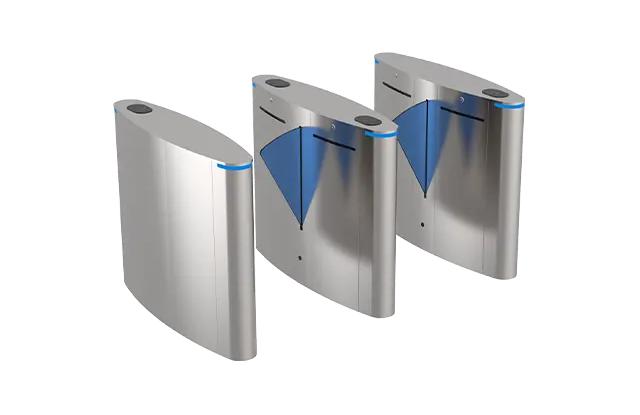
In Turboo’s Classic Oval Cabinet Flap Barrier Gate ES2012, we focus on a reasonable and reliable design that supports low noise, smooth operation, and long service life. For a site owner, the benefits are practical:
✓ Users are less stressed, so they walk forward without hesitation
✓ The entrance feels premium, which matters for office lobbies and brand image
✓ Quiet operation supports libraries, hospitals, campuses, and mixed-use spaces
✓ Fewer abnormal sounds can also mean fewer "stop and check" moments for guards
The best flow improvement is often the one you do not notice—because nothing interrupts the experience.
Smooth Operation Comes From Clear "Human Logic"
A gate can be mechanically strong but still feel slow if the logic is confusing. People do not move smoothly when they are unsure what the lane expects. That is why modern Turnstile Solutions must translate access rules into simple, readable behavior.
With the ES2012, the lane behavior is designed to match how people naturally move:
• Present a credential.
• Receive permission.
• Walk forward.
• Exit, and the lane returns to a ready state.
When this sequence is consistent, even first-time visitors understand it quickly. That reduces staff interventions and improves throughput without forcing anyone to rush.
Anti-Reverse Passing Keeps Movement Clean
One of the biggest reasons flow breaks is "wrong-way" movement. Someone steps in, then turns back midway. Others behind stop. Security staff step forward. Noise increases and the entrance becomes chaotic.
Anti-reverse pass logic keeps direction consistent. After authorization, the lane expects forward movement. If a user tries to reverse, the system treats it as an abnormal event and responds according to your site settings. For flow, this means fewer sudden stops and fewer confusing situations for people waiting.
Anti-Tail Helps Prevent "Crowd Compression"
Tailgating is not only a security issue. It is also a flow issue. When people push too close, the lane becomes stressful. Users slow down because they feel pressure from behind, and staff may need to intervene.
Anti-tail functions support a healthier rhythm: one authorization, one passage. The line moves in clean steps, which reduces crowding and improves comfort during peak times.
Automatic Reset Prevents the Lane From "Staying Confusing"
In real entrances, people do not always pass immediately after access is granted. Someone might stop to answer a phone call, adjust a bag, or wait for a colleague. If the lane remains unlocked, it creates uncertainty for the next user. They do not know whether the opening is intended for them, and that hesitation is exactly what kills flow.
That is why ES2012 includes automatic reset: after the gate grants access, it automatically restores to the locked state if the person does not pass within the time set.
For smooth operation, this matters because:
✓ The lane returns to a clear state without staff assistance
✓ The next user gets a clean "start point," reducing hesitation
✓ It reduces the chance of accidental follow-through when the lane is still open
✓ It helps keep the entrance orderly during rush hours
In 2026, the most effective Turnstile Solutions are not only "fast to open," but "fast to recover."
Card Settings That Support Flow: "With Memory" Vs "Without Memory"
Many beginners ignore reader settings. But small configuration choices can shape the entire user experience, especially when you care about smooth operation.
Turboo Turnstile Solutions can set the card to "with memory" or "without memory." This setting influences how forgiving the lane is after a valid read.
With Memory supports smoother passage when users need a short moment after reading—such as guiding a visitor, handling a package, or aligning themselves in the lane. This reduces repeated scans and small delays.
Without Memory supports stricter control when you want immediate passage behavior and tighter discipline at the entrance. This can reduce ambiguous "half-entry" situations.
The practical rule is simple: choose the setting that reduces re-scans and hesitation for your main user group. A factory shift entrance may need different logic than an office lobby with frequent visitors.
CTA: If you are unsure which configuration improves your entrance flow, contact Turboo and tell us your traffic pattern (staff-only vs visitor-heavy, peak-hour volume, one-way or two-way lanes). We will recommend the best memory and timing setup for your scenario.
Safe Movement Builds Confidence and Keeps People Walking
Flow is also psychological. People walk faster when they trust the lane. If users worry about getting clipped, they slow down and step carefully. That is why safety features support smooth operation directly.
ES2012 includes an infrared anti-clip function, providing anti-clip protection when the gate is open or running. This helps users move naturally instead of cautiously.
In addition, Turnstile Solutions must fit your identification methods without frequent "read failures." ES2012 is compatible with IC/ID cards, scanning, and face recognition, supporting common upgrade paths in 2026.
To match different management styles, the gate offers:
✓ Two Operation Modes: open or closed
✓ Multiple Working Modes: including two-way card reading and one-way card reading
These options are not just technical features. They let you design an entrance that feels smooth for users and simple for staff to manage.
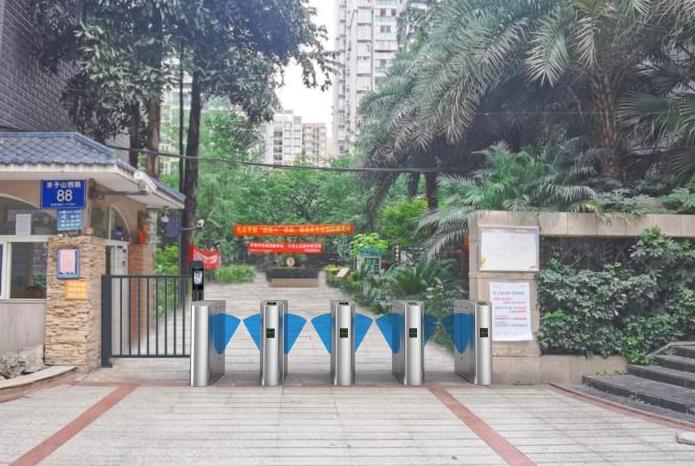
The 2026 Flow Formula: Quiet + Smooth + Self-Correcting
From Turboo’s view, Turnstile Solutions improve flow when they do three things consistently:
• Stay quiet and stable so users feel calm
• Move smoothly and predictably so people do not hesitate
• Self-correct quickly through reset logic and clear rule enforcement
When you get those elements right, your entrance becomes a "walk-through" experience instead of a checkpoint.
CTA: Planning a 2026 entrance upgrade? Talk with Turboo about the ES2012 flap barrier gate and ask for our recommended flow settings (pass time, reset timing, working mode, and card memory). The right configuration can reduce stops and keep your traffic moving smoothly from day one.