


Smart Turnstile Door Anti-Reverse Passing Explained: How One-Way Control Stays Secure

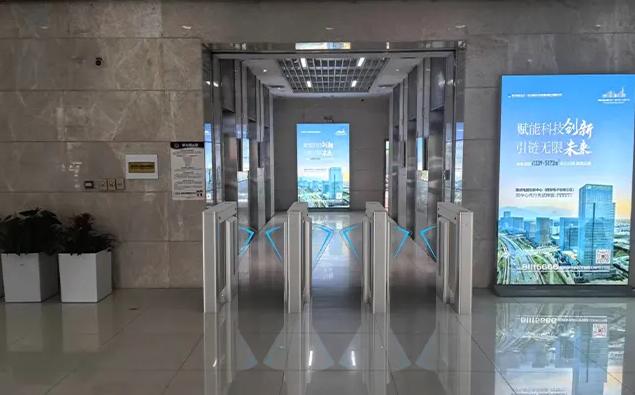
Smart Turnstile Door solutions do more than open and close a lane—they enforce simple “traffic rules” that keep entry points orderly, auditable, and safe. If you are new to access control, one feature often sounds more technical than it really is: Anti-Reverse Passing. The idea is straightforward. Once a person is authorized to move forward through the lane, the system prevents them from moving backward through that same passage.
At Turboo, we build this logic into our best-selling Flap Gate ES2216 because wrong-way moves are not rare edge cases. In real buildings and busy sites, people hesitate, change their minds, step back to talk, or attempt to “hand off” access to someone behind them. Without a consistent rule, a lane can become unpredictable during peak flow—and a small gap in behavior can become a big operational problem. Anti-Reverse Passing is a practical control layer that keeps your access policy consistent, even when the environment is crowded and fast.
What Anti-Reverse Passing Means in a Smart Turnstile Door
Anti-Reverse Passing is a rule that blocks reverse or wrong-direction movement after access has been granted. A user presents a credential—IC/ID card, QR code, or face recognition—and the Smart Turnstile Door approves a direction such as “Entry” or “Exit.” From that moment, the lane expects one thing: a forward pass in the approved direction.
If the user steps backward, turns around mid-lane, or tries to move against the authorized direction, the system flags it as an abnormal event. This is not about “punishing” users. It is about keeping lane behavior stable and preventing common misuse patterns that create confusion and security exposure.
Why reverse passing matters on real sites:
✓ It disrupts orderly entry and creates hesitation at the lane
✓ It increases the chance of credential “hand-off” behavior
✓ It can trigger collisions or bottlenecks when traffic is dense
For beginners, the takeaway is simple: Anti-Reverse Passing makes a lane behave like a one-way channel when it needs to.
The Core Logic Behind It: Authorization Plus Direction Detection
A Smart Turnstile Door does not guess direction. It relies on two inputs working together so the same rule applies every time.
1) Authorization Signal
Your access system confirms that a credential is valid and specifies direction (entry or exit). A clean authorization signal is the start of every reliable lane rule.
2) Sensor-Based Movement Pattern
Infrared sensors observe how a person moves through the lane. The controller compares real movement direction to the authorized direction.
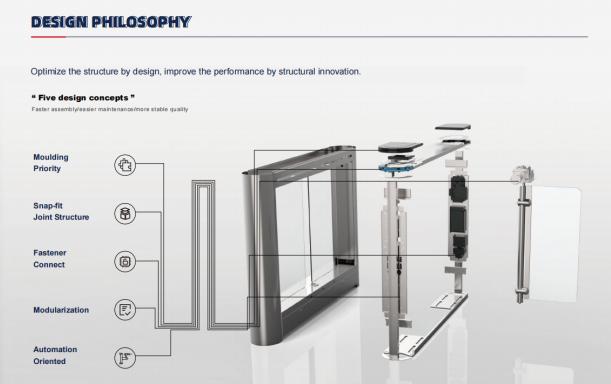
In the Turboo Flap Gate ES2216, infrared sensing plays a key role. Multiple detection points monitor the lane across standby, opening, passage, and closing. When someone walks forward, sensors trigger in a consistent order. When someone steps back, that sequence changes. That sequence difference is how the Smart Turnstile Door identifies reverse movement reliably.
This is also why Anti-Reverse Passing feels “fair” in daily use: the lane applies the same logic each time, regardless of who is watching.
How Anti-Reverse Passing Works Step By Step in Daily Traffic
It helps to imagine a typical office lobby lane during a busy morning rush. The process is simple when you view it as a short, controlled timeline.
Step 1: Credential Is Verified
A user presents an IC/ID card, scans a QR code, or uses face recognition. The controller confirms access and assigns a direction (for example, Entry).
Step 2: The Gate Creates A Permission Window
The flaps unlock/open for the approved direction. At the same time, a short passage period starts. This prevents an indefinite open state.
Step 3: Infrared Sensors Track The Passage
As the user moves forward, infrared sensors capture position and motion. The Smart Turnstile Door confirms alignment with the authorized direction.
Step 4: Reverse Movement Is Recognized
If the person turns back or steps backward, the sensor sequence denotes wrong-way travel. The system treats it as reverse passing.
Step 5: The Lane Returns To A Controlled State
The gate applies configured rules—typically re-securing the lane and recording the event.
This “authorization + movement confirmation” structure is the foundation. It prevents simple behavior tricks from becoming access loopholes.
What the Smart Turnstile Door Does When Reverse Passing Is Detected
When Anti-Reverse Passing triggers, the response should be fast, consistent, and safe. A good Smart Turnstile Door does not “panic” and create risk. Instead, it uses controlled behavior that protects the lane and supports audits.
Common response actions include:
✓ Deny the wrong-way action by keeping the lane in a controlled state
✓ Hold or re-lock so the lane cannot be exploited by the next person
✓ Report/log the event to the access control system for audit records
Operationally, this is where the value becomes clear. It turns a “human judgment” problem into a machine-enforced rule. Instead of relying on staff to interpret every unusual movement, your Smart Turnstile Door applies the policy consistently—even when the lobby is noisy, crowded, or moving fast.
Why Automatic Reset Makes Anti-Reverse Passing Stronger
Anti-Reverse Passing works best when it is paired with Automatic Reset. This feature is simple: after access is granted, if the person does not pass within a set time, the lane automatically returns to the locked state.
Many beginners focus on the opening moment. But real security also depends on how quickly a lane returns to a stable, secure state. Automatic reset protects against situations like:
• A person is authorized, then hesitates and walks away
• A user opens the lane, steps forward, then steps back to create confusion
• The lane stays open too long during peak traffic
When automatic reset is configured correctly, it reduces operational noise and keeps access events clean. In the Turboo ES2216, automatic reset supports Anti-Reverse Passing by ensuring abnormal movement does not leave the lane in an uncertain “half-open” condition.
Practical benefits include:
✓ Fewer open-lane opportunities for misuse
✓ Smoother flow because the lane returns to normal quickly
✓ Less staff intervention at entrances
Safety During Control: Infrared Anti-Clip Protects Real Users
Security features should never compromise safety. That is why modern Smart Turnstile Door designs combine strict control logic with protection functions. In flap gate environments, sudden stops and unexpected movement happen—especially when users carry bags, walk in pairs, or change their mind halfway.
The Turboo ES2216 includes an infrared anti-clip function (anti-clip while the gate is open or running). This makes interactions safer when the system is opening, closing, or responding to abnormal patterns like reverse passing. Instead of forcing harsh motion, the lane uses sensing to reduce pinch risk and improve user comfort.
From a project standpoint, safety features do more than reduce incidents. They improve acceptance and reduce complaints in public-facing environments such as office lobbies, campuses, retail complexes, and transport hubs.
✓ Better comfort for daily users
✓ Lower risk during peak flow
✓ More “professional” lane behavior that sites can trust
How to Specify Anti-Reverse Passing in Real Projects
Anti-Reverse Passing should not be treated as a checkbox. To work well, it needs to match your traffic plan and your access policy. At Turboo, we typically recommend focusing on three practical specification decisions.
1) Confirm Your Direction Strategy
Will the lane run one-way or two-way? Is it “Entry only,” “Exit only,” or dynamic based on authorization? The clearer the direction policy, the easier it is for a Smart Turnstile Door to enforce Anti-Reverse Passing without confusing normal users.
2) Choose A Credential Interface That Matches Your Site
The ES2216 supports integration with IC/ID card readers, QR scanning devices, and face recognition terminals. The key is stable authorization signals and clean controller integration so direction rules are always unambiguous. If direction data is inconsistent, even the best gate logic can feel “random” to users.
3) Set Timing Rules That Match Human Behavior
Anti-Reverse Passing feels smooth when the passage window and automatic reset time fit real walking speed at your site. If timing is too short, you create unnecessary interruptions. If it is too long, you leave room for misuse. A well-tuned Smart Turnstile Door should feel natural for normal users, while staying strict on wrong-way behavior.
Build a Lane That Stays Secure And Still Feels Smooth
If your site needs consistent direction control and reliable protection against wrong-way movement, Turboo can help you configure a Smart Turnstile Door solution around Anti-Reverse Passing using the Flap Gate ES2216. Share your traffic direction, credential method (card, QR, or face), and site scenario. Our team can provide practical configuration guidance, integration notes, and a project-ready recommendation that balances security, safety, and user flow.