


Flap Barrier Gate Supplier: The 30-Million-Cycle Test That Separates Leaders From Rest

When evaluating a Flap Barrier Gate Supplier, buyers often review material specifications, throughput speeds, and compatibility with existing access control platforms. But there is one number that tells you more about long-term system performance than any marketing claim: the cycle count figure stamped on the mechanism's quality report. That single data point separates premium-tier suppliers from those whose gates will start showing signs of fatigue after the first year of high-traffic service.
The Hidden Failure Mode Most Procurement Teams Overlook
Flap barriers fail more often from gradual mechanical wear than from component defects. The motor bearings degrade. Linkages loosen. Hinges develop play. Sensors drift out of alignment. These failures do not happen overnight. They accumulate across thousands of opening and closing cycles, and by the time the gate stops working, replacement costs far exceed the original purchase price.
��� What typical failures look like?
Sensor misreads cause barriers to freeze mid-cycle. Motors overheat after extended peak-hour runs. Pivot joints develop abnormal noise and resistance.
��� Why standard quality checks miss these issues?
Many suppliers test a single unit for functionality—not endurance. A gate that opens and closes smoothly during a 10-minute inspection may fail within three months of real-world deployment.
✅ True consequences of insufficient durability: Rush hour downtime causes crowding and a security barricade gap. Emergency repair calls carry premium pricing. Premature replacement drains your capital budget years ahead of schedule.
Industry standards indicate that premium flap barrier mechanisms are rated for 5 million cycles or more, with some high-end models achieving 10 million cycles in accredited laboratory tests. That is the baseline expectation. But a small group of suppliers goes further—subjecting every control board and drive unit to accelerated life testing that simulates decades of use within weeks.
What 30-Million-Cycle Testing Actually Measures
Accelerated life testing takes a control system through repetitive open-and-close sequences under controlled environmental conditions while monitoring for electrical faults, logic errors, and mechanical degradation. For a Flap Barrier Gate Supplier, running this test internally before shipping products provides measurable proof of reliability that no specification sheet can replicate.
1) Electrical Endurance Testing
The mainboard runs cycling tests while controlling timing and providing signals to the sensors and readers. Abnormalities in voltage or logic are documented.
2) Sensor Array Stability
Infrared alignment is measured after millions of cycles. The system was evaluated to verify that detection of tails and obstacles does not result in emergency alarms.
3) Endurance Tests of Motors and Mechanisms
Brushless motors are cycled through the full count; noise, temperature, and torque consistency are checked at random intervals. High-quality motors remain silent and completely responsive for the entire test.
Passing a standard quality check and passing a 30 million cycle aging test are two very different things. The standard quality check indicates that a gate will last two years, at best. The 30 million cycle aging test guarantees that a gate will last at least eight to ten years and require minimal maintenance.
How Turboo's Self-Designed Mainboard Passes the Tests
The Turboo control board architecture is designed for continuous use with the continuous processing of up to 16 sensors and various reader protocols. With configurable logic and event logs, the system accommodates different access control applications without requiring changes in the code.
1) Turboo's Self Developed Control System
The mainboard has independently completed 30 million cycle aging tests with consistently positive results.
2) Unlimited Protocols
Turboo supports IC and ID card access, QR code scanning, fingerprint and facial recognition, and mobile credentials, enabling Tailgating Barrier to remain adaptable.
3) Broad Platform Integration
The system works with global access control, visitor management, and time-attendance platforms through dry contact, RS-485, or TCP/IP connections, with documented SDK access available for custom integrations.
This level of testing is not performed by every Flap Barrier Gate Supplier. Many source off-the-shelf control boards from third parties and have no visibility into their long-term reliability. Turboo manufactures its own electronics, runs accelerated life testing in-house, and delivers documented test results to customers upon request.
Supplier Assessment via Endurance Data
Cycle count figures should be confirmed and not taken at face value when comparing flap barrier suppliers. There should be clear testing methods and third-party accreditation when applicable to justify an ‘endurance' rating. An ISO 9001 certification means manufacturers have documented their quality management practices, whilst a CE mark means they have adhered to the requirements of the European Union for harmonized legislation on safety and health at work.
1) Obtain Testing Documents
Request that the aging tests the suppliers have and the number of cycles, the duration of the tests, and what failures were observed be sent for your review.
2) Assess the Quality of the Material
The absence of corrosion and impact resistance is provided by 1.5mm to 2.0mm thick SUS304 and SUS316 stainless steel. Because SUS304 withstands corrosion to a degree, it can be relied upon for internal applications, while for coastal and external applications, SUS316 should be used.
3) Evaluate the Needed Maintenance
Barriers that are higher end will have enough design for the service to be light and performed every 3 to 6 months. This light service will also suffice for sensors, flap alignment, bearings, and motors. Each of these components will have a more frequent maintenance requirement if the cycle rating is low.
4) Examine Warranty Coverage
A supplier confident in their product's endurance will offer extended warranty terms that match the expected service life of the mechanism. Read the fine print regarding excluded components and labor coverage.
Why 2026 Procurement Decisions Demand Verified Endurance
Access control investments made in 2026 will remain in service for seven to ten years across most commercial and institutional deployments. Choosing a supplier based on verified cycle testing directly reduces the total cost of ownership and eliminates unplanned replacement expenses.
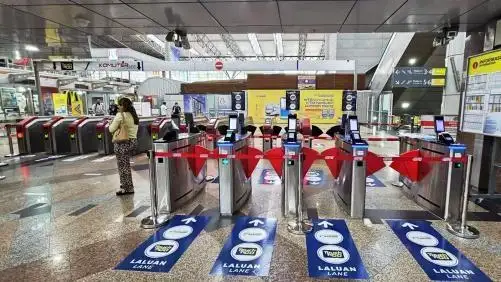
High-throughput environments such as metro stations, airport terminals, and corporate lobbies place exceptional demands on flap barrier mechanisms. Each gate may cycle hundreds of times per day. Over a five-year period, that accumulates to 1 to 2 million cycles per lane for moderate-traffic facilities, and well over 5 million cycles for truly high-volume entries.
1) Match Cycle Rating to Expected Traffic
Low-traffic facilities can specify 2 to 3 million cycles. High-traffic installations require 5 million cycles minimum for reliable long-term performance.
2) Plan for Maintenance Access
Arrange flap barriers with modular designs to carry out sensor cleaning, flap replacement, and motor servicing without the need to take apart the whole lane. Modular design reduces maintenance costs and system downtime.
3) Confirm Compatibility Before Making Major Purchases
When making a major purchase, obtain the SDK or API documentation first. Then you can confirm the supplier has technical support for system integration and remote diagnosis.
Flap Barrier Gate Supplier Turboo is a supplier with 19 years of experience in the industry, is ISO 9001 certified for quality, and does all control board and mechanical assembly in-house. This makes them a supplier with proven reliability. The 30-million-cycle aging test is not a marketing number—it is an engineering validation performed on every mainboard before shipment.
Final Thoughts
Speed, credential options, and design matter. But long-term reliability drives ROI. A flap barrier that fails early costs more in repairs and downtime than the upfront savings from a budget supplier. The 30-million-cycle test proves the mechanism will perform for years. When evaluating your next Flap Barrier Gate Supplier, ask for the cycle test report. The answer you get will separate the leaders from the rest.
FAQs
Q: What does “30-million-cycle test” mean for a Flap Barrier Gate Supplier?
A: The test means that a flap barrier gate supplier has run their control board and mechanism through 30 million open-close cycles under accelerated conditions. This simulates years of heavy daily use. Acknowledgement of this test means that their board is reliable for many years of usage.
Q: What does cycle count mean for a flap barrier?
A: Flap barriers with a higher cycle count will give a lower likelihood of unexpected failures as well as lower service costs due to maintenance. A flap barrier with a verified cycle count of 30 million can save the costs of replacement and downtime for a busy metro or office lobby.
Q: How can I verify this kind of testing from a Flap Barrier Gate Supplier?
A: An aging test report or some factory quality documentation should be available. Reputable suppliers, such as Turboo, provide summaries of their tests in accordance with ISO 9001. If a supplier does not have these types of documents, you should consider using a different supplier.
Q: Do barriers with a high cycle count require more service?
A: Not necessarily—with better designs using modular construction and brushless motors, these barriers only require minor checks every 3-6 months. Mechanisms with a lower cycle count require more frequent repair and check.
Q: Is 30 million cycles necessary for a low-traffic office?
A: Not really. Flap barriers rated for 2-5 million cycles are sufficient. However, using a supplier with a 30-million-cycle barrier would ensure that you have a supplier with sufficient capacity for future office expansions and increases in the office's potential resale value.