


Swing Pedestrian Turnstile Gate: Balancing Security, Flow, and Safety

Weak entrance control often fails quietly rather than suddenly. A lane may stay open too long, allow close follow-through, or slow traffic when steady flow matters most. For overseas buyers and facility operators, this creates a common issue: the entrance looks modern, but daily performance falls short on security, efficiency, and user confidence. As a result, buyers now evaluate a Swing Pedestrian Turnstile Gate by a more practical standard—whether it can maintain order, safety, accessibility, and reliable long-term operation under real daily pressure.
From that perspective, Turboo’s H306 should be viewed not simply as a passage device, but as a control point designed to improve how an entrance performs throughout the day.
A Better Way to Evaluate a Swing Pedestrian Turnstile Gate
Many access projects focus too heavily on credentials and software. Those elements matter, but hardware behavior matters just as much. In practice, a Swing Pedestrian Turnstile Gate is judged by what happens after authorization is granted.
A well-selected unit should help a site achieve several goals at the same time:
• Restrict unauthorized follow-through
• Reset quickly after a valid passage
• Reduce hesitation and congestion during peak periods
• Protect pedestrians during every opening and closing cycle
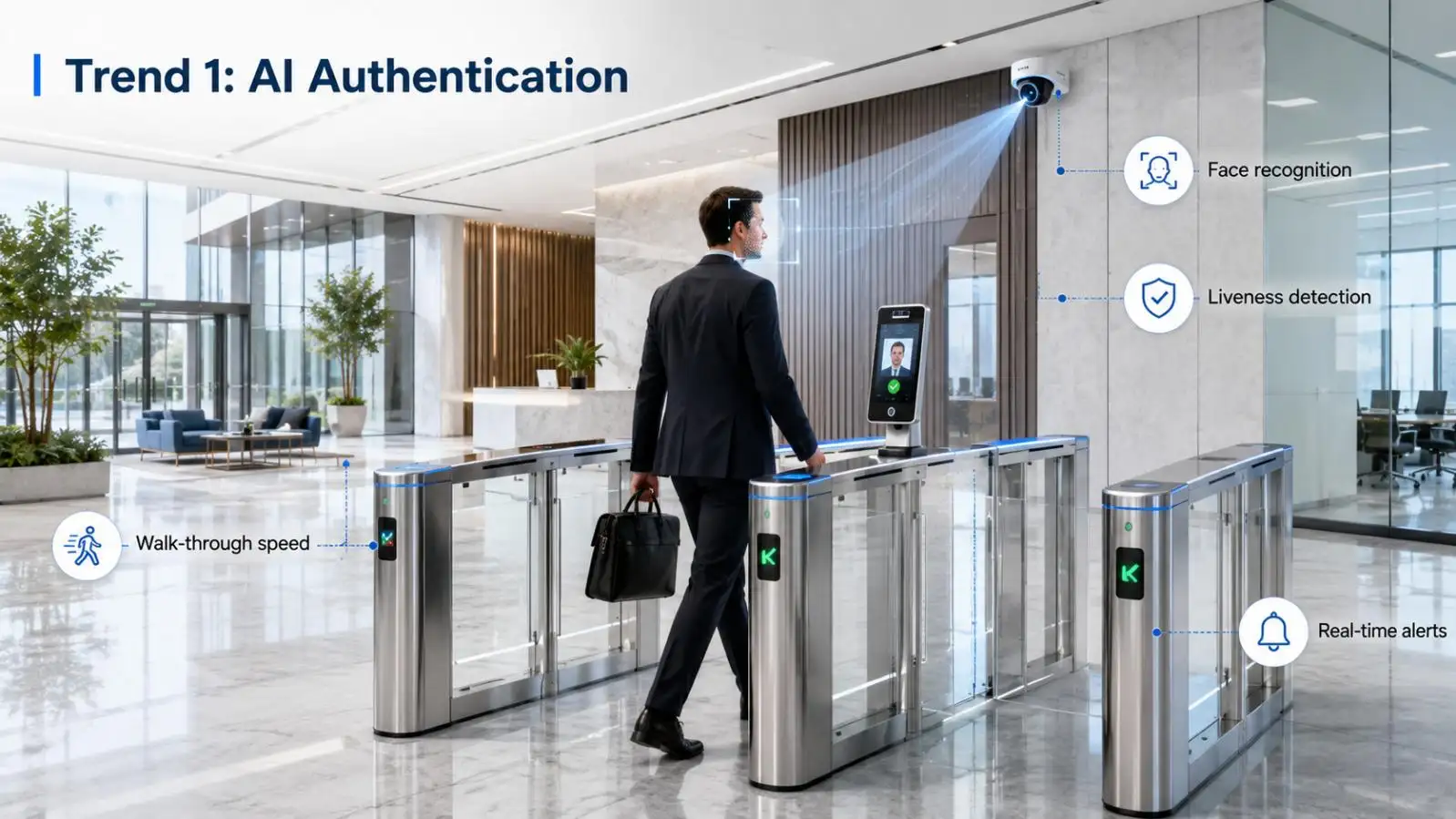
• Integrate with different identification methods without creating operational friction
This is where automatic reset becomes commercially important. It is not a minor technical detail. It is one of the functions that determines whether the gate acts as a true security layer or merely as a visual barrier.
The lane opens once an authorized user presents a valid card, QR code, biometric credential, or face scan. If the individual delays, turns around, or misses the permitted passage time, the gate should not stay open longer than necessary. The reset system should promptly restore the lane to its protected condition. That helps reduce tailgating opportunities and keeps each authorization tied to one controlled passage.
Why Automatic Reset Matters More in High-Traffic Entrances
In office towers, transport hubs, campuses, hospitals, and commercial buildings, small timing failures create larger management problems. A gate that remains open too long can weaken audit discipline. A gate that resets too aggressively can frustrate users and increase complaints. The correct balance is what buyers should look for.
For this reason, the automatic reset function in the H306 deserves attention. It supports a more disciplined entry sequence by ensuring the lane does not stay open beyond the intended access window. In security planning, layered access control is often used to reduce unauthorized movement beyond the lobby or main entry zone. That broader principle is well recognized in the security field.
The operational value is straightforward:
• One authorization is linked to one controlled opening event
• Unused openings do not remain available to the next passerby
• Staff do not need to intervene as often during routine entry traffic
• The entrance maintains a more consistent security posture throughout the day
For procurement teams, these are not abstract advantages. They influence staffing pressure, incident exposure, and the credibility of the entire access control investment.
Brushless Motor Performance Improves Reset Accuracy
Automatic reset is only as reliable as the mechanism behind it. If the motor system introduces excess vibration, noise, or inconsistent movement, the user experience deteriorates and component wear rises over time.
That is why the H306’s brushless motor integrated machine core is commercially relevant. Compared with older brushed systems, a brushless design can support smoother motion, lower noise, and better cycle stability. For buyers, this translates into more controlled opening and closing behavior rather than a harsh mechanical response.
The practical purchasing value includes:
• Quieter passage in reception areas and premium lobbies
• Smoother arm movement during repeated daily cycles
• Lower mechanical stress under frequent use
• Better suitability for sites that expect continuous operation
This matters most in projects where the entrance is not just a checkpoint, but part of the overall visitor impression. A secure lane should not feel unstable or overly industrial in normal daily use.
Safety Performance Should Be Part of the Buying Decision
Security alone is not enough. A modern entrance lane must also protect pedestrians during operation. Infrared anti-clip protection supports that requirement by monitoring the passage area and responding before contact occurs.
In practice, this means the gate can detect hesitation, reverse movement, or an incomplete passage and adjust its closing response accordingly. That turns the reset cycle into a safer and more intelligent action.
For specifiers, this point should also be considered alongside code and compliance planning. Entrance gates and related systems must be coordinated with accessibility requirements, and any secured barrier installed on an egress path must be reviewed against life-safety expectations. The U.S. Access Board’s ADA guidance explains requirements for accessible entrances, doors, and gates, while NFPA materials emphasize the need for compliant means of egress and appropriate release arrangements in secured openings.
That is why buyers should ask more than whether a gate can operate smoothly. They should also ask whether the selected configuration supports:
• Safe pedestrian detection
• Emergency release logic
• Accessible route planning
• Code-aligned entrance design
A Swing Pedestrian Turnstile Gate that performs well mechanically but is poorly coordinated with building requirements can still become a costly mistake.
Flexible Credential Compatibility Supports Long-Term Use
Another reason to take a broader purchasing view is credential change. A gate may be installed today for card-based access, but the client may later move toward QR codes, biometrics, or face recognition.
The H306 is easier to position as a long-term solution because the reset logic is not tied to one identification method. It can work with common access credentials such as:
• ID and IC cards
• QR codes and barcodes
• Fingerprint or palm-vein systems
• Face recognition terminals
This flexibility helps buyers protect the life of the investment. Instead of replacing the lane when authorization methods evolve, they can adapt the access layer around an already capable physical platform.
Why This Product Positioning Works Better for 2026 Buyers
For 2026 projects, the stronger sales message is not that the H306 simply opens quickly or looks modern. The stronger message is that it helps buyers solve several entrance problems at once: security discipline, smoother traffic flow, safer reset behavior, and compatibility with evolving credential strategies.
That makes the Swing Pedestrian Turnstile Gate more relevant to serious commercial and institutional buyers who need controlled passage without sacrificing user experience.
For buyers comparing suppliers, that is a more persuasive and more credible reason to move forward.