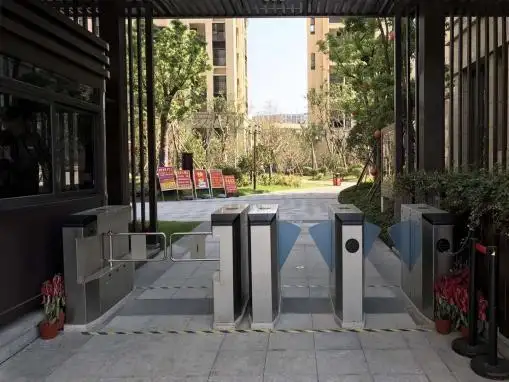



Reduce Tailgating With Turnstiles: Why Physical Entry Control Still Matters

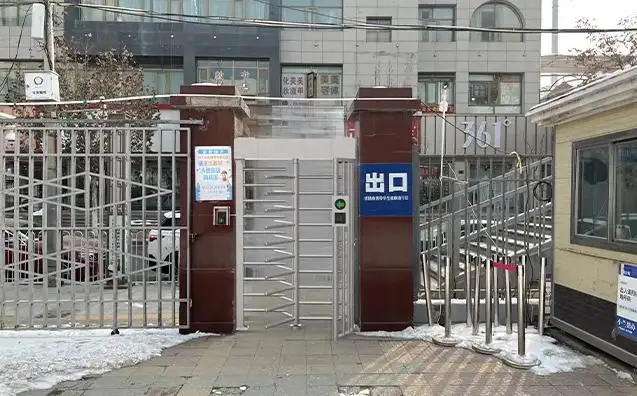
Electronic access control has advanced, but many facilities still face the same problem: one valid credential, two people entering. Badges, QR codes, biometrics, and surveillance help, yet they cannot fully secure an entrance without physical passage control. That is why more buyers now focus on Reduce Tailgating With Turnstiles as a practical way to strengthen security and maintain smooth traffic flow. For overseas buyers, property operators, and security integrators, tailgating increases compliance risk, weakens audit trails, and creates avoidable operational disruption.
Tailgating Is a Daily Control Failure, Not a Minor Exception
Many unauthorized entries do not begin with force. They begin with convenience, hesitation, or social pressure at the door. A staff member badges in. A second person follows closely. Reception is busy. No alarm sounds. The incident may pass unnoticed, yet the security gap is real.
Recent ASIS reporting shows that tailgating and piggybacking remain among the most common physical access issues reported by security professionals, alongside propped doors and credential sharing. That matters because a single uncontrolled passage can undermine the value of the wider access system around it.
For facility managers, the consequences often include:
• Reduced confidence in entry logs
• Greater pressure on guards or reception teams
• Higher risk in data centers, offices, plants, and restricted zones
• Weaker enforcement of visitor and contractor procedures
This is the reason buyers increasingly view turnstiles not as simple barriers, but as enforcement points within a layered security strategy.
Why Physical Barriers Change the Result
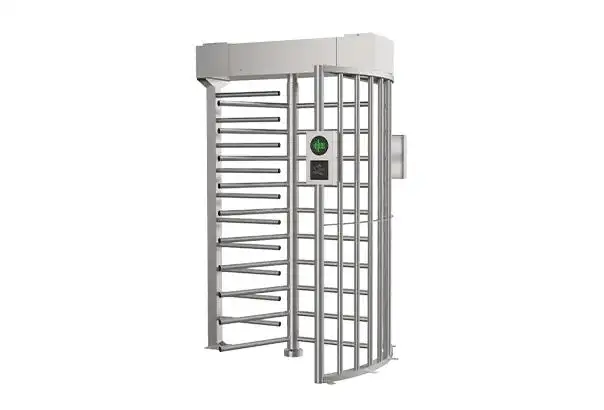
A card reader can verify a credential. It cannot, by itself, ensure one-person-one-pass. A properly designed turnstile adds the missing physical control. It converts access permission into a controlled movement event.
That distinction is important. NIST guidance emphasizes enforcing physical access authorizations at entry and exit points and maintaining access logs that support accountability. In real projects, that goal is easier to achieve when the lane itself limits passage rather than relying on user behavior alone.
To Reduce Tailgating With Turnstiles, the equipment should do more than open after validation. It should:
• Allow only one passage per authorization
• Prevent reverse movement where required
• Reset quickly if no passage occurs
• Communicate clearly with upstream access control software
• Preserve safety during normal use and emergency conditions
In other words, strong entry control is not only about identification. It is also about controlled movement.
The Features That Matter Most In Real Projects
Not every turnstile performs equally in daily use. Buyers who compare only appearance, price, or lane width often miss the features that shape long-term performance.
Anti-Tailgating Logic and Passage Discipline
This is the core requirement. The system should detect or discourage attempts by a second person to follow on a single authorization. In higher-security environments, anti-passback and anti-reverse functions also matter because they help prevent credential sharing and unauthorized return movement.
Where traffic is heavy, memory mode or queued authorization logic can also improve throughput without abandoning control. The best result is a lane that remains disciplined under pressure rather than becoming easier to bypass during peak periods.
Automatic Reset and User Safety
A secure lane should not remain exposed because an authorized user stopped, turned back, or delayed passage. Automatic reset capability allows the system to re-establish a protected state in a short time. Safety sensors are also necessary for proper operation. Infrared and blockage detection help prevent the barrier from shutting on people or objects.
This balance matters. Stronger control should not create a poor user experience. ASIS coverage on modern access control repeatedly points to the importance of combining secure design with practical movement management.
Integration Is Now a Purchasing Requirement
Today’s buyers rarely want a standalone gate. They want a turnstile that fits the wider security ecosystem already in place.
A future-ready solution should support integration with:
• RFID or IC card credentials
• QR code and visitor access systems
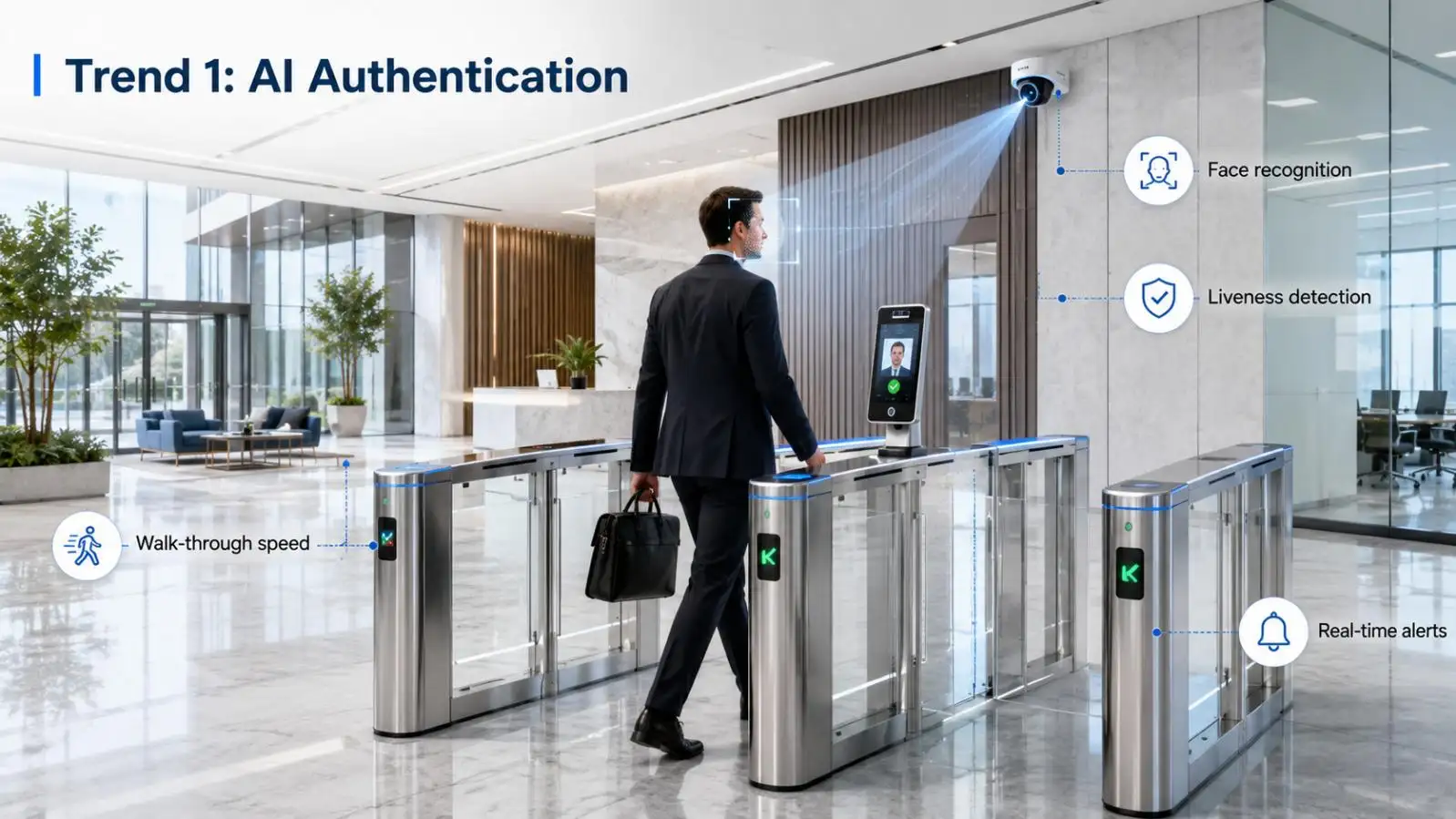
• Biometric verification such as fingerprint or facial recognition
• Central access control platforms
• Surveillance and event monitoring tools
This flexibility is especially valuable in mixed-use projects. A company may allow standard card access in office zones, require facial recognition at server rooms, and assign temporary QR credentials to visitors. The turnstile should not become the limiting factor. It should act as the controlled execution point of whatever authorization rule the site applies.
That is one reason integrated access control and surveillance continue to rank highly in professional security discussions. When physical entry devices and system intelligence work together, organizations gain stronger visibility and more useful incident data.

Different Sites Need Different Operating Modes
A turnstile that works well in a corporate lobby may not be right for a factory, utility site, or transport entrance. Buyers should therefore look for operational flexibility rather than fixed behavior.
Useful configuration options often include:
• Open mode for controlled free flow during selected periods
• Closed mode for full validation on every passage
• One-way credential reading
• Two-way credential reading
• Emergency release logic aligned with life-safety requirements
This flexibility helps the same hardware platform support changing policies, shift patterns, and site conditions. That makes the investment more practical over time.
Why Long-Term Reliability Matters to Buyers
Security equipment is expected to work every day, not only during commissioning. If a turnstile becomes noisy, inconsistent, or difficult to maintain, users lose confidence and operators may be forced to leave lanes open during faults or servicing. At that point, the security value drops sharply.
For procurement teams, the better question is not only whether a product can Reduce Tailgating With Turnstiles on day one. It is whether the product can keep doing so after years of use.
A stronger purchasing evaluation should therefore include:
• Mechanical stability under repeated daily cycles
• Low-maintenance design
• Clear service access and spare parts planning
• Reliable integration support
• Proven suitability for the intended environment
A Better Way to Evaluate Turnstile Projects
For buyers, the most effective purchasing approach is simple: judge the solution by how well it controls real behavior at the entrance. A turnstile should not be selected as a symbolic checkpoint or a decorative access device. It should be selected as a working control layer that strengthens accountability, supports policy enforcement, and protects throughput.