


Anti-Climbing Full-Height Turnstile: A Smarter Choice For High-Security Sites

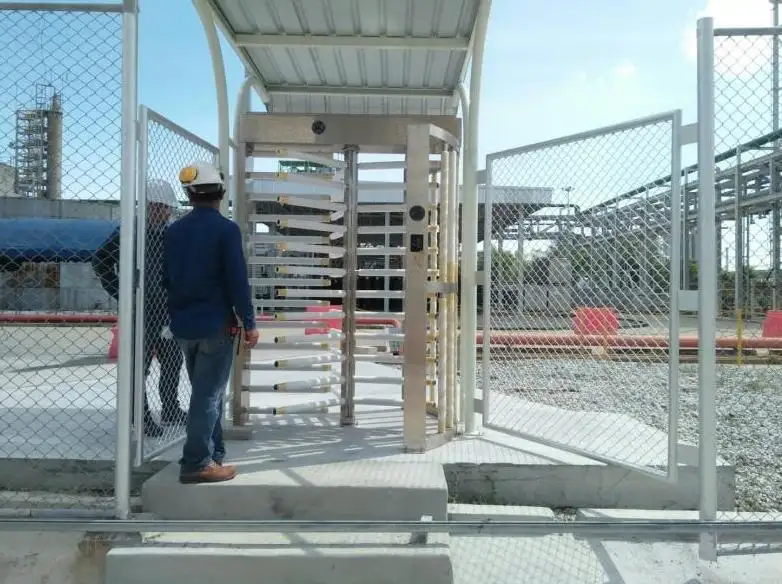
Weak pedestrian access control can create costly problems long before any formal security incident is reported. In many facilities, the bigger risks include tailgating, perimeter evasion, weak audit trails, and equipment that fails under daily use. For utilities, data centers, industrial plants, and transport hubs, these issues quickly become operational and liability concerns. That is why many buyers are moving beyond waist-high barriers. An Anti-climbing Full-Height Turnstile provides stronger deterrence, tighter passage control, and better support for modern access systems in higher-risk environments.
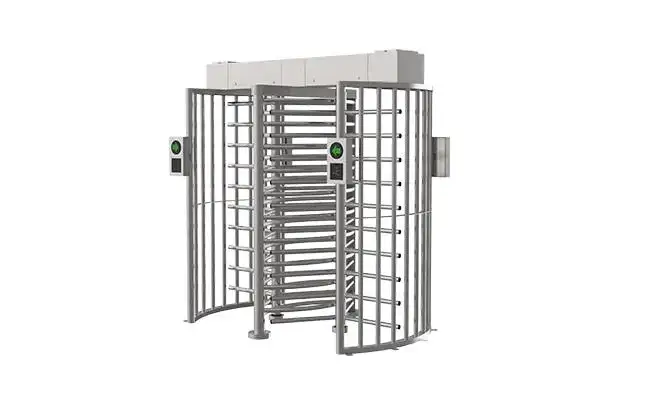
A Full-Height Barrier Changes the Security Equation
The biggest difference between a waist-high unit and an Anti-climbing Full-Height Turnstile is simple: the barrier itself does far more of the security work.
A lower turnstile can regulate flow, but it does not fully prevent climbing, vaulting, or misuse by determined intruders. By contrast, a full-height model creates a more controlled enclosure and extends the physical perimeter into the access point itself. In practical terms, it becomes part of the site’s defensive architecture rather than a basic entry device.
For overseas buyers, this matters because procurement decisions are rarely judged only by purchase price. They are judged by whether the installed system reduces risk, supports compliance, and avoids costly retrofits later.
Key advantages usually include:
• Stronger resistance to climbing and forced passage
• Clearer one-person-per-credential control
• Better deterrence at unmanned or lightly staffed entrances
• More suitable protection for power facilities, logistics compounds, research sites, and data center campuses
• Improved alignment with layered perimeter security strategies often recommended in critical infrastructure protection guidance
Security Is Not Only About Blocking Entry
Buyers in this category usually ask a reasonable question: does a taller barrier create problems during emergencies?
A properly specified system should not. Life safety principles require that means of egress remain effective and that occupants can move toward safety when needed. NFPA guidance repeatedly stresses the importance of compliant means of egress and safe exit arrangements.
This is where product design matters more than marketing language. A high-quality Anti-climbing Full-Height Turnstile should be evaluated not only for security strength, but also for how it responds during alarm conditions, power loss, or emergency release scenarios.
Procurement teams should pay attention to points such as:
• Fire alarm linkage and fail-safe release logic
• Safe evacuation configuration during power interruption
• Passage sensors that reduce pinch and collision risk
• Smooth rotation and controlled movement for safer user interaction
• Clear local compliance documentation for fire and life-safety review
In other words, the right solution should support security and egress at the same time. Those two requirements should be engineered together, not treated as separate discussions.
Better Traffic Control Produces Better Accountability
Another reason the Anti-climbing Full-Height Turnstile is gaining attention is that modern sites need more than a rotating barrier. They need passage intelligence.
At many facilities, the main operational problem is not a dramatic intrusion event. It is routine misuse: one credential used by multiple people, reverse entry attempts, and weak monitoring during busy periods. These issues undermine audit quality and weaken the value of the entire access control system.
A stronger full-height solution supports tighter traffic logic through:
• Anti-tailgating detection
• Anti-reverse entry control
• One-person-one-pass authorization
• Reset logic when a credential is presented but passage is not completed
• Flexible operating modes for shift changes, visitor flow, or stricter restricted-area access
This matters especially in facilities where entry records are tied to safety procedures, contractor control, attendance records, or incident investigation. When the passage lane itself is more disciplined, the data behind the access event becomes more reliable.
Long-Term Value Depends on Build Quality
Overseas buyers are often managing total lifecycle cost, not just first-stage purchasing. That changes how access equipment should be evaluated.
A turnstile installed outdoors or in a heavy-use industrial setting must withstand repeated operation, variable weather, and minimal tolerance for downtime. If the structure is unstable, the drive system is rough, or servicing is difficult, the equipment can become a maintenance burden rather than a security asset.
That is why the commercial value of an Anti-climbing Full-Height Turnstile is closely tied to practical engineering details:
• Stable mechanical structure for intensive daily cycles
• Smooth and quieter operation for mixed-use environments
• Durable materials and finish quality for exposed installations
• Sensible internal layout for service access and component replacement
• Automatic reset and fault-response logic that reduces manual intervention
For procurement teams, these details influence maintenance frequency, operating continuity, and the real cost of ownership over several years.
Integration Capacity Protects the Investment
Access technology continues to evolve. Cards remain common, but QR codes, biometrics, mobile credentials, and platform-based access management are becoming more common across commercial and critical sites. A rigid barrier without interface flexibility may age quickly.
This is why a well-designed Anti-climbing Full-Height Turnstile should be considered a long-term security asset that can integrate with evolving authorization approaches. NIST and related security guidance consistently frame access control around authenticated and authorized entry, which supports the importance of compatibility with broader credentialing systems.
Buyers should therefore look for:
• Compatibility with RFID, IC, ID, QR code, and biometric readers
• Straightforward integration with third-party access control systems
• Configurable entry and exit logic
• Support for stronger audit trails in both single-direction and dual-direction control modes
• Upgrade flexibility without replacing the physical barrier itself
This protects the capital investment and gives facility operators more room to adapt as technology or site policy changes.
Final Takeaway
Not every project needs a full-height unit. However, where perimeter integrity, deterrence, accountability, and service life matter, a lower barrier is often not enough. Where real security performance is required, an Anti-climbing Full-Height Turnstile is a stronger option for buyers than access equipment designed mainly to mark an entrance.
For high-security commercial and industrial environments, the better question is no longer whether a turnstile can open and close. The better question is whether it can reliably control passage, support compliant safety planning, integrate with evolving credentials, and stand up to years of operational pressure. That is where the right full-height solution creates measurable value.