


Privacy And Compliance In Tripod Turnstile Face Recognition Deployments

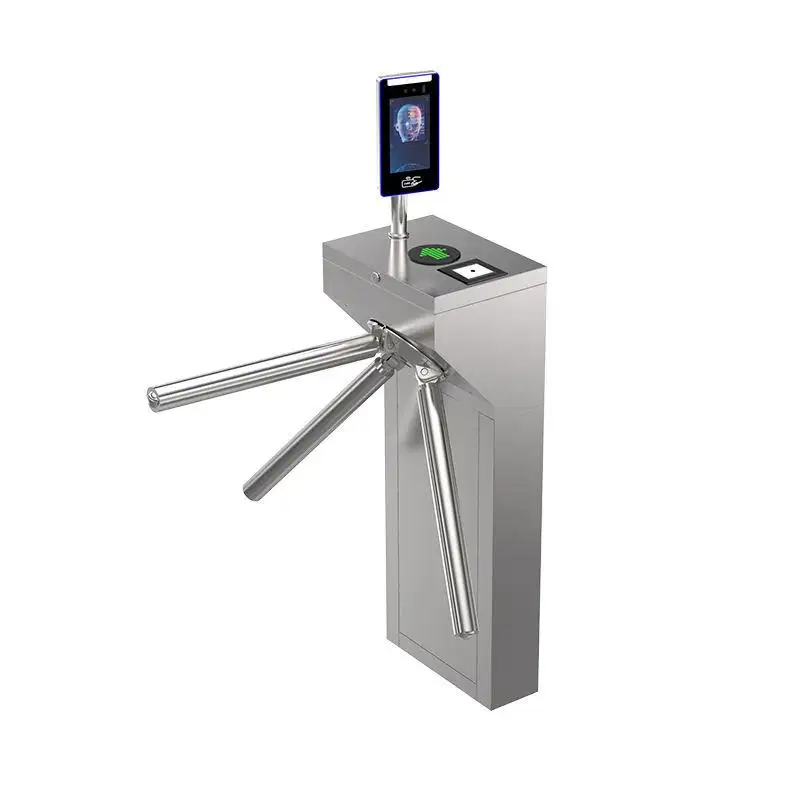
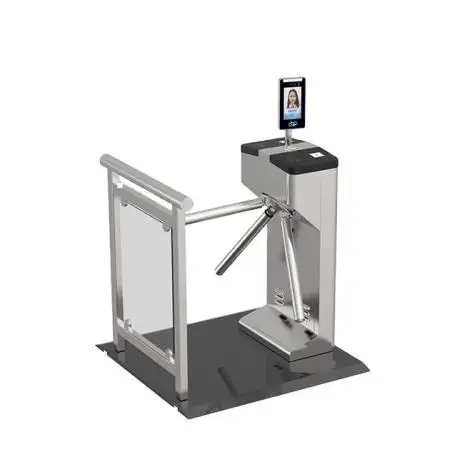
Tripod Turnstile with Face Recognition Systems are no longer judged only by speed, convenience, or labor savings. For many overseas buyers, the harder question is whether a deployment can pass privacy review, satisfy local data rules, and still deliver fast, reliable entry. That is now one of the biggest barriers to adoption in offices, campuses, transport sites, and semi-public facilities. Regulators increasingly treat biometric data as highly sensitive, and current guidance puts strong emphasis on lawful processing, transparency, accuracy, storage control, and data protection by design.
The sharper industry challenge is this: how can a buyer deploy facial recognition at a tripod turnstile without creating unnecessary biometric exposure? That is where a privacy-first design becomes a real product advantage.
The Real Problem Is Not Recognition Speed
Many entrance projects still begin with throughput targets. Buyers ask how many people can pass per minute, whether the lane can cut queues, and how quickly the camera can match a face. Those questions matter, but they are no longer enough.
The bigger problem is deployment risk. The UK ICO states that when biometric recognition is used, organizations must identify both a lawful basis and a separate condition for processing special category biometric data. It also highlights fairness, transparency, accuracy, discrimination risk, and the need for a DPIA as core compliance issues.
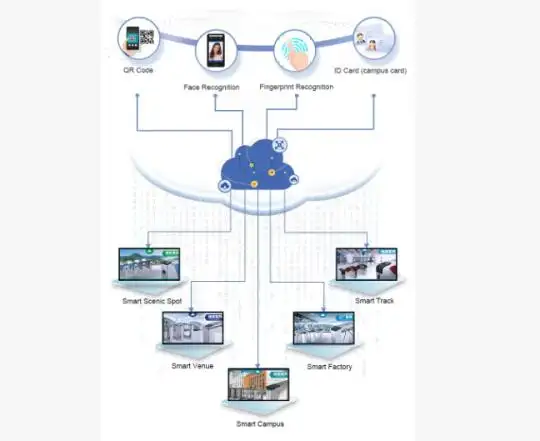
For a buyer, that changes the procurement logic. A tripod turnstile with face recognition is not just a lane device. It becomes part of a wider biometric processing chain that includes:
• Image capture
• Feature extraction and template creation
• Storage architecture
• Matching logic
• Audit and policy controls
If that chain is poorly designed, even a smooth mechanical lane can become the weak point in a compliance review.
Why Storage Architecture Has Become a Key Selling Point
One of the most important recent signals from Europe is that where and how biometric templates are stored now matters as much as recognition itself. In a 2024 opinion on facial recognition deployments, the European Data Protection Board concluded that facial recognition for authentication could be compatible in principle in certain cases when the enrolled biometric template is stored locally on the individual's device and under their sole control, subject to safeguards.
The same opinion also concluded that some centralized approaches without sufficient protection cannot comply with GDPR requirements on integrity, confidentiality, and privacy by design.
That is why privacy-first architecture is becoming a stronger commercial argument than generic AI language. Buyers increasingly want a system design that helps them minimize exposure, narrow retention, and avoid over-collecting biometric information.
In practical terms, a privacy-first Tripod Turnstile with Face Recognition Systems strategy should favor:
• Data minimization
• Role-based system access
• Encrypted template handling
• Clearly defined retention rules
• Transparent user notices
• Architecture choices that reduce unnecessary central storage
This shift is not theoretical. It has a direct impact on a project advancing, going into a legal review stalling, or being redesigned late into the cycle.
Accuracy and Bias Still Need to Be Designed In
Compliance is not only about permissions and storage. It also depends on performance quality. NIST's Face Recognition Vendor Test has documented demographic differentials across many face recognition algorithms, based on testing involving nearly 200 algorithms from nearly 100 developers and very large image datasets. That means buyers should not treat "face recognition" as a single generic capability. Algorithm choice, camera conditions, enrollment quality, and operational testing all affect fairness and reliability.
The EDPB has also warned that facial recognition can lead to false negatives, bias, and discrimination, while misuse of biometric data can create serious consequences such as identity fraud or impersonation.
For tripod turnstile projects, this has two direct implications:
• Lane hardware must support consistent capture conditions at the point of entry
• System integrators must validate real-world performance, not just vendor demo accuracy
A stable entrance lane, controlled passage logic, and clear user flow help reduce avoidable matching errors. In other words, the mechanical side and the biometric side should not be specified separately.
Where Turboo Fits This Market Shift
Turboo's value in this trend is not about making exaggerated biometric claims. It is about offering tripod turnstiles built for precision, reliability, and easy integration, with advanced control logic, hardware-software integration capability, optional emergency drop-arm functionality, and compliance with international quality and safety standards according to its published materials. Turboo also positions its solutions for access control, visitor management, time and attendance, smart campus, transportation hubs, and commercial buildings.
That matters because buyers rarely purchase a turnstile as a standalone product anymore. They need a lane platform that can connect cleanly with the facial recognition stack, credential logic, site policies, and local compliance requirements chosen for the project.
From a procurement perspective, Turboo aligns with current demand in three useful ways:
• Integration Readiness: easier integration helps buyers select the facial recognition and storage model that best fits their legal environment.
• Operational Reliability: advanced control logic and stable lane operation support orderly one-person passage, which is important when biometric authentication is linked to access events.
• Deployment Flexibility: customization and multi-scenario application support make it easier to adapt one tripod turnstile platform across campuses, office buildings, and other managed entrances.
That is a better fit for today's market than a one-dimensional "AI access" pitch.
What Overseas Buyers Should Ask Before Buying
When reviewing a Tripod Turnstile with Face Recognition Systems solution, buyers should move beyond surface-level feature lists and ask more specific questions:
• Is the biometric template stored centrally, locally, or under user-controlled architecture?
• What legal basis and special-category condition will support the deployment?
• Has the supplier considered DPIA requirements, transparency, and retention limits?
• How is algorithm performance validated across real operational conditions?
• Can the turnstile hardware integrate with different access-control and identity workflows?
These questions are now part of commercial due diligence, not only legal review. The strongest suppliers are the ones that understand that privacy, security, and user flow must be engineered together.
Privacy-First Design Is Becoming the Safer Growth Path
The future of facial recognition entry is not moving toward unlimited biometric collection. It is moving toward narrower, better controlled, and more defensible deployments. That makes privacy-first architecture a stronger product theme than raw recognition speed alone.
For buyers comparing suppliers, the takeaway is clear: the right tripod turnstile partner should help reduce compliance friction as well as entry friction. Turboo's emphasis on integration, control logic, and application-ready pedestrian access platforms puts it in step with that direction. In a market where biometric projects are increasingly judged by auditability and design discipline, that is a more durable advantage than a simple convenience claim.