


Successful Acceptance Does Not Equal Long-Term Stability: Don’t Choose a Turnstile Gate Supplier Based on Price Alone

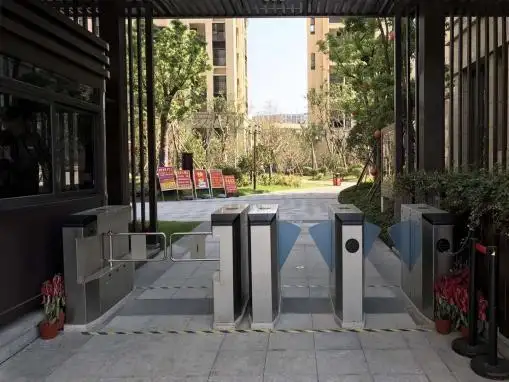
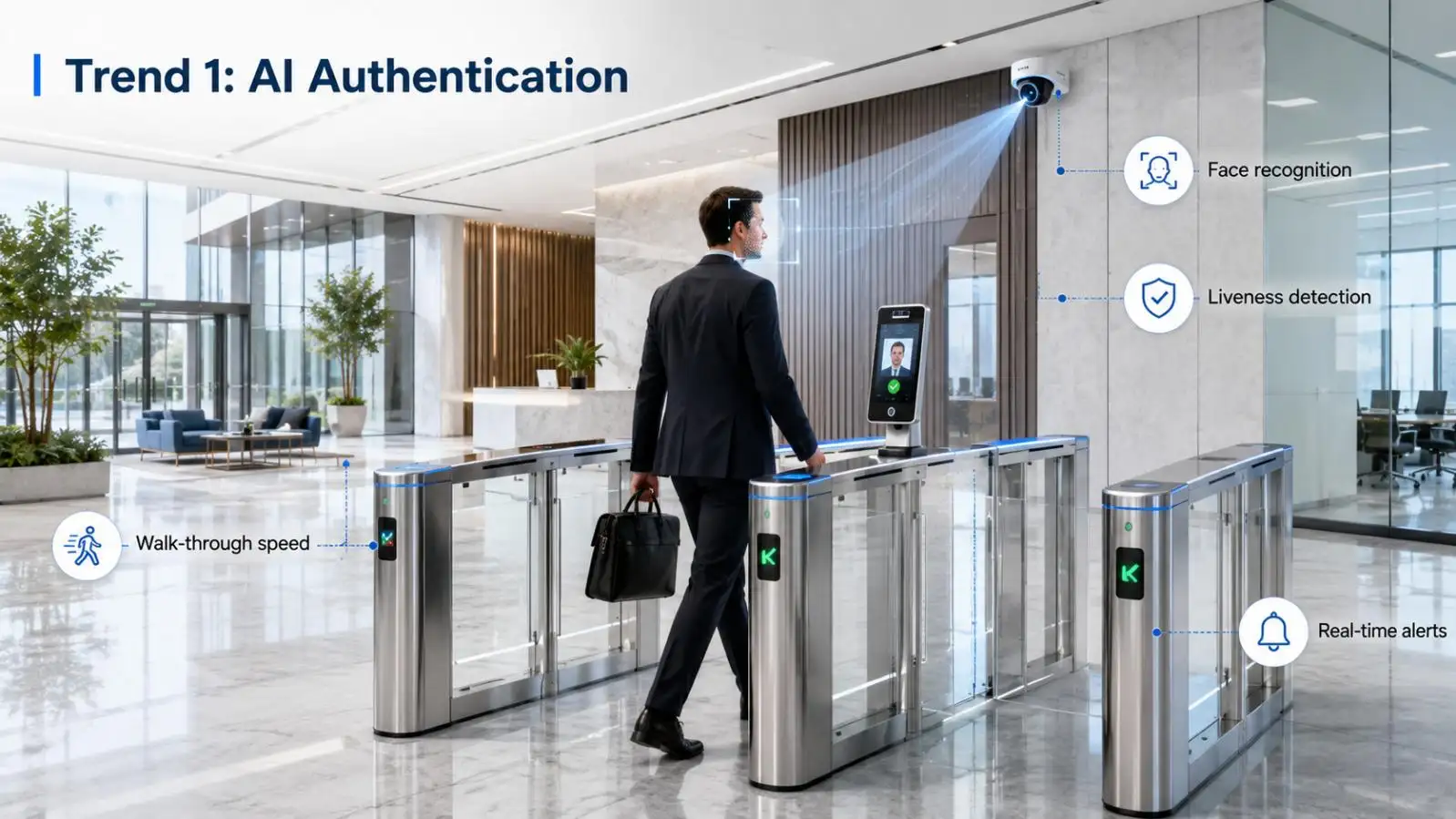
Many buyers believe that as long as a project passes acceptance testing and the equipment operates normally, the project can be considered successful.
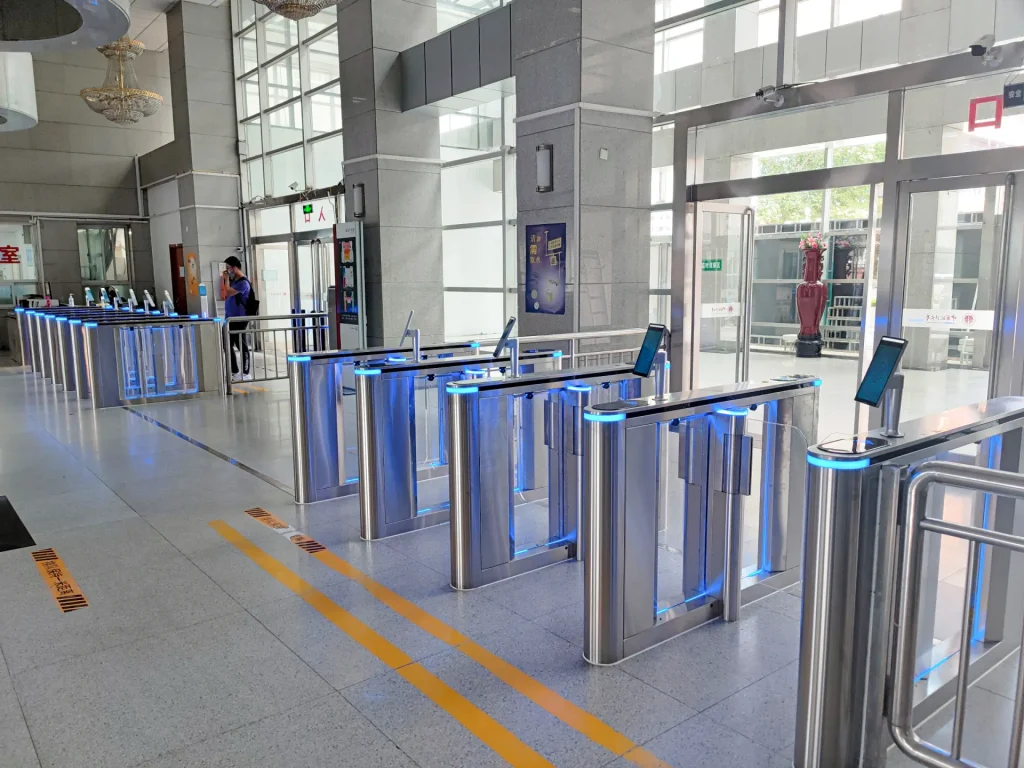
But in real-world projects, TURBOO often sees a very different outcome: two projects may use similar turnstile gate systems, yet one remains stable after eight years while another begins experiencing problems in less than three years.
- Abnormal gate noise
- Unstable passage operation
- Surface corrosion
- Discontinued spare parts
- Difficult after-sales support and slow response
More importantly, most of these problems are difficult to identify during project acceptance.
So where do these problems really come from?

Based on years of project experience, TURBOO has found that many problems are not actually caused during operation. The risks were already embedded at the supplier-selection stage.
In this guide, TURBOO shares seven commonly overlooked factors that system integrators, distributors, contractors, and project owners should evaluate when selecting a turnstile manufacturer or turnstile supplier.
01. Is the Supplier a Genuine Manufacturer or a Trading Company?
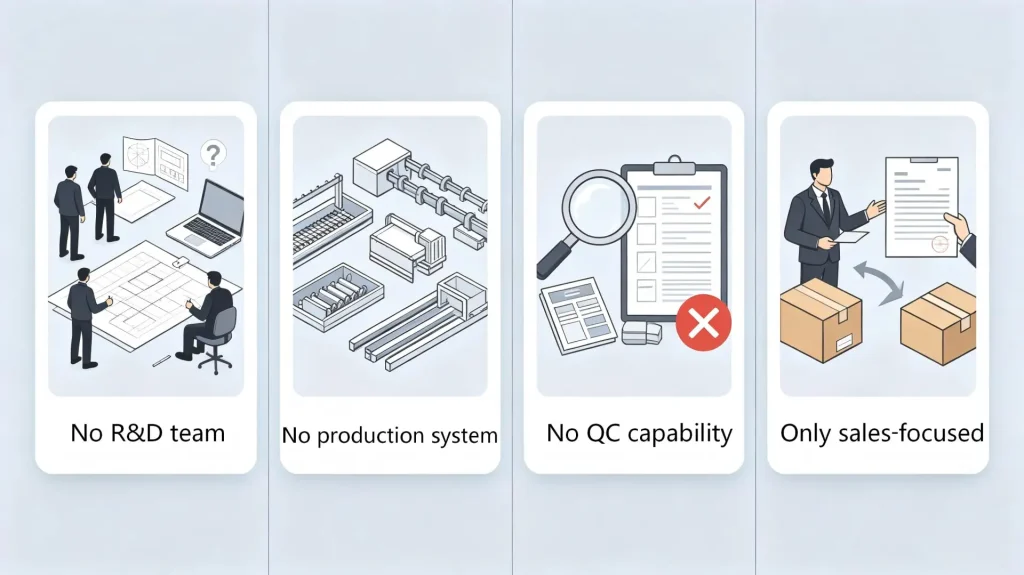
This is one of the most common issues in turnstile projects. Many companies describe themselves as a “manufacturer” on their websites, but in practice they may have:
- No dedicated R&D team
- No established production system
- Limited quality-control capabilities
- A business model focused mainly on sales
Why does this matter?
When a project requires non-standard dimensions, system integration, customized appearance, or other engineering changes, a genuine manufacturer can mobilize its R&D, engineering, and production teams to solve the issue directly.
A sales-only company often has to pass requirements through several layers of communication. The response time and problem-solving capability can be completely different. With a trading company, the communication chain is even longer, which can increase response times and project risk.
How can you verify a manufacturer?
- Does the company have an in-house R&D team?
- Does it operate its own production workshop?
- Can it develop and validate prototypes?
- Can it provide independent ODM project examples?
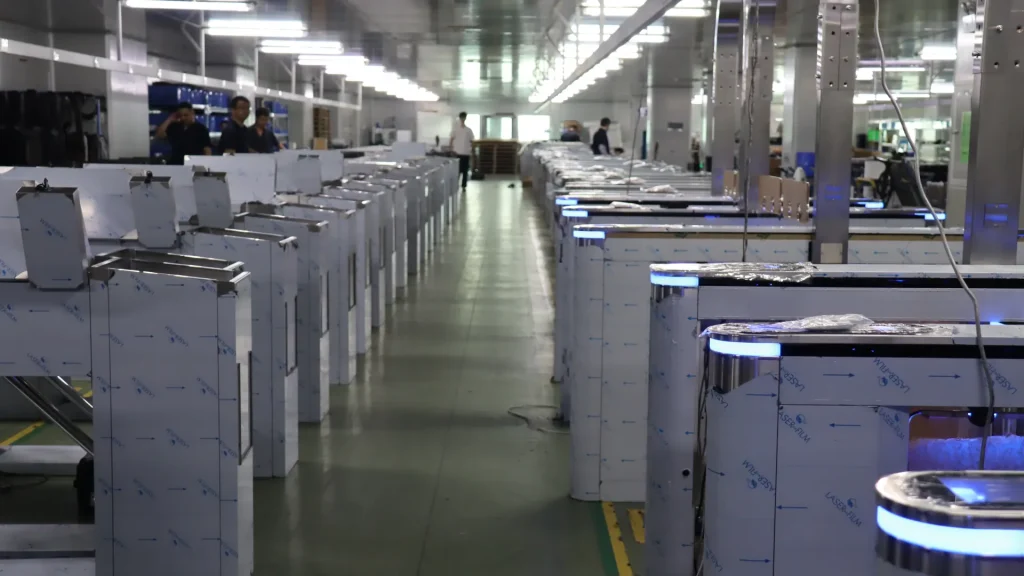
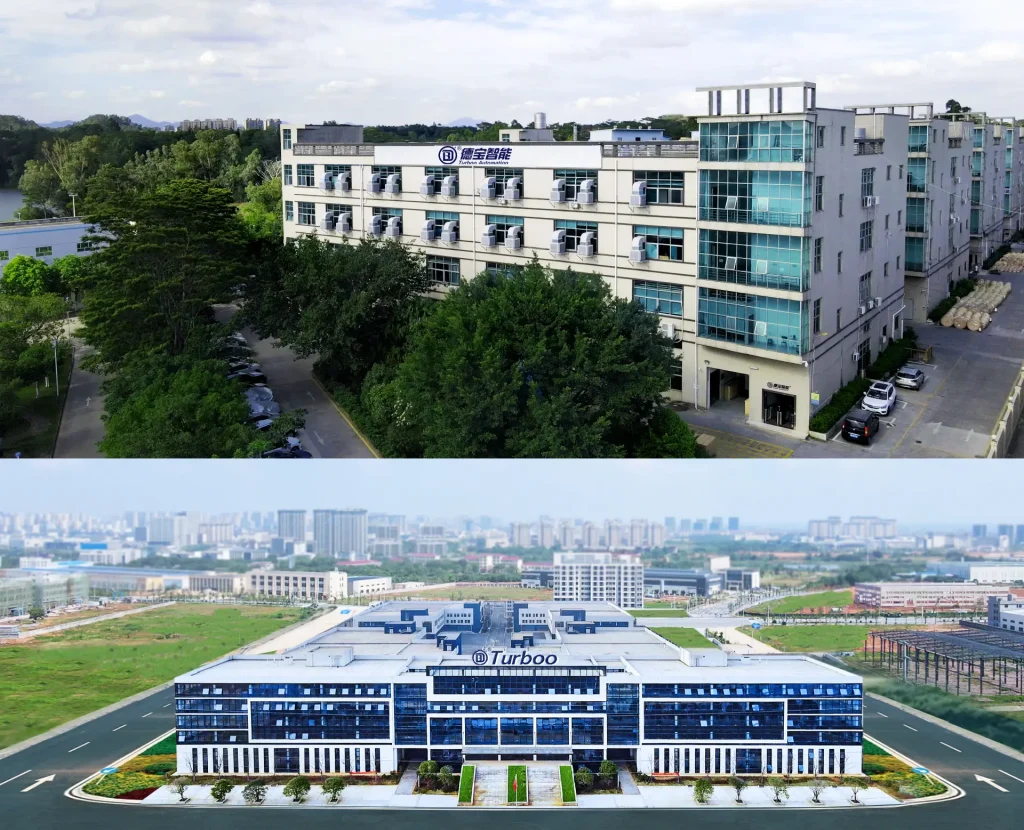
Image suggestion: Real factory production-floor photos / R&D team working scenes.
02. Does the Supplier Really Have ODM Capability?
Over the years, TURBOO has worked with many customers, and one of the most common issues is this: “Many suppliers say they can provide ODM, but once the project starts, they cannot actually deliver it.”
In reality, changing a logo, changing a color, or adjusting dimensions does not constitute true ODM. True ODM capability means that after receiving a customer's requirements, the supplier can complete the entire development process, including:
- Requirement analysis
- Structural design
- Prototype development and validation
- Reliability testing
- Mass-production introduction
The real test is the supplier's R&D system—not simply its production capacity.
How can you evaluate it?
- Does the supplier have structural engineers?
- Does it have industrial design capabilities?
- Does it have a formal prototype validation process?
- Can it provide independently developed project examples?
03. Are You Focusing on Functions While Overlooking Manufacturing Precision?
During project tenders, buyers usually focus on questions such as:
- What identification methods does the turnstile support?
- What system interfaces are available?
- What functions are included?
But far fewer buyers ask about the manufacturing details behind the product:
- What is the enclosure joint gap?
- What welding process is used?
- How are assembly tolerances controlled?
In practice, these seemingly minor details can determine the condition of a turnstile gate several years after installation. For high-end projects, the equipment must not only work at handover—it should remain stable, precise, and visually consistent for years.
Why does this matter? An enclosure joint gap of 0.3 mm versus 1 mm affects more than appearance. It can also influence water resistance, dust resistance, and assembly consistency.
When evaluating a turnstile manufacturer, pay attention to:
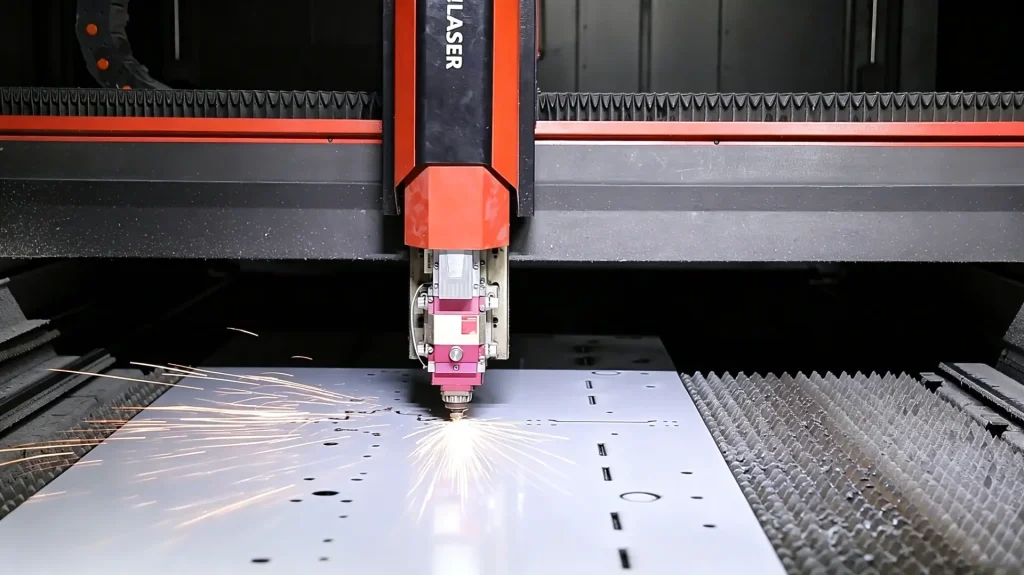
- Laser cutting accuracy
- Assembly tolerance control
- Consistency of surface finishing
04. Does Turnstile Service Life Really Depend Only on the Motor?
Many buyers assume that turnstile service life mainly depends on the motor. However, TURBOO's project experience shows that structural engineering is often underestimated.
Key factors include:
- Flatness control of the movement mounting plate
- Concentricity control of the transmission system
- Structural rigidity and load-bearing design
These factors directly influence:
- Smoothness of operation
- Noise control
- Long-term mechanical wear
In many projects, abnormal noise, sticking, or gate-arm misalignment that appears later is not caused by the motor itself, but by structural or transmission issues.
When evaluating a supplier, consider:
- Life-cycle testing standards, such as MTBF
- Structural load-bearing capability, such as cabinet load capacity
- Durability of key components, including bearings, motors, and transmission parts
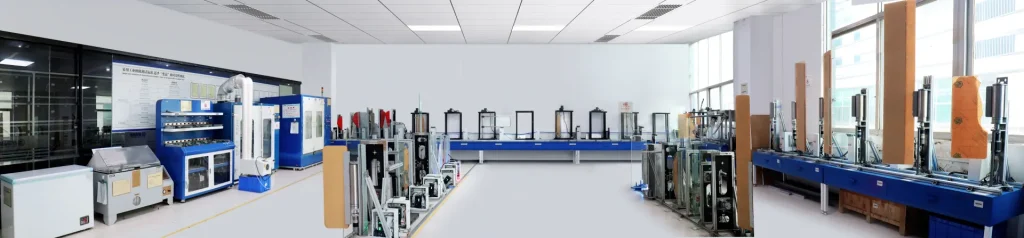
05. Have You Evaluated Environmental Adaptability?
Different projects face completely different environmental challenges.
- Hospitals: hygiene and antibacterial performance
- Airports: high-frequency operation and reliability
- Coastal projects: salt-spray corrosion resistance
- Scenic areas: water and dust protection
If these conditions are not considered during the early project stage, problems later on are almost inevitable.
Why does this matter?
The same turnstile gate can have a service life that differs by several times between an indoor environment and a coastal environment.
When evaluating environmental adaptability, pay attention to:
- Salt-spray test rating, such as ≥500 hours
- IP protection rating, such as IP54 or IP66
- Surface treatment options, including antibacterial coating, fingerprint-resistant finishing, and outdoor powder coating
06. Is the After-Sales Service System Actually Practical?
Many customers ask during procurement: “Do you provide after-sales service?” But the more important question is: “If a problem occurs, how quickly can it be resolved?”
After a turnstile system goes into operation, many issues are not caused by hardware failure. They may involve parameter adjustment, system commissioning, remote diagnosis, or software upgrades. If a supplier lacks a mature technical support system, project maintenance costs can continue to increase.
When evaluating after-sales capability, consider:
- Does the supplier support remote diagnosis, such as through a cloud platform?
- Is there a structured spare-parts supply system?
- Is there a dedicated technical support team with defined response times?
07. Are You Looking for a Supplier — or a Long-Term Partner?
For many system integrators and distributors, one project is not the end of the relationship. It is the beginning of a partnership. Therefore, what matters is not only whether the current project can be delivered successfully, but also:
- Can the supplier continue developing new products in the future?
- Can it support additional application scenarios?
- Can it continuously upgrade products as the market evolves?
Long-term partnership capability often determines how far both sides can go together.
Why does this matter?
A successful project does not automatically mean a successful long-term partnership. A strong partner should have:
- Continuous R&D capability
- Product upgrade capability
- Stable supply-chain capability
- Long-term service capability

When evaluating a long-term turnstile manufacturing partner, also consider:
- Company history and development track record
- Product iteration capability
- R&D investment
- Global service capabilities, including overseas project experience
What Are Mature Customers Really Buying?
After years in the industry, TURBOO has noticed an interesting pattern: the more experienced the customer, the less likely they are to focus only on price. They understand that the biggest project cost is often not the initial purchase price, but the operating and maintenance cost that follows.
They are more concerned about questions such as:
- Can the equipment operate reliably for five years?
- Can it remain reliable for ten years?
- Will someone take responsibility when problems occur?
- Can the project be expanded in the future?
These questions are far more important than having a few extra features on a specification sheet.
Therefore, when selecting a turnstile gate supplier, look beyond product specifications and evaluate:
- Manufacturing capability
- ODM capability
- Structural reliability
- Environmental adaptability
- After-sales service system
- Long-term partnership capability
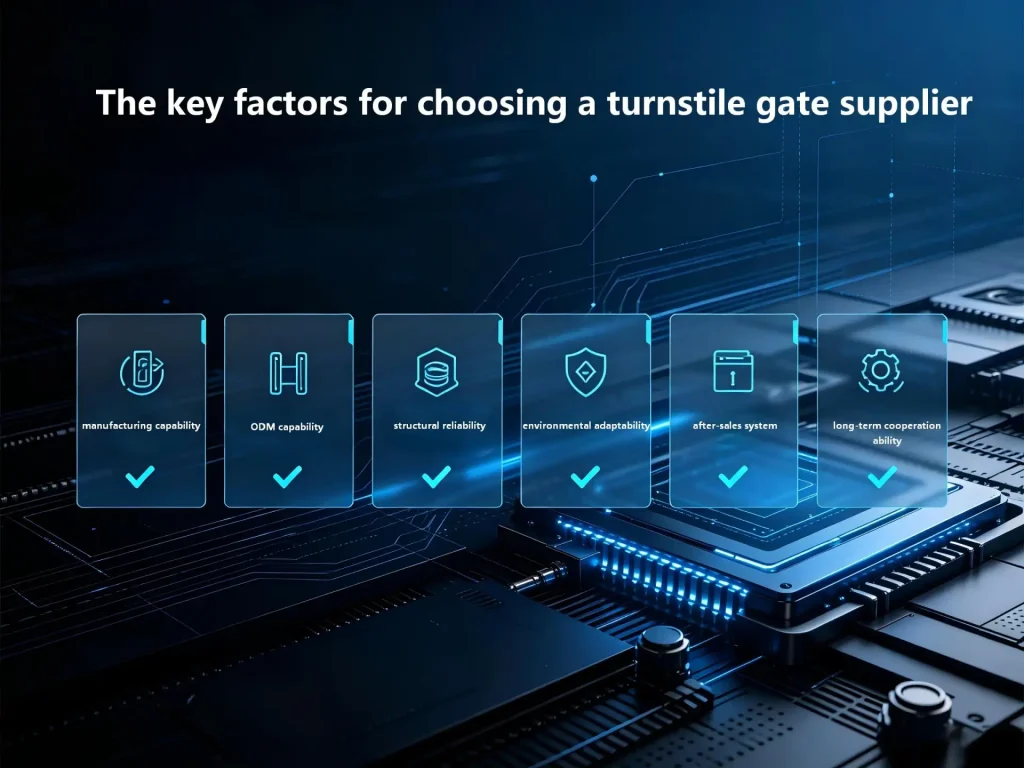
These factors often have a greater influence on the final success of a project than the equipment itself.
A Turnstile Project Is More Than the Purchase of Equipment
For a turnstile gate project, you are not simply purchasing a piece of equipment. You are choosing a partner that can support the project throughout its entire lifecycle. From project planning, product development, and manufacturing to installation, commissioning, and ongoing maintenance, every stage can affect the final outcome. A reliable turnstile manufacturer should provide more than products. It should provide:
- Stable manufacturing capability
- Mature project experience
- A long-term, reliable service system
This is also what an increasing number of large-scale projects and international customers consider when evaluating turnstile suppliers.
If you are currently evaluating turnstile suppliers or preparing for your next tender, TURBOO can provide practical supplier-evaluation materials based on manufacturing capability, ODM experience, after-sales support, and project references.
Contact us : https://www.turbooturnstile.com/contact/
Share on Social: