


Student Access Turnstile: From School Gate to Dormitory, A Complete Campus Guide

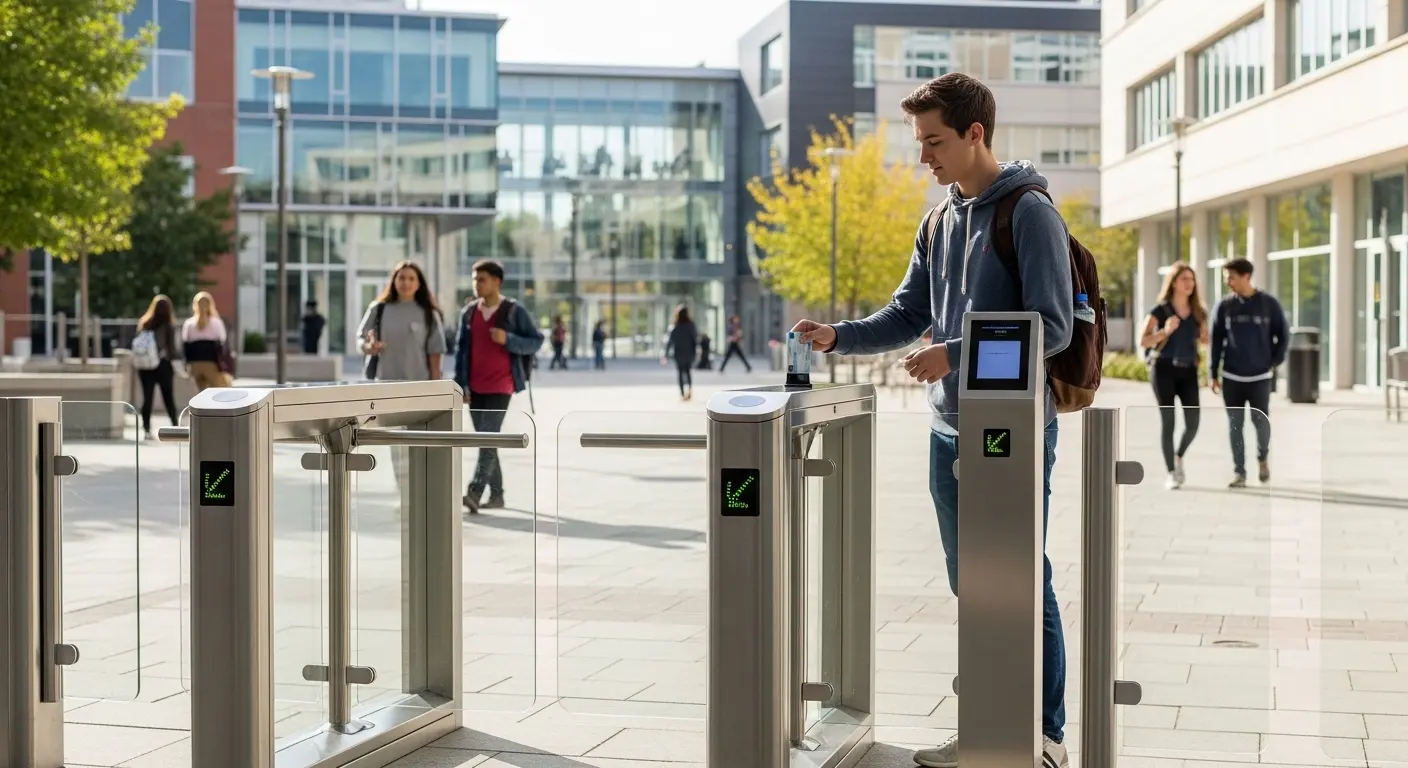
A student access turnstile manages credentialed access across every zone a student moves through during their day — not just the front gate. Bottlenecks at the main entrance, unauthorized visitors entering campus, and manual attendance records that miss critical data are daily problems at schools and universities worldwide. This guide addresses all three.
We cover every campus zone: main gate, dormitory, library, sports center, and canteen. Each zone has different throughput, security, and credential requirements. Choosing the wrong hardware for the wrong zone creates new operational problems. For a full view of Turboo's purpose-built campus gate hardware, explore our school entrance turnstile range as a starting point.
Whether you manage a K-12 school or a large university, this zone-by-zone guide helps you specify the right system with confidence.
Why Student Access Is Different From Standard Access Control
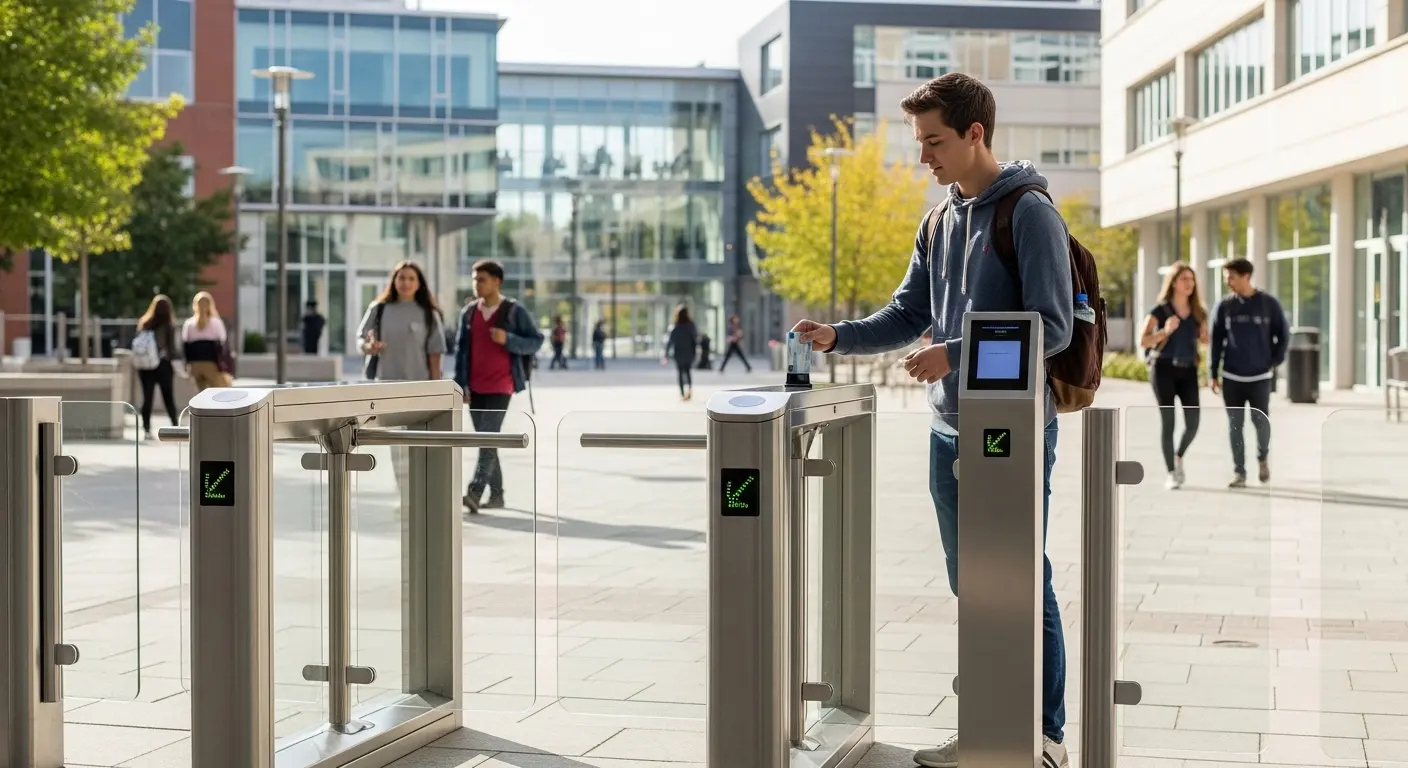
Student access control is not simply "commercial access control in a school building." The requirements are fundamentally different. Treating them as identical leads to poor specification decisions and costly rework.
The Multi-Zone Challenge
Students pass through four to six distinct controlled zones every single day. These include the main gate, the canteen, the library, the sports center, the dormitory, and restricted labs or admin areas. Each zone has different throughput demands, noise tolerances, weather exposure levels, and security grades. Therefore, a single-product solution cannot serve all of them equally well.
Credentials, Visitors, and Compliance
Student credentials are enrolled at the institutional level — tied to a student information system, not just a standalone access database. Visitors, parents, and contractors must pass through the same physical entry points alongside students. Additionally, K-12 environments must meet child safety requirements that adult workplaces simply do not face.
| Factor | Student Access | Standard Commercial Access |
|---|---|---|
| Daily zones accessed | 4–6 per student | Typically 1–2 |
| Credential system | Student information system | Security database only |
| Visitor management | Parents, contractors, guests | Visitors only |
| Child safety requirements | Required (K-12) | Not applicable |
| Attendance tracking | Compliance-level requirement | Optional |
Campus Zone Guide: Which Student Access Turnstile Belongs Where?
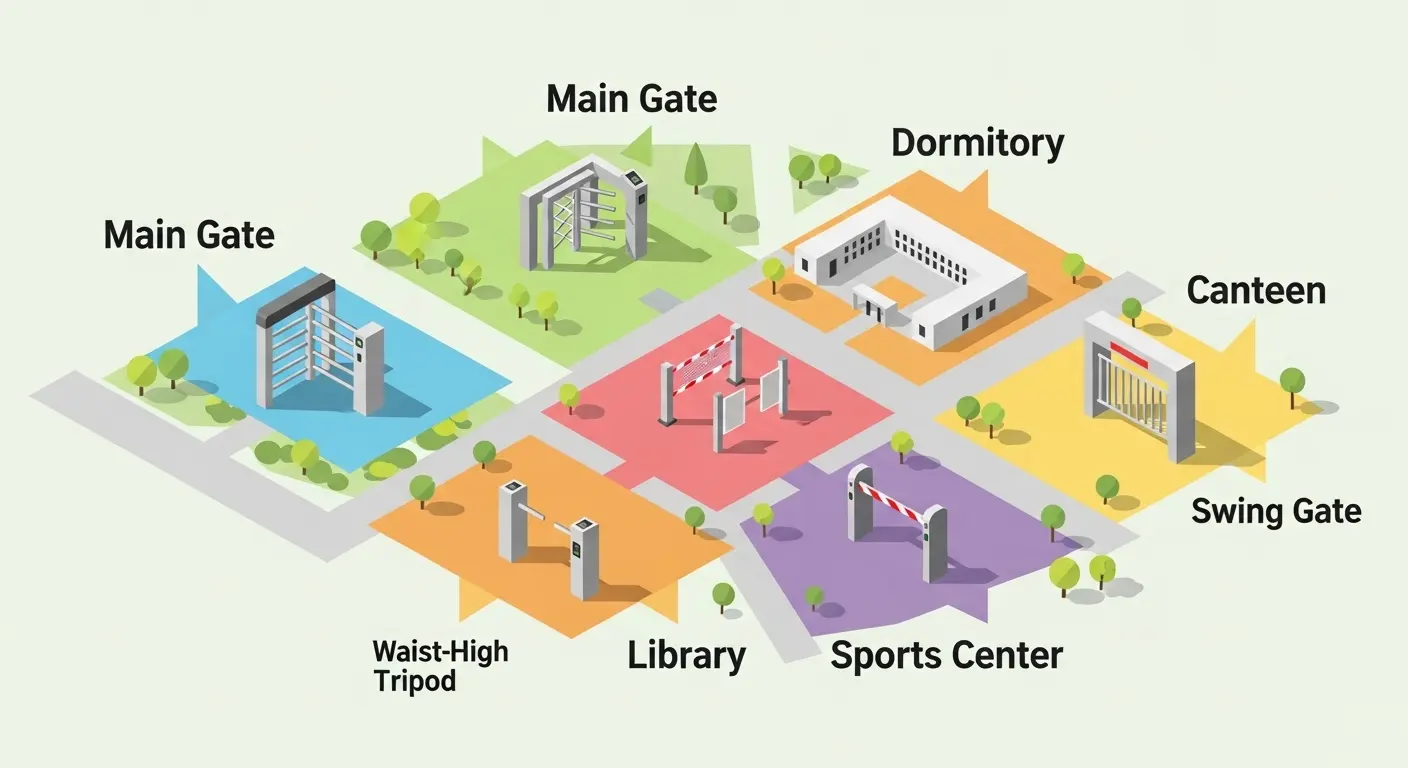
The right student access turnstile depends entirely on the campus zone. There is no single correct answer for an entire campus. Every procurement decision should therefore start with a zone map — not a product list.
Main Entrance and School Gate
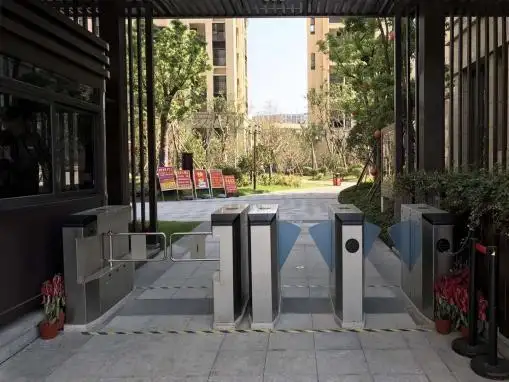
The main gate is the highest-traffic point on any campus. It handles more than 2,000 people per hour during peak arrival times, based on Turboo Smart Campus deployment data. Consequently, this zone requires the highest-throughput hardware available.
Swing gates or wide-passage flap barriers are the correct choice here. They accommodate bicycles and e-bikes alongside pedestrians. They also support multiple credential types simultaneously and withstand outdoor exposure. An IP65 minimum rating is required for open-air installations. For swing gate options suited to campus entrances, see Turboo's optical swing turnstiles range.
Dormitory and After-Hours Access
Dormitory gates operate in a completely different mode. Throughput is lower, but curfew enforcement logic becomes critical. Silent operation — below 40dB — is a priority because these gates activate throughout the night.
Flap barriers are ideal for dormitory corridors. They process 30–35 students per minute and support NFC mobile credentials. They also integrate directly with student affairs platforms to generate curfew compliance reports automatically. Explore Turboo's flap barrier access options for dormitory-specific configurations.
Library, Canteen, and Sports Center
These indoor zones require a different logic again. Libraries need quiet operation and integration with library management systems. Canteens often require payment or meal plan validation at the gate. Sports centers may operate on membership or timetable-based access windows.
Tripod turnstiles or compact flap barriers serve these moderate-volume indoor zones well. They cost less than full swing gates, require minimal floor space, and integrate easily with third-party management systems. See Turboo's full tripod turnstile range for indoor campus zone applications.
K-12 vs. University: Why Configuration Differs
K-12 schools face stricter child safety requirements. Anti-pinch sensors are mandatory where young children may hesitate mid-passage or reach back through an arm. Passage speeds must be slower, and arm heights need adjustment for smaller students. Furthermore, parent notification integration — alerting a parent's phone when their child enters or exits — is a common K-12 requirement that university campuses simply do not need.
Universities handle significantly higher daily volumes with more complex multi-building zone structures. Wide passage gates accommodate cycling students. After-hours access windows for labs and libraries require time-zone scheduling logic. Multi-site campus networks need centralized access management across buildings. As a result, the hardware specification and software integration requirements are substantially more complex at university level.
Student Credential Options: ID Card, NFC, Facial Recognition, and QR
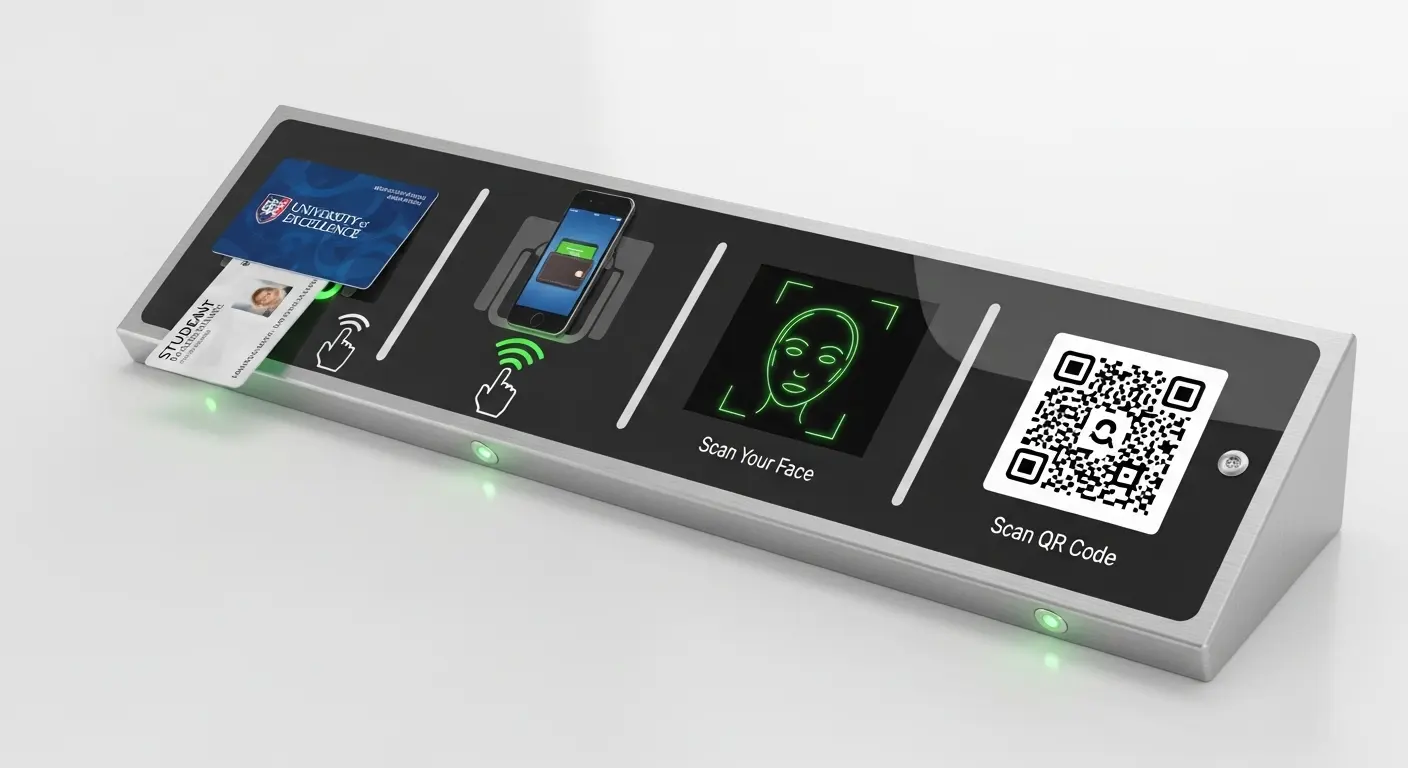
The credential type you choose determines your system's security level, daily convenience, and integration path. Match the technology to your student population and to what your existing infrastructure can support.
In our experience across campus deployment projects, the most common specification error is selecting a credential type that the school's IT system cannot actually integrate with. Confirm your SIS compatibility before choosing hardware — not after.
Comparing the Four Main Credential Types
| Credential | Speed | Security | Best Campus Zone |
|---|---|---|---|
| Student ID Card (RFID/IC) | Fast | Medium | Main gate, canteen, gym |
| NFC Mobile | Fast | Medium-High | Dormitory, library |
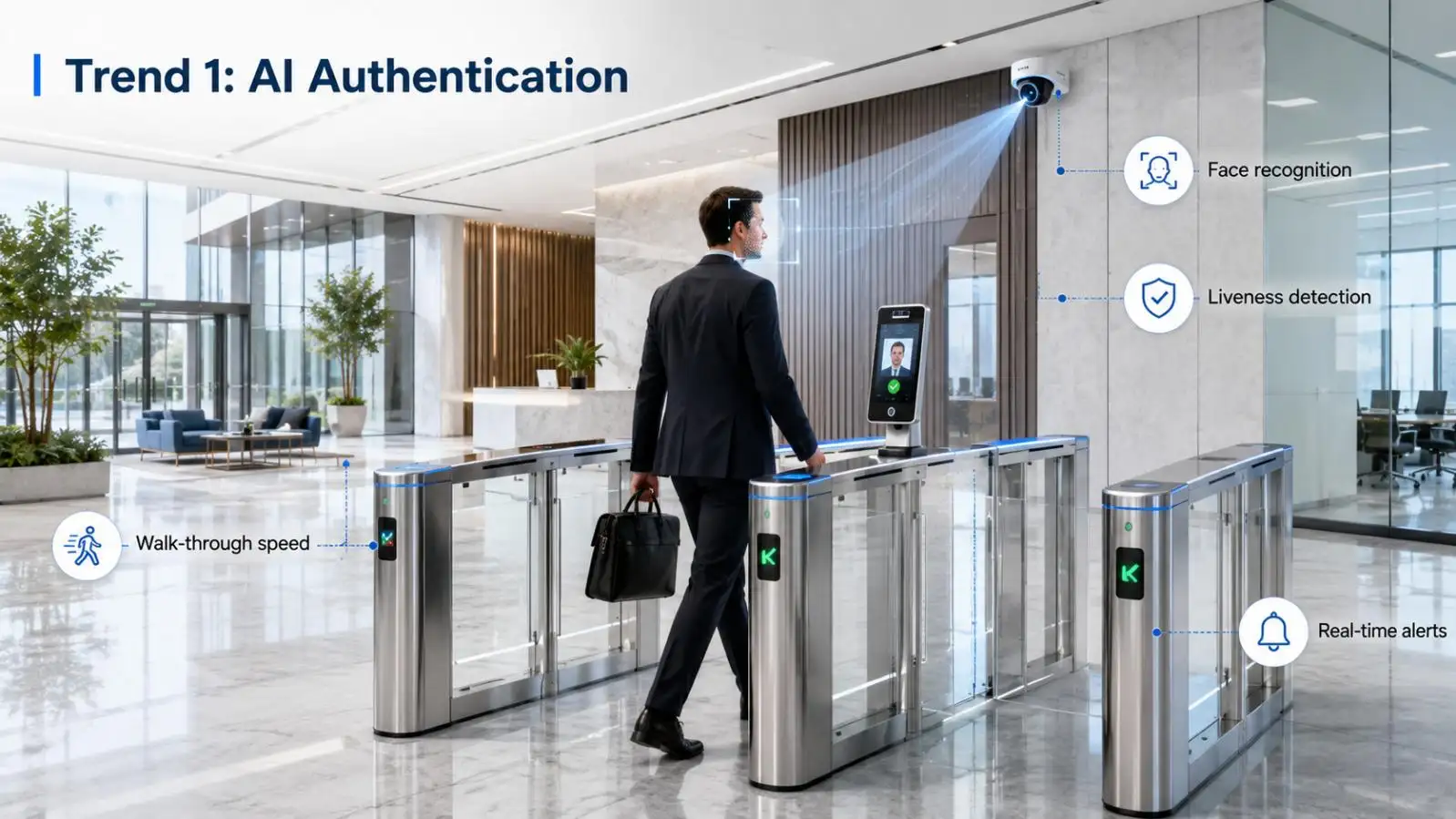
| Facial Recognition | Very Fast (≤300ms) | High | Main gate, dormitory, labs |
| QR Code | Moderate | Low-Medium | Visitor/parent access, events |
Facial recognition is the fastest and most secure option for high-volume zones. It identifies a student in under 300ms with an accuracy rate above 99%, based on published campus gate specification data. Additionally, it eliminates buddy-scanning — where one student taps another student's card. For RFID-integrated campus gate options, see Turboo's RFID tripod turnstile range.
Multi-Modal Configurations for High-Security Zones
Sensitive areas — server rooms, science labs, and admin offices — benefit from two-factor entry requirements. A student presents their ID card and their fingerprint at the same gate. This approach is common in university research facilities where equipment or data security justifies the added step.
Student Attendance Tracking and System Integration
A student access turnstile tracks attendance automatically. Every gate event generates a timestamped record tied to the student's enrolled ID — with zero manual input required from staff.
According to Turboo Smart Campus deployment data, data utilization in decentralized campus management systems falls below 35% without integrated access control. Connecting turnstiles to a unified platform solves this fragmentation immediately and cost-effectively.
How Attendance Data Flows
Here is the standard integration path for a campus deployment:
- Student scans their credential at any campus gate.
- The controller logs the entry: student ID, timestamp, and zone.
- Data exports via RS485, TCP/IP, or open API to the attendance platform.
- The student information system or LMS receives and processes records in real time.
- Automated alerts trigger if a registered student fails to scan in during scheduled class hours.
This workflow eliminates paper registers and the staff time spent managing them. As a result, attendance disputes resolve in seconds with verified, timestamped data. For a full overview of Turboo's campus integration capabilities, visit the smart campus solutions page.
Visitor and Parent Access Management
Visitors and parents need a parallel credential track alongside regular student access. Temporary QR codes — generated at reception and time-limited to the visit window — grant access through the same gate hardware without permanent enrollment.
Parent pickup scenarios use pre-registered parent profiles linked to a student's record. The gate opens only during the authorized pickup window. Contractor credentials work the same way: time-limited access that expires automatically, with no manual revocation needed.
Anti-Tailgating and Safety in School Environments
Tailgating — where an unauthorized adult follows a student through an open gate — is the most common unauthorized entry method at school campuses. The Security Industry Association identifies tailgating as a primary failure point in access control programs across educational facilities.
Physical Barriers That Prevent Tailgating
The mechanical design of flap barriers and swing gates physically prevents two-person passage on a single credential. Each arm or panel cycle admits one person, then closes immediately. There is no gap. Therefore, an unauthorized follower cannot pass through without triggering an alarm.
Additional safety mechanisms include:
- Anti-reverse function: The gate cannot be pushed backward to allow entry through the exit lane
- CCTV integration: Each gate event triggers automatic image capture for incident documentation
- Anti-pinch sensors: Required for K-12 installations where young children may hesitate mid-passage
- Fire alarm integration: Arms release automatically when linked to the building's fire panel — required under most national fire safety codes
IP Rating and Outdoor Durability
Outdoor school gates face rain, dust, temperature extremes, and direct sunlight. Based on Turboo's campus deployment data, non-IP-rated outdoor gate equipment has an average annual hardware failure rate of 12.7%. IP65 is the minimum rating for open-air school installations. IP67 is recommended in high-rainfall regions.
Direct sunlight also causes false sensor triggers on standard infrared sensors. Anti-sunlight matrix infrared distribution — standard on commercial-grade outdoor gates — eliminates this problem entirely.
Outdoor Requirements for School Gate Turnstiles
Outdoor student access turnstile installations must meet specific hardware standards. Meeting these standards at the specification stage avoids costly replacement within the first two operating years.
Key Outdoor Specification Checklist
- IP rating: IP65 minimum; IP67 for high-rainfall climates
- Housing material: 304 stainless steel for standard environments; 316-grade for coastal or high-humidity locations
- Operating temperature: -40°C to +60°C for year-round operation in varied climates
- Anti-sunlight infrared: Matrix distribution to prevent false sensor triggers in direct sun
- Passage width: Standard 550–600mm for pedestrians; expandable to 1,000–1,200mm for bicycle access at university gates
- Standby power consumption: ≤2.8W — Turboo's campus gate models consume 55% less energy than traditional equipment in standby mode
These specifications apply to main gate and outdoor zone installations. Indoor zones — dormitories, libraries, and canteens — do not require IP-rated housing but still benefit from 304 stainless steel for hygiene and long-term durability. The ASIS International Physical Security Standards provide detailed guidance on outdoor access control equipment requirements for educational facilities.
Choosing the Right Student Access Turnstile: A Quick Decision Framework
Most campus access control mistakes happen at the planning stage. Administrators select a product before mapping their zones. However, following a structured process eliminates the most common and costly errors.
Six-Step Specification Process
- Map every campus zone that needs access control — not just the front gate. List each zone, its daily volume, and its operating hours.
- Identify your credential infrastructure. Confirm what your student information system supports before selecting any hardware.
- Assign indoor vs. outdoor to each zone and match IP rating requirements accordingly.
- Calculate throughput per zone. Divide peak students per hour by 30 to find your minimum lane count.
- Confirm your integration path — RS485, TCP/IP, or API — with your IT team before issuing a specification document.
- Apply K-12 safety requirements if applicable: anti-pinch sensors, slower arm speeds, child-height adjustments, and parent notification integration.
Additionally, plan for future zones during the initial deployment. Adding a new gate to an existing network costs significantly less than installing a standalone system later. For a complete campus deployment consultation, explore Turboo's smart campus turnstile solutions.
Frequently Asked Questions
Q1: What type of turnstile is best for a school entrance gate?
A swing gate or wide-passage flap barrier is best for a school entrance gate. These types handle high peak volumes — more than 2,000 people per hour — and come in IP65-rated outdoor configurations. They also support multiple credential types simultaneously. Tripod turnstiles are better suited to lower-volume indoor zones such as libraries and canteens. For the main student entry point, prioritize throughput capacity and outdoor durability above all else.
Q2: Can a student access turnstile track attendance automatically?
Yes. Every gate event generates a timestamped record tied to the student's enrolled ID. That data exports via RS485, TCP/IP, or open API directly to your school's attendance platform or student information system. No manual input is required at any stage. Automated alerts can also trigger if a registered student fails to scan in during scheduled class hours.
Q3: How do student access turnstiles prevent unauthorized adults from entering campus?
The mechanical gate design physically prevents tailgating. Each arm or panel cycle admits exactly one person, then closes immediately — leaving no gap for a follower. Additional protection includes anti-reverse arms that block entry through the exit lane, CCTV triggers on each gate event, and alarm outputs that activate on forced or unauthorized entry attempts.
Q4: Are campus turnstiles safe for young children in primary schools?
Yes, when specified with the correct child-safety features. K-12 installations require anti-pinch sensors that detect a hesitating child and stop the arm immediately. Passage speeds should be reduced at primary school gates, and arm heights need adjustment for smaller students. These configurations are standard on purpose-built school turnstile models. Always confirm child-safety compliance with your supplier before finalizing an order.
Q5: What happens to school turnstiles during a fire alarm or emergency evacuation?
Motorized turnstiles linked to a fire alarm panel release automatically during a fire alert, allowing free passage in both directions. This is called fail-safe mode. It is a compliance requirement under most national fire safety and building codes for educational facilities. Always confirm that your chosen model supports direct fire panel integration and automatic fail-safe arm release before final specification.
Conclusion
Three principles drive every successful student access turnstile deployment. Start with a zone map — not a product list. Match your credential technology to your existing student information system. Apply the correct outdoor specifications to every gate that faces weather or high-traffic volume.
A well-planned campus access system does more than stop unauthorized entry. It creates a real-time data layer connecting physical movement to attendance records, curfew compliance, and visitor management — automatically, across every zone, every day.
To plan your campus deployment zone by zone, explore Turboo's smart campus turnstile solutions or contact our access control specialists for a site-specific consultation.