


Security Turnstile Gate for Airports: Faster Passenger Entry

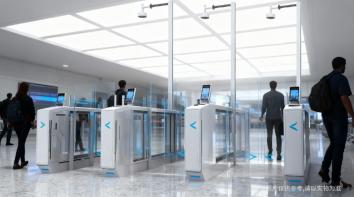
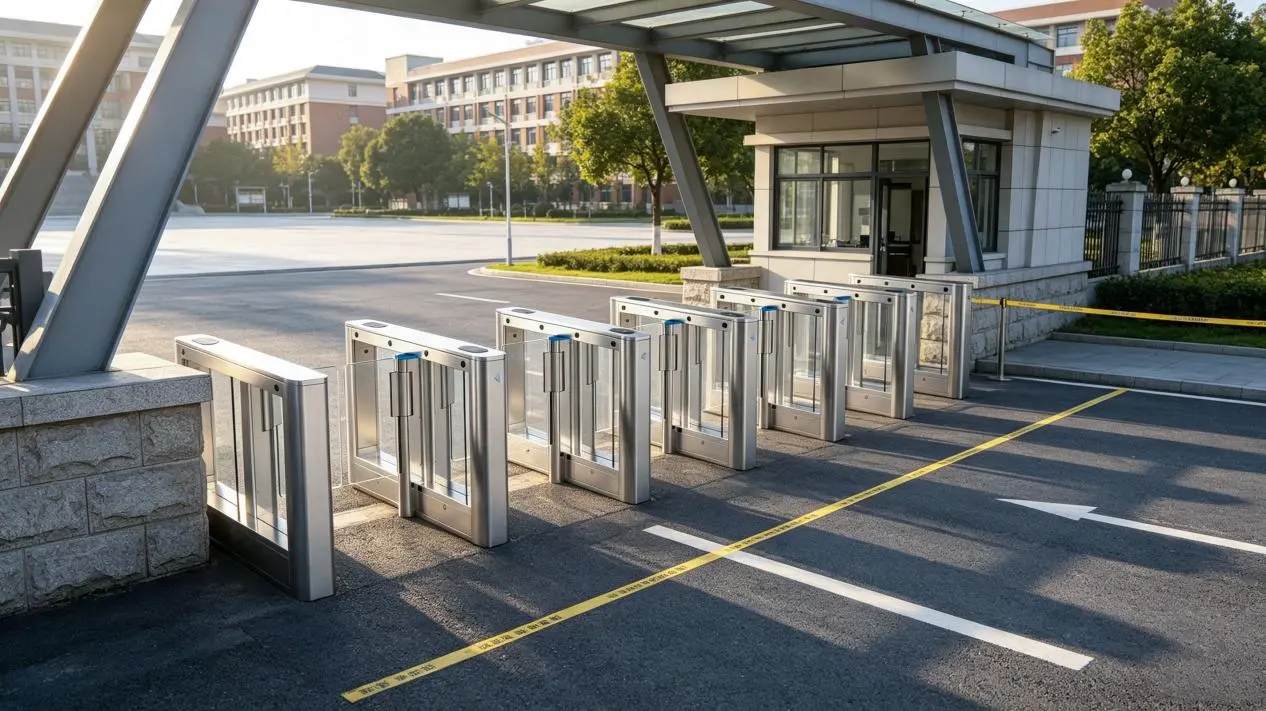
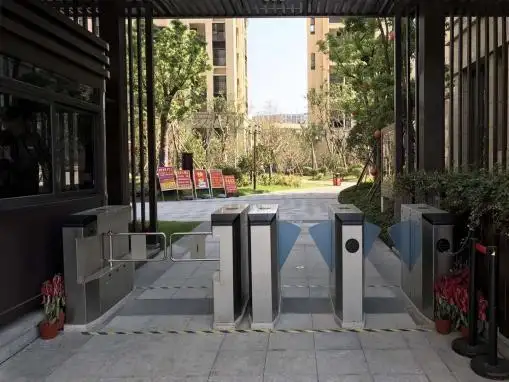
Security Turnstile Gate for Airports is one of the fastest ways to improve Faster Passenger Entry without expanding floor space or adding more frontline staff. From Turboo’s view, the real win is not "a gate that opens." It is a lane that keeps people moving even when travelers hesitate, carry luggage, or arrive in waves. When a self-boarding lane is designed correctly, it becomes a quiet traffic manager: it confirms permission, guides one person at a time, and prevents the small mistakes that usually create long queues.
What "Faster Passenger Entry" Really Means in Airport Lanes
In airports, speed is not only measured by how quickly a door swings open. The biggest delays happen in the "in-between seconds"—after a passenger is validated but before they actually pass through. People stop to check their phone, adjust bags, turn around to talk to family, or hesitate because the lane feels unclear.
A well-designed Security Turnstile Gate for Airports supports faster entry by doing three things at once:
✓ Clear decision: passengers instantly understand "approved" or "not approved."
✓ Stable rhythm: one passenger passes, then the next—without confusion.
✓ Fewer exceptions: less tailgating, fewer wrong-way moves, fewer half-entries.
When exceptions drop, staff interventions drop, and the lane stays smooth during peak hours.
Why Gate Logic Is the Hidden Engine Behind Faster Passenger Entry
Many operators try to solve queues by upgrading readers or adding signage. Those help, but they do not fix the core problem: passenger behavior is unpredictable. Faster passenger entry requires the lane to "expect" normal human mistakes.
Turboo designs the Automated Self-boarding Gates M3610 with practical control rules that keep flow moving. Instead of treating abnormal movement as rare, the lane is built to respond calmly and consistently.
This is why airports often see the biggest speed improvement after upgrading lane logic, not only the credential device. When the gate reacts the same way every time, passengers learn faster and move with less hesitation.
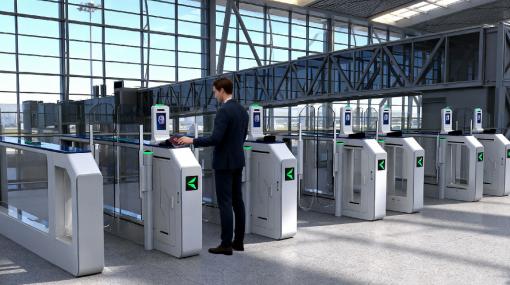
Turboo Automated Self-Boarding Gates M3610: Built for Smooth, Low-Noise Flow
The M3610 is designed for airport environments where high traffic is constant and user behavior is mixed. Its design priorities directly support faster passenger entry:
• Low noise operation keeps the lane comfortable and reduces perceived stress.
• Smooth operation reduces the "start-stop" feeling that makes people hesitate.
• Reliable structure and long service life reduce downtime events that instantly create queues.
In airports, a gate that fails or becomes inconsistent forces manual processing. Manual processing is slower by nature and creates uneven rhythm. Reliability is not only an engineering target—it is a throughput requirement.
Three Controls That Reduce "Queue Breakers" and Keep People Moving
To write about faster passenger entry honestly, we must talk about why queues break. Most queues break when the lane gets "confused" by passenger movement. M3610 uses core functions to prevent that confusion.
Anti-Tail: Keep One Person Per Authorization
Tailgating is not only a security risk—it is a throughput risk. When two people try to pass on one authorization, the lane must stop, alarm, or call staff. That interruption slows everyone behind them.
✓ Anti-tail helps prevent close-follow entry attempts, so the lane stays orderly.
The practical benefit for airports is less lane interruption, which keeps the line moving.
Anti-Reverse Pass: Stop Wrong-Way Movements That Create Bottlenecks
Reverse movement is common: a passenger is approved, steps forward, then steps back to talk or fix something. In a tight lane, this causes collisions and hesitation.
✓ Anti-reverse pass discourages wrong-way movement after authorization.
The benefit is clean direction control and fewer "back-and-forth" delays.
Automatic Reset: Fix the "Approved But Not Passed" Problem
One of the most common slowdowns is simple: a passenger is authorized, but does not pass. The lane stays in an uncertain state, and the next passenger does not know what to do.
✓ Automatic reset returns the gate to locked state if the passenger does not pass within the set time.
This protects faster passenger entry by restoring clear rules quickly—no guessing, no awkward pauses.
Card "With Memory" vs "Without Memory": Choose the Setting That Matches Flow
For faster passenger entry, small configuration decisions can have big results. M3610 supports card settings that can be set "with memory" or "without memory." This choice affects how the lane behaves when timing is imperfect.
With memory can support speed when passengers hesitate after a valid read. The lane can "remember" a valid authorization briefly, reducing repeat scans and preventing small delays from turning into a blockage.
Without memory supports strict rule enforcement, which may be preferred in some controlled zones. But in busy passenger-facing lanes, overly strict behavior can increase re-reads and hesitation if travelers are unfamiliar.
From Turboo’s project experience, the best approach is to treat this as a flow design tool. If your objective is faster passenger entry in public-facing lanes, "with memory" is often used to reduce friction, while still keeping control logic intact.
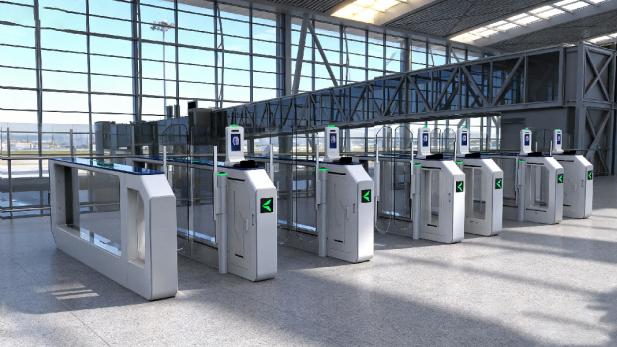
Safety and Compatibility That Protect Speed in Real Crowds
Faster entry must remain safe. If travelers feel the lane is risky, they slow down. If bags get stuck, the line breaks. M3610 includes features that support safe movement and reliable integration.
✓ Infrared anti-clip protection helps prevent pinch risk when the gate is open or running.
In practical terms, it supports smoother movement for passengers with luggage, children, or mobility needs.
✓ Compatible with IC/ID cards, scanning, and face recognition.
This matters because airports are upgrading. A Security Turnstile Gate for Airports should support future credential methods without forcing a full lane replacement.
When the lane integrates cleanly with existing systems, you avoid "handoff delays" where passengers are approved digitally but stuck physically.
Call-To-Action: Build a Faster Passenger Entry Pilot With Turboo
If your airport is targeting Faster Passenger Entry, start with the lane logic that reduces exceptions and keeps rhythm stable. Turboo can help you select working modes (open/closed), direction settings (one-way/two-way reading), and credential behavior ("with memory" vs "without memory") to match your real traffic patterns.
CTA: Contact Turboo to request a lane configuration proposal for the Automated Self-boarding Gates M3610 and a practical plan to improve throughput in your passenger entry zones.