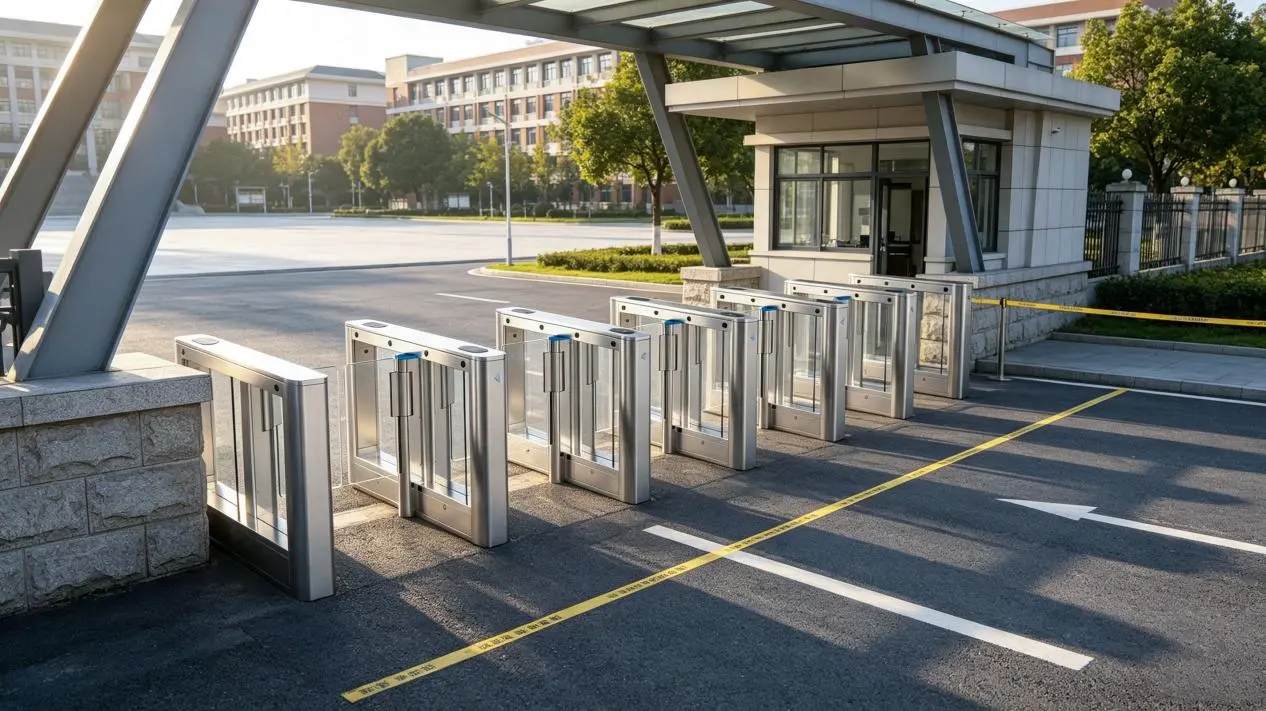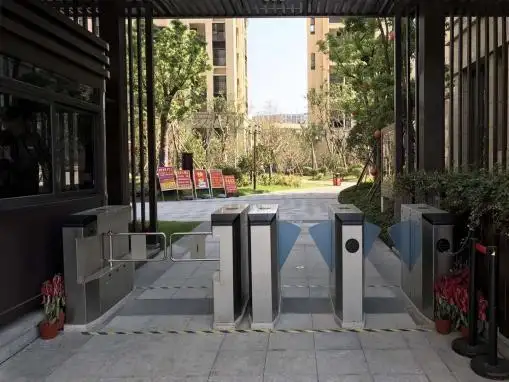



2026 Pedestrian Tripod Turnstile Guide: Choosing The Right Lane

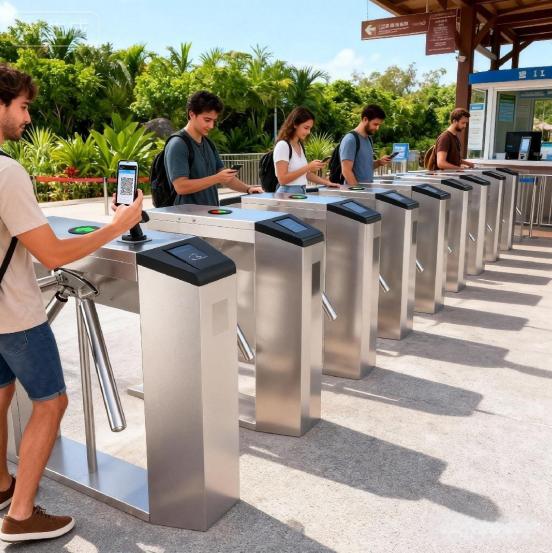
Pedestrian Tripod Turnstile selection in 2026 is no longer just about "a gate that opens." For most sites, the real question is simpler and more practical: which lane design will keep people moving smoothly while enforcing clear rules?
1) What a Pedestrian Tripod Turnstile "Lane" Really Means in 2026
When buyers hear "lane," they often imagine only the width of the passage. In real projects, a lane is a complete logic + hardware system: the tripod mechanism, the control board, the reader integration, indicators, and the physical layout around it.
At Turboo, we see many first-time users choose the wrong lane not because the product is bad, but because the lane behavior does not match the crowd pattern. A Pedestrian Tripod Turnstile lane should answer three beginner questions:
✓ Who enters and how often? (office staff, visitors, shift workers, students)
✓ What credential will be used? (RFID, QR, face, ticket, barcode)
✓ What must be prevented? (tailgating, reverse passing, misuse, confusion at peak time)
If you define these clearly, the "right lane" becomes obvious.
2) The Three Most Common Lane Types: Single, Bi-Directional, and Controlled One-Way
A Pedestrian Tripod Turnstile can be installed as single-direction or bi-directional. This choice is not just a software setting—it changes how people behave in front of the lane.
Single-direction lanes are best when you want the rules to feel simple and predictable. People walk up, present a credential, pass through, and the lane resets.
Bi-directional lanes can save space, but only if your site has good signage and stable user habits. Otherwise, two flows collide and slow each other down.
In many 2026 deployments, we recommend a "controlled one-way" strategy at peak hours: set lanes as entry-only in the morning and exit-only in the evening. This keeps traffic orderly without building extra lanes.
A helpful rule of thumb: if your users are mostly the same group every day, bi-direction can work. If your users change often (visitors, contractors, events), one-way lanes reduce mistakes.
3) Choosing the Right Lane Width and Cabinet Form Factor
A Pedestrian Tripod Turnstile is usually chosen because it is compact, durable, and cost-efficient. But the "standard" lane is not automatically right for every site.
In practice, lane width should consider clothing, carried items, and site culture. For example, winter coats, backpacks, or tool bags can make a narrow lane feel uncomfortable even if it is technically passable.
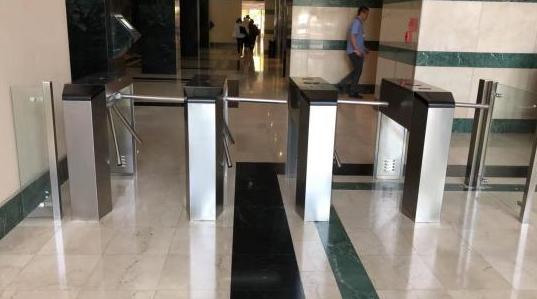
At the product level, the cabinet form factor affects stability and maintenance access. In modern projects, a stainless-steel cabinet remains the most common choice because it balances durability with appearance, especially for lobbies, campuses, and transit-like entries.
If your site has limited space, the tripod lane is often the easiest to fit. But if you expect frequent wheelchair access or large luggage, you should plan an adjacent accessible lane (for example, a swing gate) rather than forcing every user into one narrow passage.
4) Performance Basics That Matter More Than Beginners Expect
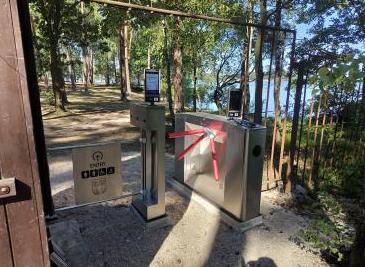
Most buyers ask first about speed. Speed matters, but only when it is stable under real usage. A Pedestrian Tripod Turnstile lane must keep a consistent rhythm: authorize → unlock → pass → reset.
Instead of chasing the highest theoretical throughput, focus on these practical performance points:
✓ Stable unlocking and re-locking during continuous traffic
✓ Clear indicators (arrow, red/green, audible prompts if needed) to reduce hesitation
✓ Controlled reset logic so the lane does not "double count" or stay open after abnormal behavior
From a manufacturer view, the lane performs best when it is paired with a clean layout: enough approach distance, clear signage, and a reader position that feels natural. Many "slow lane" complaints are actually layout problems, not turnstile problems.
If you want a measurable way to think about flow: in real environments, a well-configured tripod lane often supports about 20–30 persons per minute when user behavior is consistent (for example, staff tapping cards during peak entry). The real limiting factor is usually credential presentation time, not the tripod mechanism itself.
5) Security Logic: What You Can Prevent With the Right Lane Rules
A Pedestrian Tripod Turnstile is popular because it creates a physical rule: one person per authorization. But the "right lane" is the lane that enforces your rule without annoying normal users.
Here are common issues and the lane settings that help:
✓ Tailgating: use anti-tailgating logic, timeout windows, and clear alarms
✓ Reverse passing: enable anti-reverse passing so users cannot backtrack through the same lane after authorization
✓ Credential confusion: configure "valid once" logic so one credential triggers one passage only
✓ Crowd pressure at peaks: add a buffer zone and consider controlled one-way lanes
For many 2026 sites, security is not about being harsh—it is about being consistent. If users understand the rule in three seconds, they follow it naturally. That is why we emphasize indicators, lane discipline, and clean reset logic.
6) A Simple 2026 Buyer Checklist and a Practical CTA
If you are choosing a Pedestrian Tripod Turnstile lane for the first time, you do not need a long specification sheet to start. Simple steps:
• Decide direction: entry-only, exit-only, bi-directional
• Size capacity: peak flow and busiest 15-minute window
• Choose access: RFID, QR, ticket, face recognition
• Provide accessibility: add an alternate path/bypass
• Align layout: approach path, signage, reader location
• Set protections: anti-tailgating, anti-reverse, timeout
Turboo can turn these into action. Send site type, peak-hour pattern, and credential plan, and we’ll recommend lane setup and hardware to fit your site.
CTA: If you are planning a 2026 upgrade, message Turboo for a lane recommendation + layout suggestions. We can provide a practical proposal that explains which Pedestrian Tripod Turnstile lane works best, how many lanes you need, and how to set the rules so your entry stays smooth and secure.