


Fare Control Tripod Turnstile: Complete Buyer's Guide for Transit & Venues

A fare control tripod turnstile is the most cost-effective physical barrier for enforcing paid access in transit stations, stadiums, and public venues. If your facility loses revenue every day because people walk through without paying — this guide is for you.
Fare evasion costs transit systems worldwide billions of dollars annually. The fix isn't more guards. It's a proven mechanical gate that makes free entry physically impossible. That's exactly what a fare control tripod turnstile does — and it does it for a fraction of the cost of alternatives.
Here's everything you need to know before you buy.
What Is a Fare Control Tripod Turnstile?
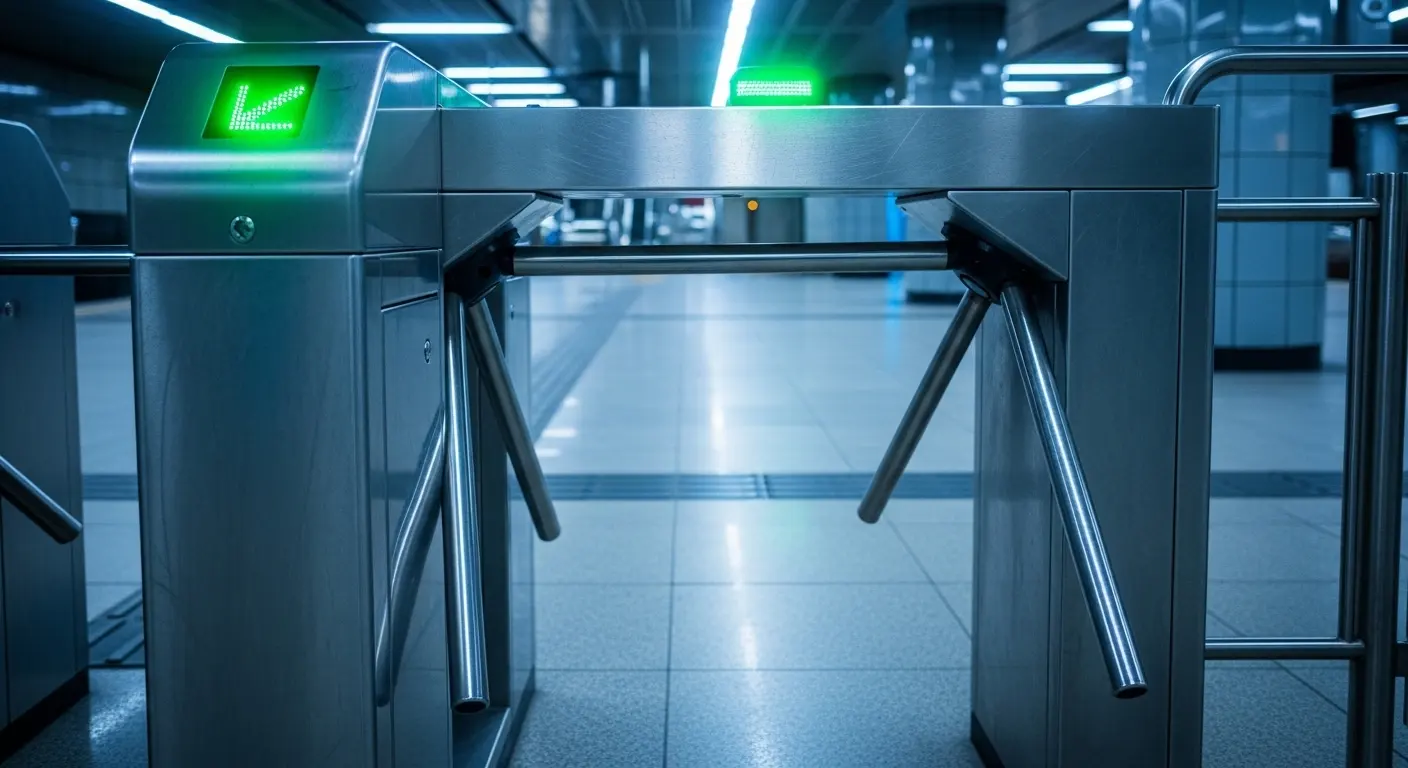
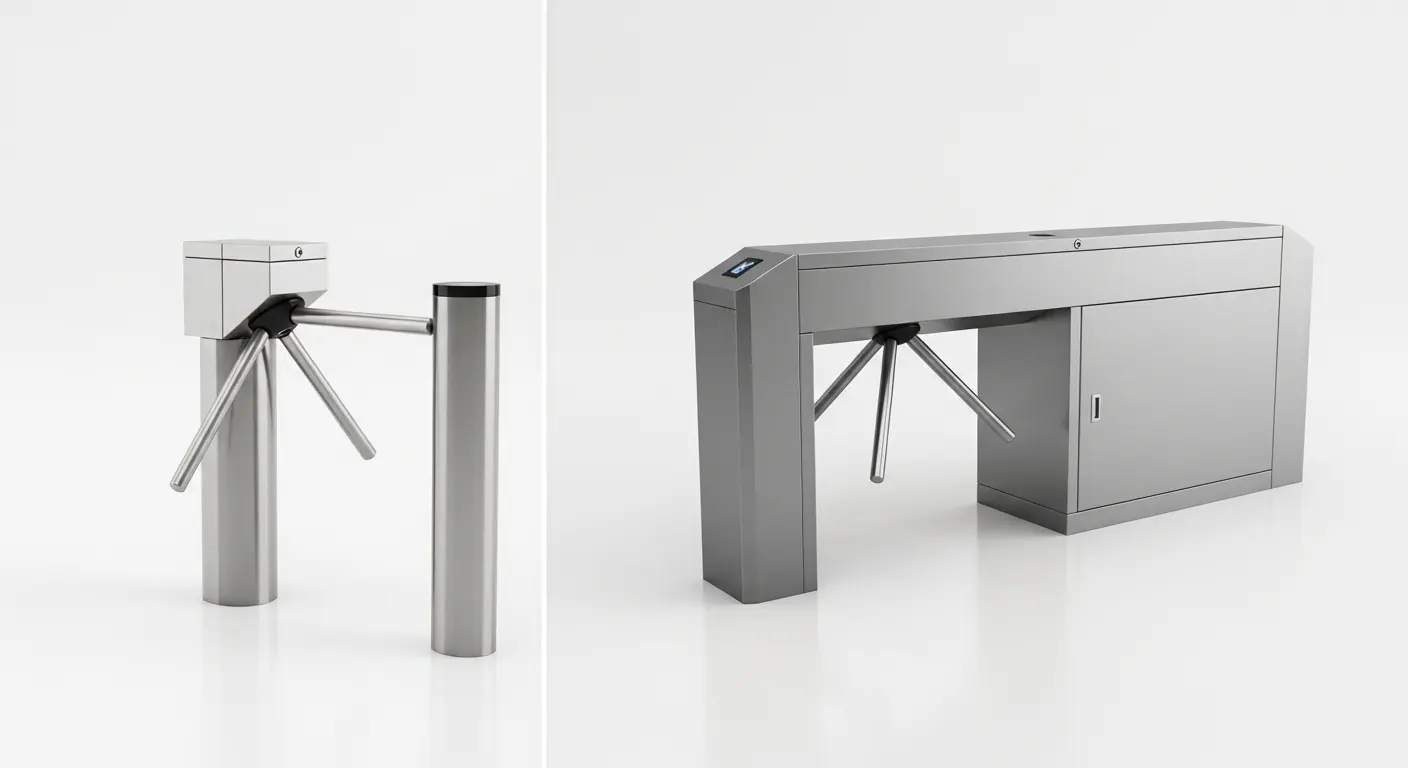
A fare control tripod turnstile is a waist-high access gate fitted with three stainless steel arms arranged 120 degrees apart. It allows exactly one person to pass per valid credential — whether that's a transit card, QR code ticket, barcode, or biometric scan.]
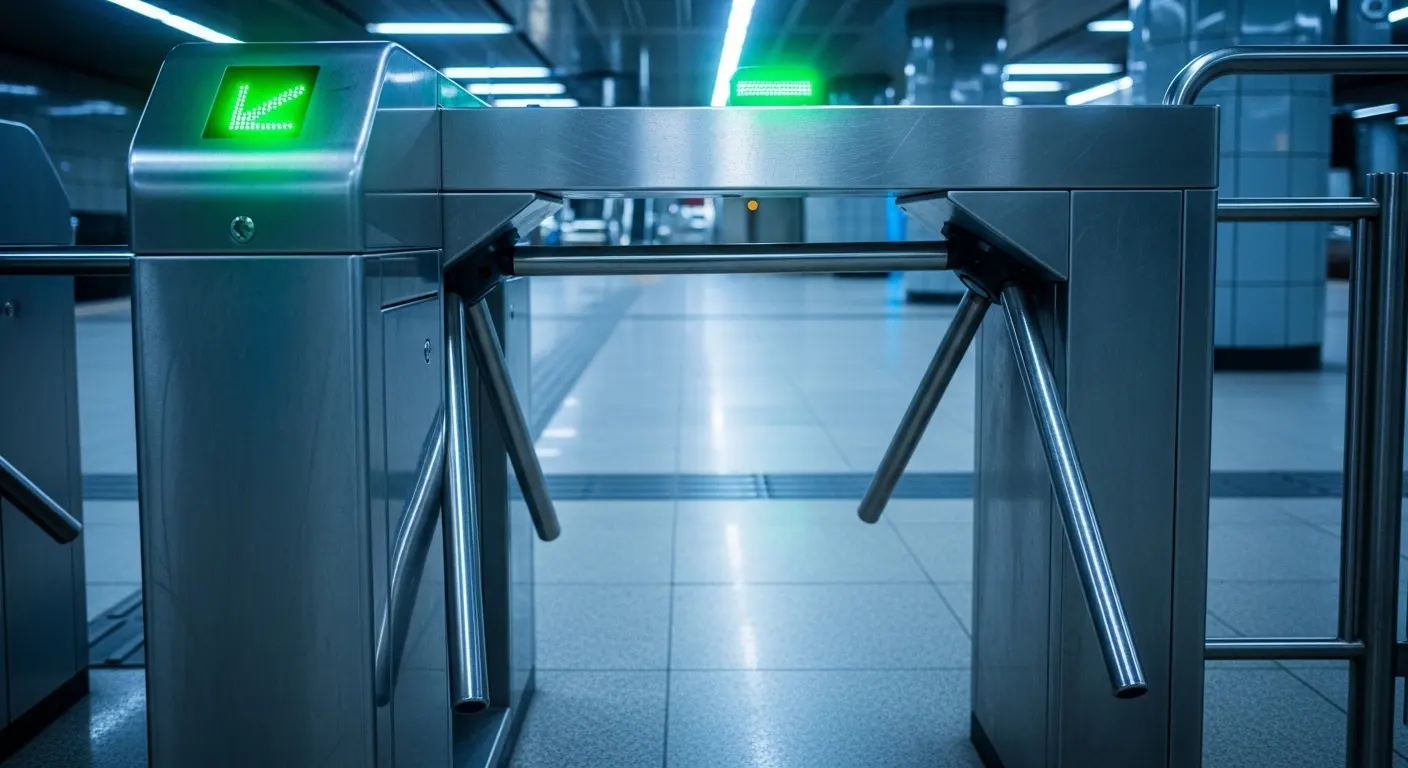
The key word here is physical. Unlike a camera-based system or an alert that triggers after someone passes, the tripod arm blocks passage completely until authorization is confirmed. There is no gap, no squeeze-through, and no tailgating — because the arm physically cannot rotate without a valid signal.
Transit operators and venue managers choose the fare control tripod turnstile for three reasons: it's the most affordable motorized gate on the market, it requires minimal maintenance, and it integrates with virtually any ticketing system already in use.
How Fare Control Actually Works - Step by Step
Understanding the control cycle helps you evaluate quality and plan integration. Here's what happens every time a passenger uses a fare control tripod turnstile:
- The passenger presents their ticket, transit card, QR code, or biometric credential to the reader
- The reader authenticates the credential and sends an open signal to the control board
- The control board unlocks the mechanism for one 120-degree arm rotation
- The passenger pushes through; the arm automatically resets and re-locks
- The gate is immediately ready for the next person
If no valid credential is presented, the arms stay locked. Most models also include an automatic reset timer: if the passenger doesn't walk through within 5–20 seconds after authorization, the gate re-locks without counting an entry. This closed-loop design means revenue leakage is essentially eliminated.
Types of Fare Control Tripod Turnstile
Not every fare control tripod turnstile suits every environment. The right choice depends on traffic volume, available space, and your budget.
Semi-Automatic Tripod Turnstile
This is the most widely deployed type for fare control. An electromagnet or motor handles locking and unlocking, but the passenger pushes the arm to pass. It's cost-efficient, reliable, and perfectly suited for bus stations, mid-traffic transit hubs, and factory canteens. Turboo's automatic tripod turnstile uses a brushless motor for quieter, longer-lasting operation at this tier.
Full Automatic Tripod Turnstile
In a fully automatic model, the motor both locks and opens the arm with no physical push required. The passenger simply walks through after a valid scan. This delivers a premium passenger experience ideal for high-footfall transit stations. Turboo's full automatic tripod turnstile LB123 handles 35–50 persons per minute, supports face recognition, IC/ID card, QR code, and temperature detection — all in a single 330×280×980mm unit.
Bridge vs. Vertical: Which Form Fits Your Site?
| Feature | Bridge Type | Vertical Type |
|---|---|---|
| Chassis | Extended — creates a defined fare lane | Compact — standalone unit |
| Security level | Higher — enclosed passageway | Standard |
| Space required | More | Less |
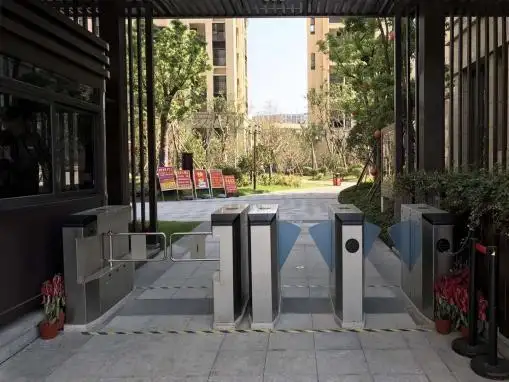
| Best for | Subway, railway, transit hubs | Offices, factories, gyms |
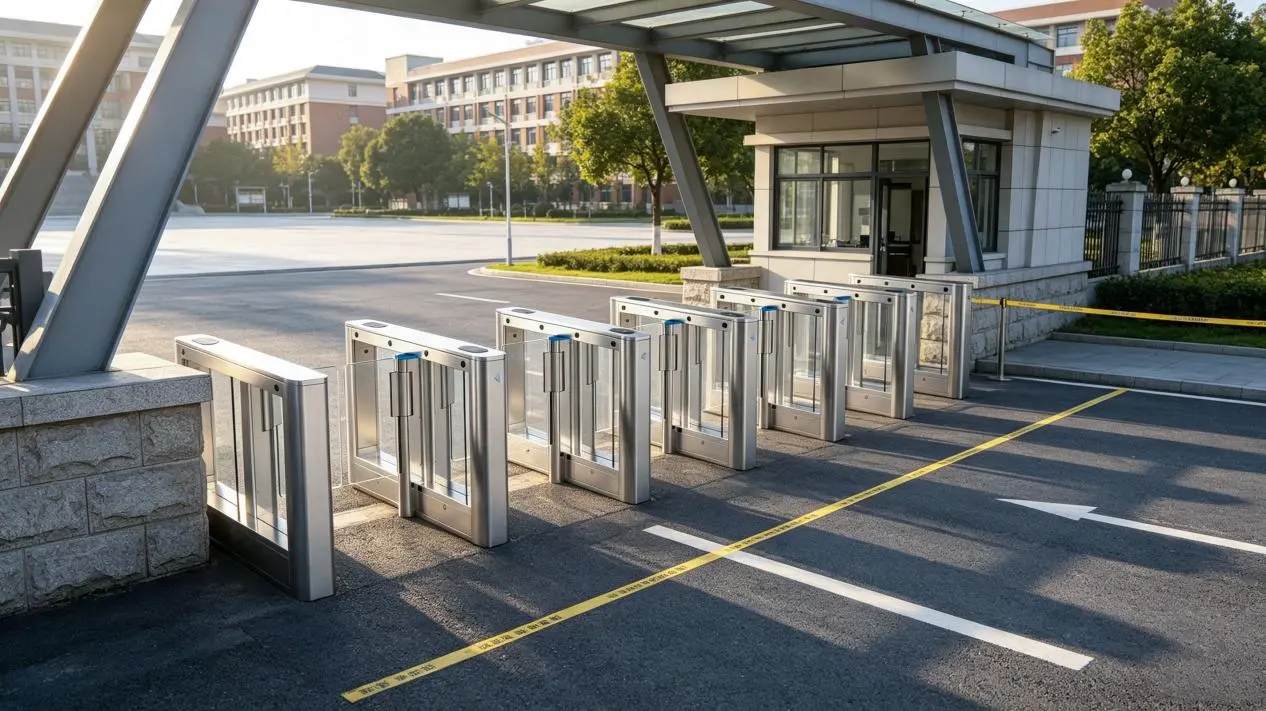
Turboo's tripod turnstile bridge creates a clearly marked fare lane — the right choice when visual lane structure matters for passenger flow. For tighter spaces, the narrow mechanism bridge tripod turnstile delivers the same lane definition in a smaller footprint.
Why Transit Systems Rely on a Fare Control Tripod Turnstile
A well-placed fare control tripod turnstile doesn't just block non-payers — it changes passenger behavior entirely. When people see a physical barrier, most don't attempt to bypass it. That deterrent effect alone reduces enforcement costs.
Here's what makes the tripod design specifically effective for fare enforcement:
Built-in anti-tailgating: The three-arm configuration allows exactly one arm rotation per credential. Two people cannot pass on one authorization — not through complex sensor logic, but through pure mechanical design. No expensive sensor array is needed.
Extreme durability: Transit environments run 24/7 in all weather conditions. Turboo's heavy duty tripod turnstile is built from 304 stainless steel with reinforced mechanisms rated for continuous high-frequency use. The chassis handles external force without deforming.
Emergency compliance: During evacuations, power-off drop-arm functionality frees all lanes automatically. This is a mandatory safety feature for any public venue — and every quality fare control tripod turnstile includes it.
Universal ticketing integration: Whether your system uses NFC transit cards, barcode paper tickets, or app-based QR codes, the control board accepts standard dry contact and RS485 signals. There's no proprietary lock-in.
Key Features to Demand from a Fare Control Tripod Turnstile
When evaluating models, these are the specifications that actually determine performance in a fare control environment:
- Reader compatibility: Supports RFID, QR code, barcode, face recognition, and biometric inputs — future-proofs your system as ticketing technology evolves
- Pass rate: 25–35 persons/minute for semi-automatic; 35–50 persons/minute for full automatic
- IP rating: IP54 minimum for outdoor or covered transit stations; fully weatherproof enclosures for exposed sites
- Body material: 304 stainless steel chassis; 201 stainless for arms — balances cost and corrosion resistance
- Power-off mode: Arms must drop automatically for fire safety and emergency compliance
- Communication interface: Dry contact + RS485 for seamless PLC and ticketing system integration
- Operating temperature: -20°C to +70°C minimum for stations in climate-variable regions
- Noise level: Brushless DC motors reduce operational noise — critical in enclosed station environments
Turboo's waist-high tripod turnstile lineup covers all of these specs, with models certified to CE, RoHS, FCC, and ISO9001 standards — backed by over 178 patents in access control technology.
Fare Control Tripod Turnstile vs. Other Gate Types
For fare enforcement specifically, the gate type you choose has major implications for cost, throughput, and security level. Here's how the fare control tripod turnstile stacks up against the alternatives:
| Gate Type | Fare Control Ability | Unit Cost | Pass Rate | Best Use Case |
|---|---|---|---|---|
| Tripod Turnstile | High (mechanical block) | $400–$1,200 | 25–50/min | Transit, stadiums, factories |
| Flap Barrier | Medium (electronic deterrent) | $700–$2,000 | 45–55/min | Airports, corporate offices |
| Speed Gate | Medium | $2,000–$5,000+ | 50–60/min | Premium venues, tech campuses |
| Full-Height Turnstile | Very high | $1,500–$4,000 | 10–15/min | High-security perimeters |
The fare control tripod turnstile wins on cost-to-security ratio for the majority of transit and public venue applications. For most operators, the logic is simple: the tripod delivers near-full mechanical fare enforcement at the lowest available price point.
Installation & Integration with Ticketing Systems
Site Planning Essentials
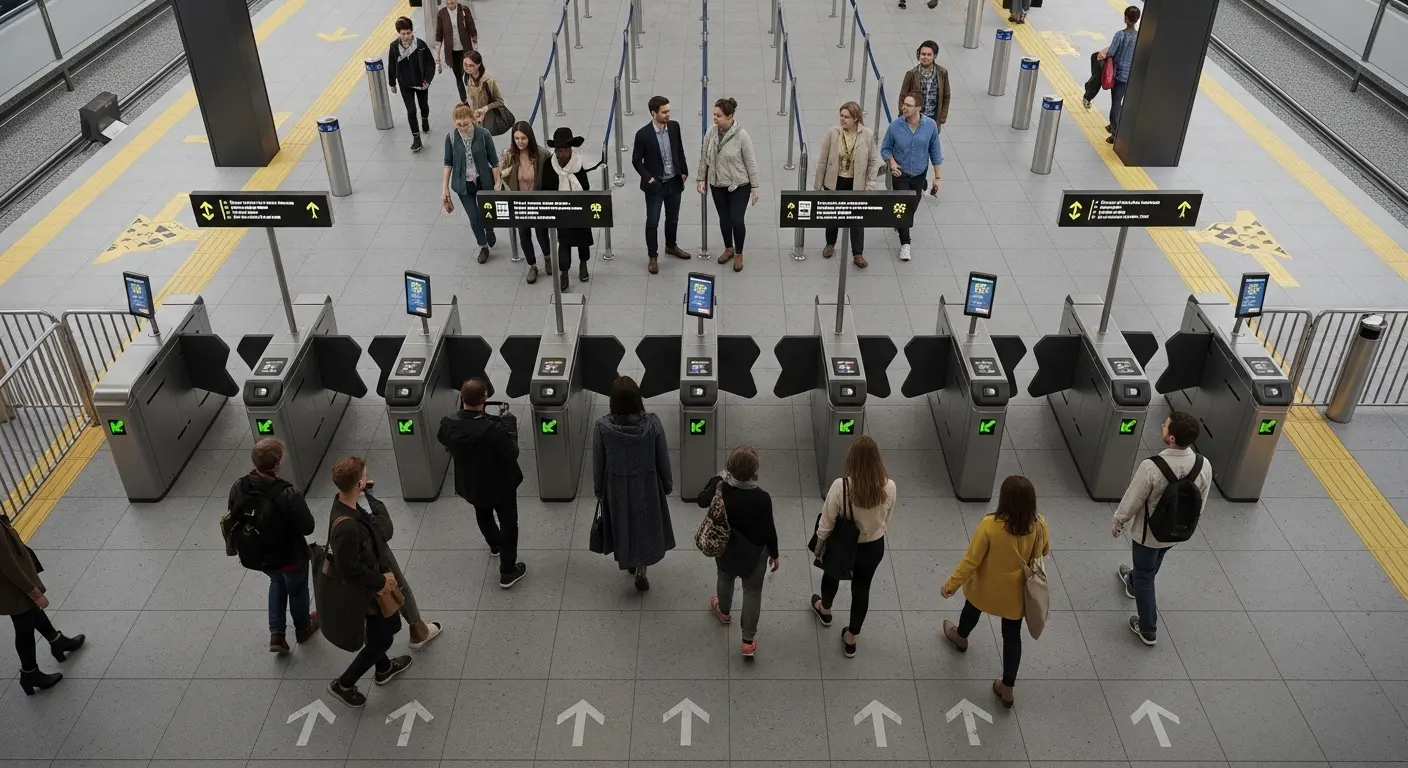
Before ordering, measure your lane configuration carefully. Standard fare control tripod turnstile models support a 500–550mm pass width — sufficient for adults with small bags. However, they do not accommodate wheelchairs, prams, or large luggage. Therefore, always pair fare lanes with at least one accessible swing gate for ADA/accessibility compliance. This is a real procurement concern most operators overlook until the final stage.
How the Ticketing Signal Works
Integration is straightforward. Your ticketing software sends an open pulse — typically 100–500ms — when a valid ticket is scanned. The turnstile control board receives this via dry contact or RS485 and executes the unlocking sequence. No custom firmware is needed. Turboo's vertical tripod turnstile gate includes a standard external electrical interface compatible with virtually any access control or ticketing platform.
Multi-Lane Fare Gate Planning
For high-footfall transit stations, install multiple fare control tripod turnstile lanes in parallel. A typical 4-lane setup processes 140–200 persons per minute — sufficient for mid-size station peak hours. Furthermore, multi-lane setups can be centrally managed from a single control room via RS485 network. Turboo's complete tripod turnstile range supports this configuration with unified management software.
Where Fare Control Tripod Turnstiles Are Used
The applications for a fare control tripod turnstile go well beyond subway stations. In fact, any venue where paid access must be enforced can benefit:
Transit Stations (Subway, Bus, Rail): The primary use case — one valid scan equals one entry, with automatic passenger count logging for capacity management.
Stadiums and Sports Arenas: Ticket validation at entry gates, with real-time access data fed to the control room. Staff can see exactly which lanes are active and how many have entered.
Amusement Parks and Tourist Attractions: High volumes and mixed ticket types (day passes, group tickets, annual passes) are all handled through unified reader integration.
Factory and Warehouse Canteens: Meal vouchers or employee IDs control canteen access. The fare control function works identically — one credential, one entry, counted and logged.
University Campuses: Fare-controlled entry to paid facilities like gyms, event halls, or libraries. Students use existing campus ID cards without a separate ticketing system.
Contact a Turboo turnstile dealer to discuss the right configuration for your specific venue type.
FAQ: Fare Control Tripod Turnstile
What is a fare control tripod turnstile?
A fare control tripod turnstile is a waist-high, three-arm access gate that physically locks until a valid ticket, card, or credential is presented. One authorization unlocks exactly one 120-degree arm rotation, allowing one person to pass. It is the standard mechanical solution for fare enforcement in transit stations, stadiums, and paid-access venues.
Can a fare control tripod turnstile work outdoors?
Yes. Quality models like Turboo's LB123 are rated IP54 or higher and operate reliably between -20°C and +70°C. For fully exposed outdoor installations, a canopy is recommended to protect the control board from direct rain exposure.
How does the tripod turnstile specifically prevent fare evasion?
The three-arm mechanism physically cannot rotate without a valid signal. Additionally, the 120-degree-per-rotation design prevents two people from passing on a single authorization — there's no gap large enough for a second person to follow before the arm resets.
What ticketing or access systems does it integrate with?
Fare control tripod turnstiles work with NFC/RFID transit cards, QR code tickets, barcodes, biometric readers (fingerprint, face recognition), and coin or token acceptors. Integration uses standard dry contact or RS485 signals supported by virtually all access control and ticketing platforms.
How many people can a fare control tripod turnstile process per minute?
Semi-automatic models process 25–35 persons per minute. Full automatic models reach 35–50 persons per minute. For peak-hour transit demand, multi-lane parallel installations are the practical solution.