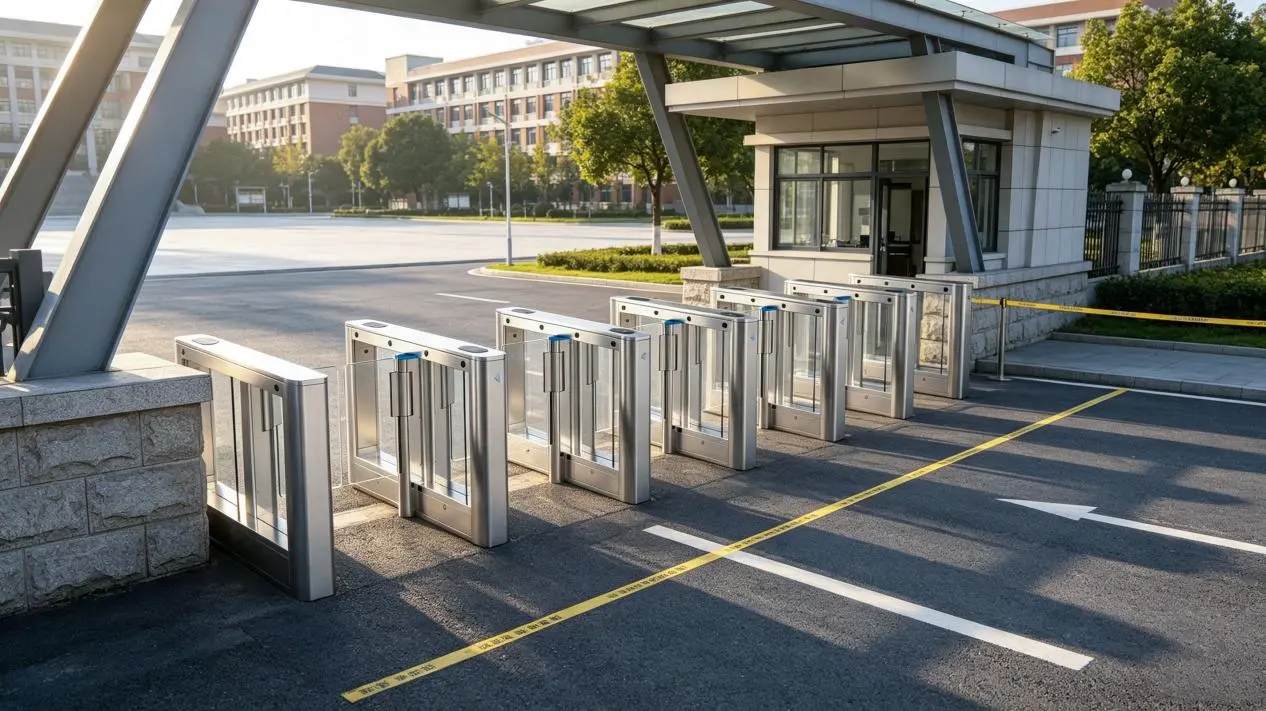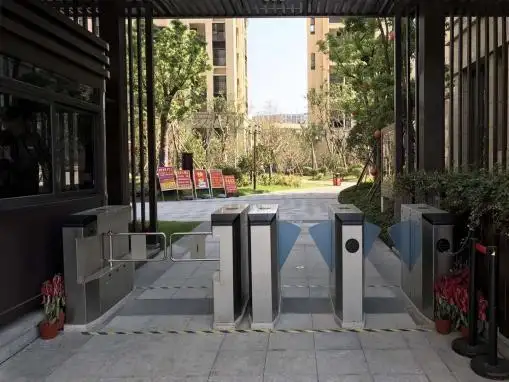



Swing Gate For Gated Communities: Not Just A Gate, But A Strategy

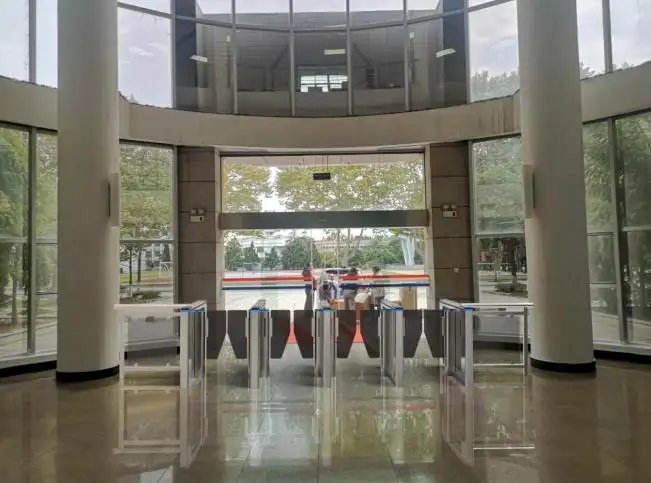
Weak entrance control creates problems long before a visible incident occurs. In many residential projects, the real issue is not whether a gate can open and close. It is whether the entrance can control tailgating, support daily traffic, integrate with modern credentials, and continue working safely under changing weather and heavy use. For developers, property managers, and overseas buyers, a Swing Gate For Gated Communities should therefore be evaluated as part of a wider perimeter strategy rather than as a decorative access point alone. Guidance from gate-safety regulators and access-control providers continues to emphasize safe interaction, entrapment protection, and system integration as core requirements for modern automated entrances.
Start With Site Conditions and Traffic Reality
A gate that appears suitable on a drawing can become a daily bottleneck after installation. That is why planning should begin with the real geometry of the entrance and the expected movement of residents, visitors, service staff, and vehicles.
Before specifying a Swing Gate For Gated Communities, buyers should check:
✓ Available swing radius and clearance around walls, lighting poles, landscaping, and signage
✓ Driveway slope, hinge positioning, and load behavior under repeated movement
✓ Setback distance from the public road to avoid conflict with waiting vehicles
✓ Peak-hour traffic demand at resident entry, visitor entry, and service access points
✓ Whether a single-leaf or double-leaf layout better matches lane width and operating frequency
A double-leaf arrangement is often more suitable for wider openings because it balances load distribution and reduces the visual heaviness of one large moving panel. A single-leaf design can still be effective for narrower passages, side entrances, or lower-volume access points where space discipline matters more than formal symmetry.
Material Choice Should Support Both Durability and Appearance
In gated communities, the entrance often carries architectural value as well as security responsibility. For that reason, material selection should not be based on appearance alone. It should reflect corrosion exposure, service expectations, and the desired maintenance burden over time.
Many buyers favor aluminum alloy structures for community gates because they offer strong resistance to rust, especially in coastal or humid environments. When buyers place value on long-term color stability and surface toughness, powder-coated finishes remain a practical specification. Decorative panels or cladding may refine the appearance, but non-structural features must not create imbalance or weaken operator function.
From a procurement perspective, the better question is not simply whether the gate looks premium on delivery day. It is whether the structure, finish, and moving hardware will still perform well after years of weather exposure and repeated opening cycles.
Safety Compliance Should Be Treated as a Purchasing Requirement
Safety failures in automated gates can lead to injury, legal exposure, and expensive corrective work. This is why compliance cannot be handled as a late-stage technical issue. It should be part of supplier evaluation from the beginning.
European guidance for powered gates places strong emphasis on safe user interaction, foreseeable misuse, and protection against crushing or entrapment hazards. Mechanical standards for industrial, commercial, and residential gates also address requirements and test methods for safe operation. In the United States, UL guidance focuses on preventing entrapment and on ensuring that operator safety works together with broader compliance requirements.
Key features to review include:
✓ Infrared or photoelectric sensing to identify people or objects in the movement area
✓ Pressure-sensitive edge protection where there is a risk of impact or obstruction
✓ Controlled closing sequences with automatic reset after an incomplete passage
✓ Emergency release or fail-safe measures that meet local life-safety regulations
✓ Stable operation across wind, rain, debris exposure, and normal service conditions
For buyers, the message is straightforward: a compliant gate system should not only support efficient entry, but also maintain safe response when a person pauses, retreats, or crosses the lane without warning.
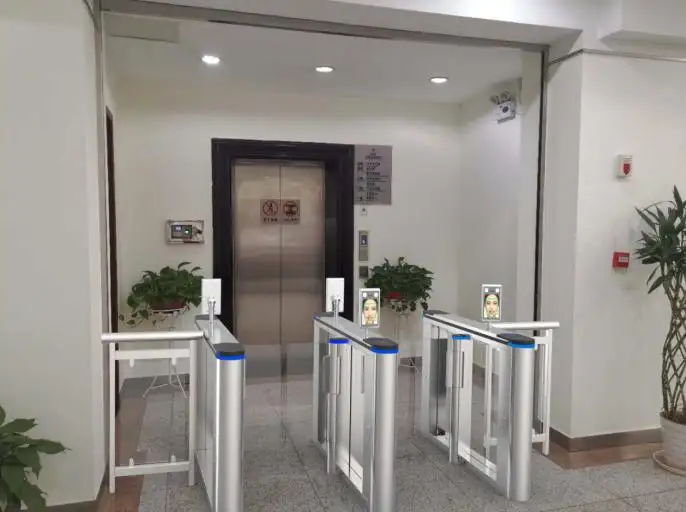
Access Control Integration Now Matters More Than Ever
A community entrance is no longer an isolated barrier. It is increasingly part of a connected access environment that may involve residents, delivery staff, contractors, and temporary visitors using different credential types.
This is where a well-planned Swing Gate For Gated Communities can create more long-term value. Current access-control trends show growing interest in mobile credentials, broader use of biometrics, and demand for platforms that can support multiple authentication methods from a single infrastructure path. HID reports continued growth in mobile credential adoption, while its reader platforms also highlight support for NFC, Bluetooth, smart cards, and biometric-ready configurations.
For community projects, that flexibility is important because it allows the entrance to support:
✓ IC or ID cards for residents and staff
✓ Mobile credentials through Bluetooth or NFC-enabled devices
✓ Facial or fingerprint verification in higher-control environments
✓ Visitor management workflows linked to reception or property software
✓ Vehicle authorization through license plate recognition where needed
In procurement terms, scalability reduces future replacement pressure. A gate should not become obsolete simply because the community later upgrades from cards to mobile credentials or adds visitor automation.
Administrative Control Should Match Daily Operating Patterns
Residential traffic is rarely constant. Morning departures, school-hour visitor activity, evening returns, delivery windows, and seasonal changes all affect how an entrance should behave. A rigid operating model may protect the lane on paper while creating friction in real use.
This is why administrative flexibility matters. Community managers should be able to adjust direction logic, passage timing, and operating schedules without rebuilding the system. A more capable entrance platform can support one-way flow during specific periods, separate rules for entry and exit, and timed behavior that matches known traffic peaks.
From an operational standpoint, the strongest systems are often the least visible in daily life. When opening logic, safety response, and credential handling work smoothly in the background, complaints decrease and the entrance becomes easier to manage.
Why Buyers Should Evaluate the Full Lifecycle
The most expensive gate is not always the one with the highest purchase price. In many cases, the greater cost comes later through downtime, difficult servicing, weak spare-parts support, or software that cannot evolve with the site.
That is why supplier assessment should include more than design and automation performance. Buyers should also review:
✓ Spare-parts availability
✓ Technical documentation and testing records
✓ Warranty clarity
✓ Local or regional maintenance support
✓ Upgrade path for readers, controllers, and software
From Turboo’s perspective, products such as the Marble Top Cover Swing Gate ES301 are best positioned not as isolated hardware, but as part of a complete entrance solution for communities that need appearance, safety, and operational consistency in one package.
A Swing Gate For Gated Communities should ultimately do more than mark a boundary. It should help the site control access more cleanly, reduce management pressure, and support long-term value at the entrance where security and daily experience meet.