


How Anti-reverse Logic Keeps a Waist Height Tripod Gate Fast

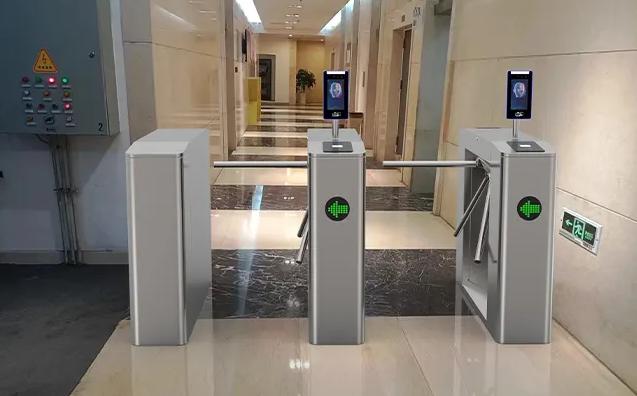
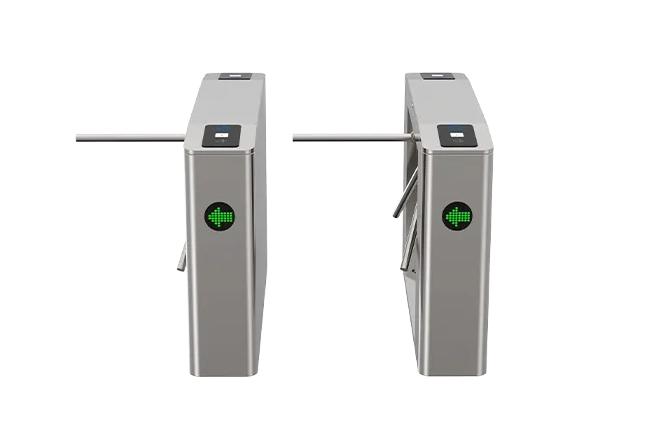
A Waist Height Tripod Gate moves people quickly only when it knows exactly which way they intend to go. The quiet hero behind that confidence is anti-reverse logic - software and control algorithms that block backward rotation while keeping forward motion light and predictable. This field guide explains how that logic works, why it accelerates legitimate traffic without compromising safety, which metrics matter, how to deploy it with your access control stack, and how to keep lanes fast as conditions change.
What you will take away:
- How direction sensing and control loops interpret human intent in real time
- Which benchmarks reveal true throughput on live sites
- How to deploy for speed while satisfying safety and code requirements
- How to monitor, maintain, and tune for sustained performance
Why Anti-Reverse Logic Moves the Needle
Human flow through an entrance is uneven: shift changes, tour groups, and pauses at the reader all introduce spikes and stalls. In that chaos, a Waist Height Tripod Gate must invite forward passage yet resist backflow and reverse tailgating. Anti-reverse logic does exactly that. It identifies direction early, chooses a response in milliseconds, and applies just enough torque to either assist a valid pass or hold the arm steady when a user nudges it the wrong way. That finesse eliminates nuisance stops, trims the time between users, and smooths the entire queue. People feel the lane cooperating with them; security teams see fewer reverse incidents and more consistent throughput.
How the Mechanism Senses Direction and Acts On It
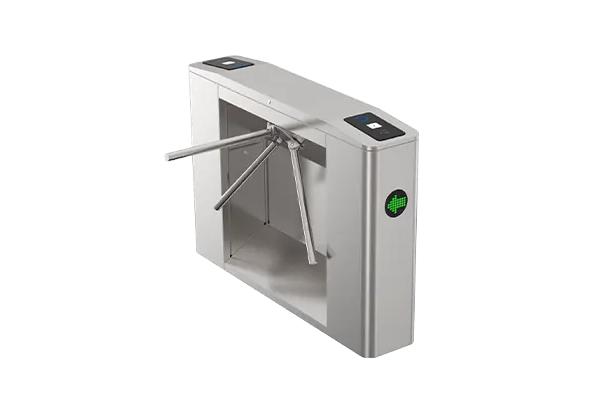
Modern tripod turnstiles marry a closed-loop motor controller with a small sensor suite:
• A hub encoder tracks arm angle and angular velocity with high resolution.
• Cabinet-mounted optical sensors observe approach direction and detect tight followers.
• The controller fuses these signals to infer intent and position on the arc.
The logic itself runs as a state machine:
• Idle: The arm rests at home with a light preload, so the first push feels ready rather than sticky.
• Commit: The instant a user pushes forward, the controller samples velocity vectors and direction indicators, validating thresholds within a few milliseconds.
• Assist: If motion matches an authorized forward pass, the controller reduces resistance and adds a guiding torque for a smooth, steady sweep.
• Lock: If reverse angular acceleration or a reverse step-over pattern appears, the system raises holding torque and, if required, engages a motor brake.
• Settle: After the pass, the arm returns home with controlled acceleration to prepare for the next user.
Good tuning is all about timing and hysteresis. Confirm direction quickly enough to feel responsive but not so fast that bounce or vibration looks like intent. The best Waist Height Tripod Gate implementations reject reverse attempts in under 80 ms yet leave forward motion essentially drag-free. Hysteresis bands prevent chatter, so micro-oscillations don't cause stop-start behavior that spooks users or wears components.
Features that Translate to Real Operational Value
Shiny spec sheets don't run a lobby; practical gains do. The following capabilities reliably convert into better user flow and lower risk:
• Dual-path direction sensing: Independent encoder and optical inputs cross-validate each decision. Result: fewer false locks, a confident first push, and a steady line.
• Low-latency lock actuation: Brake and drive stages respond in tens of milliseconds when reverse triggers fire. Result: backflow is stopped without a jolt, keeping trust high.
• Adaptive torque by angle and speed: The controller shapes torque across the arc and with user effort. Result: effortless forward motion, firm reverse resistance, and less wear on bearings and brakes.
• Anti-tailgate windows: Proximity timing distinguishes a close follower from the wrong side versus a legitimate sequence. Result: one-person-per-pass integrity without penalizing compliant users.
• Self-recovery to home: After any event, the arm glides back to the start position. Result: quicker resets and less dead time between people.
• Event logging and analytics: Every pass, reverse attempt, and lock is timestamped with lane ID. Result: concrete data to tune thresholds by time of day and to inform staffing and policy changes.
When these features align with your goals - fast admission for authorized users, reliable reverse rejection, predictable maintenance - you see shorter queues, fewer incidents, and longer component life.
Benchmarks that Predict Real-world Speed
Lab numbers are a starting point. Look for metrics that survive site acceptance tests and mirror how your visitors behave:
• Throughput (single direction): 35 - 50 persons per minute in steady state, contingent on credential type, approach space, and user familiarity.
• Reverse reaction time: Less than 80 ms between reverse detection and lock engagement.
• Mean time between failures (MTBF): 5 - 10 million cycles for the core drive and brake under standard duty.
• Nuisance reverse stops: Under 1 in 10,000 passes when lanes are aligned and sensors are calibrated.
• Clearance time per user: 0.8 - 1.5 seconds with card or mobile credentials; slower identity steps will dominate this number.
Validate these in your own environment. Test during peaks, with real credentials, and with your access control stack in the loop. Use native logs to compare expected versus observed throughput and to pinpoint where time is actually spent - at the reader, on the push, or during reset.
Deploying for Speed, Integrating for Insight, Complying Without Compromise
A fast control loop cannot overcome a slow approach. Set the stage for success:
•Approach geometry: Keep a straight lead-in and avoid sharp turns within about one meter of the gate. Clear sightlines minimize hesitation and improve sensor reads.
•Reader placement: Enable in-stride presentation with consistent cues.
•Integration: Link gate states and auth events to ACS; forward-enable on valid, log reverse with lane and time. Enable anti-passback for high traffic.
•Safety and code: Plan for emergencies. Configure fail-safe egress, provide an accessible lane, calibrate holding torque, document commissioning, and comply with privacy retention rules.
Operating at Scale: Monitor, Maintain, and Tune
Speed is a continuous practice - measure it, maintain it, and tune it over time. Establish a small, durable KPI set:
•Throughput by hour and entrance
•Reverse attempts per 1,000 passes
•Nuisance stops
•Average clearance time
Review weekly. Segment by daypart and traffic type; patterns usually point to simple fixes - moving a reader a few centimeters, adding a floor decal, or trimming an aggressive torque setting that causes a hesitant first push.
Preventive maintenance protects your speed envelope. Put the following on a regular cadence:
•Verify encoder alignment and cable integrity.
•Clean optical sensors and check their aim.
•Inspect brake pads and drive components for wear.
•Apply firmware updates that refine anti-reverse sensitivity or hysteresis logic.
•Test changes off-peak and keep rollback packages on hand.
People matter too. Train lobby stewards to keep the flow forward - clear gestures and consistent prompts reduce indecision and keep the controller in its sweet spot. When traffic patterns evolve, revisit lane layout. If burst loads are common, add a short buffer zone or deploy a second Waist Height Tripod Gate lane to absorb peaks. Use your own logs to quantify the impact on queue time and service levels before and after changes.
Putting it into Practice
If you are selecting or re-tuning a Waist Height Tripod Gate, insist on a live demonstration in your environment. Ask vendors to expose logs for direction decisions, reaction times, and lock events, then compare the data to your KPIs. A well-tuned lane will feel almost weightless in the authorized direction, snap decisively against reverse motion, and keep queues steady even at peak.
Ready to see the difference? Schedule a site assessment and pilot lane. In a 30-minute technical walkthrough, we can map your current benchmarks, align fail-safe behavior with local code, and configure thresholds tailored to your users. Within a single peak period, you'll witness the trifecta you're aiming for: smoother forward passage, tighter reverse rejection, and more stable throughput from your Waist Height Tripod Gate.