



What Makes Weatherproof Turnstile Last Through Storms?

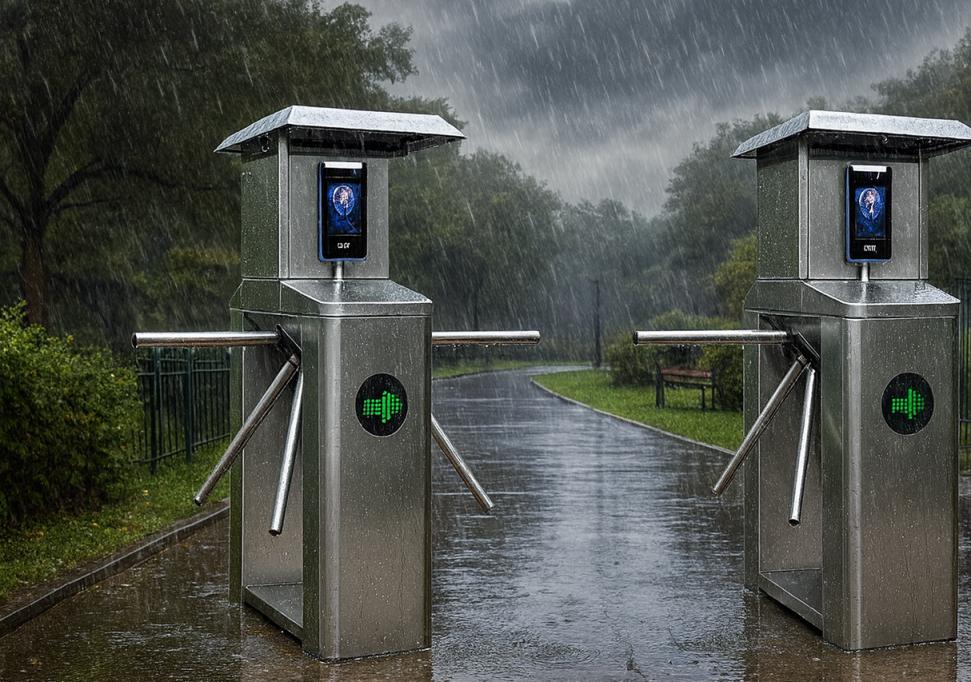
A Weatherproof Turnstile is a compact gate for outdoor access control. It guides one person at a time. It keeps crowds flowing and sites secure. Yet storms test every weakness – water, dust, and power loss. Why does this design keep working when others fail? And which features truly matter in the rain? Stay with me.
Why A Weatherproof Turnstile Survives Storms
Outdoor turnstiles fail for simple reasons: water creeps in, motors fight grit, electronics spike during lightning, and bearings rust. A well-built Weatherproof Turnstile counters all of that with a fully welded stainless-steel body that resists corrosion, keeps vibration low, and runs quietly. The sealed mechanics stay smooth even when the temperature swings or the air is salty. Inside, smart control logic manages passage, resets itself after timeouts, and avoids the “jammed arm after card tap” problem that frustrates users during bad weather.
When power drops in a storm, safety should not. Power-off arm-drop ensures the lane becomes free for evacuation. When power returns, the controller recovers gracefully, and the arm locks again. Anti-reverse and anti-tailgating functions protect the lane from misuse when crowds surge for shelter. The LED indicator is simple but crucial: green for valid, red for invalid, so people don’t hesitate in the rain.
✅ Core Weatherproofing Elements To Look For
• Fully welded stainless-steel housing for corrosion resistance and rigidity
• Sealed drive and bearings for low noise and long service life
• Surge-friendly controller with automatic reset after timeouts
• Power-off arm-drop and optional remote drop for emergency release
• Clear LED guidance to speed flow in poor visibility
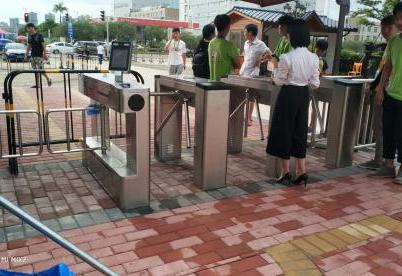
Outdoor Pain Points — And How a Weatherproof Turnstile Solves Them
Storms expose weak links. Water and dust push sub-par designs into early failure, causing gate downtime just when security needs are highest. Maintenance teams face repeated callouts for squeaks, misreads, and stuck arms. Budget owners see costs rise from frequent part swaps. Operators struggle with tailgating during crowd rushes. Integration also becomes a headache when readers, cameras, and attendance software don’t play nicely.
A Weatherproof Turnstile solves these issues with a “reasonable and reliable” design philosophy: simple mechanics, durable materials, and control logic that anticipates misuse. Anti-tail and anti-reverse reduce the security risk at windy perimeters and temporary event sites, where lines can turn chaotic. The “with memory / without memory” card modes let you tune behavior for different flows – store multiple valid taps for group entry or force one-by-one for stricter control. Automatic reset returns the arm to a locked state if a passer doesn’t enter within the set time, which keeps the lane secure when rain delays or phone distractions slow people down.
- Where A Weatherproof Turnstile Shines
In exposed locations – stadium gates, school campuses, factory yards, seafront parks, construction sites – simplicity wins. The stainless body shrugs off impacts and weather. Sealed internals resist grit. The unified electrical interface makes it easy to connect existing systems without rewiring the whole site. And because it runs quietly, it’s neighbor-friendly for residential communities and office plazas where noise complaints matter after a stormy night.
Beyond access control, the same unit can extend into attendance, fee collection, and visitor analytics. That’s useful when you want to justify ROI with data, not just hardware durability. The device accepts IC/ID cards, scanning, and face recognition, so you can start basic and scale to multimodal verification when conditions or policies change.
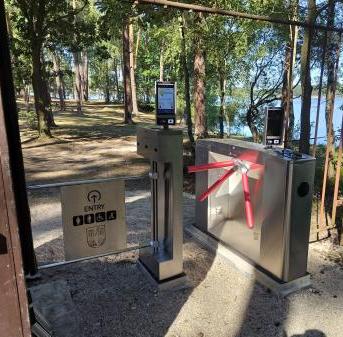
How To Specify And Deploy A Weatherproof Turnstile
Start with the environment. If your site sees heavy rain, airborne dust, or salt, prioritize fully welded stainless steel and sealed mechanics. Confirm the controller supports automatic reset, anti-tail, and anti-reverse; these keep lanes secure when visibility is poor. For emergency planning, require power-off arm-drop and consider adding remote drop so security can open lanes from a sheltered control room.
Integration is next. Choose a Weatherproof Turnstile with a unified, standard electrical interface. That keeps wiring clean and lets you connect popular access controllers, campus cards, QR readers, or face terminals without custom boards. Plan your UX too – clear LED signals reduce hesitation, while memory settings let you balance throughput and policy. If you run seasonal events or temporary perimeters, one machine can function as a full lane, simplifying logistics and spares.
Deployment should emphasize flow and safety. Test the timeout window for automatic reset based on your real queue speed in rain gear. Verify that face or QR readers are shielded and angled to shed water. Map evacuation paths that rely on the arm-drop behavior, and train staff to use the remote drop feature during a storm. Finally, schedule light preventive maintenance – wipe seals, check fasteners, confirm indicators – so the unit stays quiet and smooth for years instead of months.
✅ Quick Specification Checklist
• Stainless, fully welded chassis for outdoor corrosion resistance
• Sealed drive, low noise, smooth operation, long service life
• Anti-tailgating, anti-reverse, automatic reset after set time
• Power-off arm-drop + optional remote drop control
• LED guidance; supports IC/ID, scanning, and face recognition
• Unified interface; extendable to access, attendance, and fees
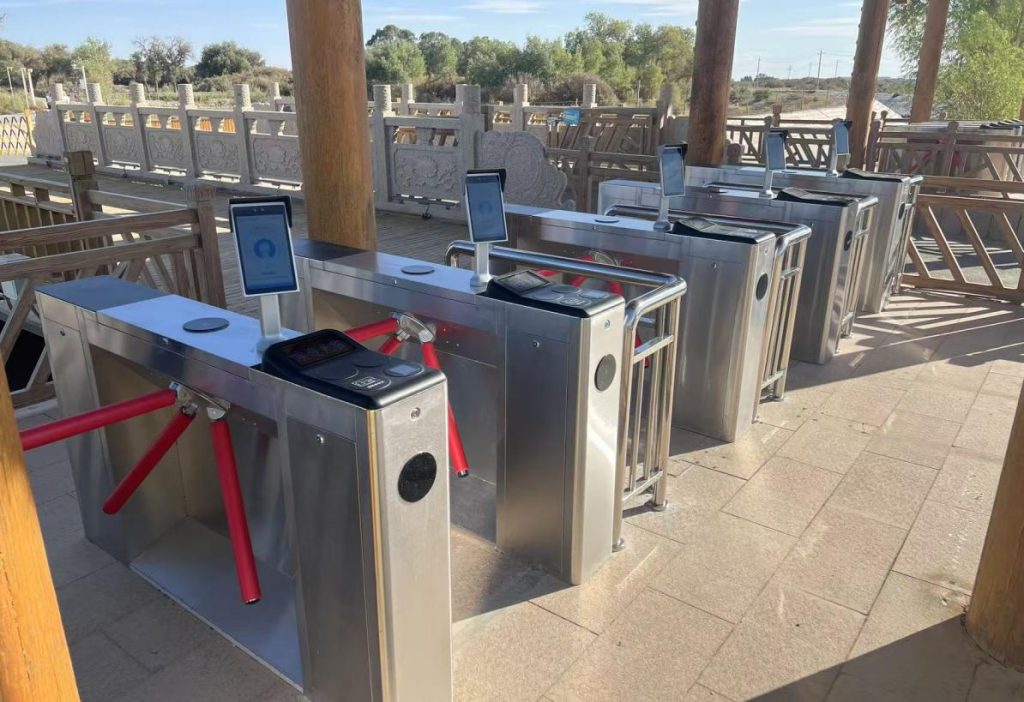
Final Words
If storms are exposing weak links in your perimeter, upgrade to a Weatherproof Tripod Turnstile built for real weather, not showroom floors. Talk to our team for a quick site check and integration plan, and keep your gates running when the sky turns rough.