



2026 Security Turnstile Gate Guide: Biometrics Cut Queues

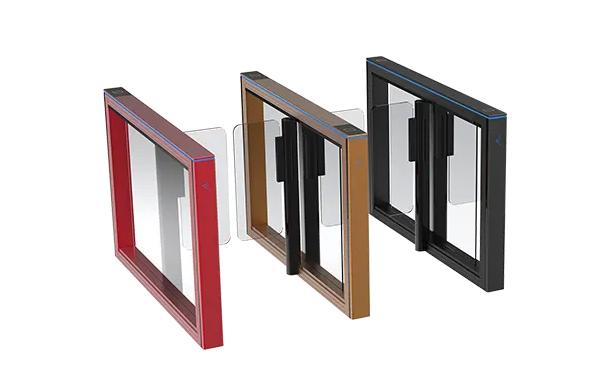
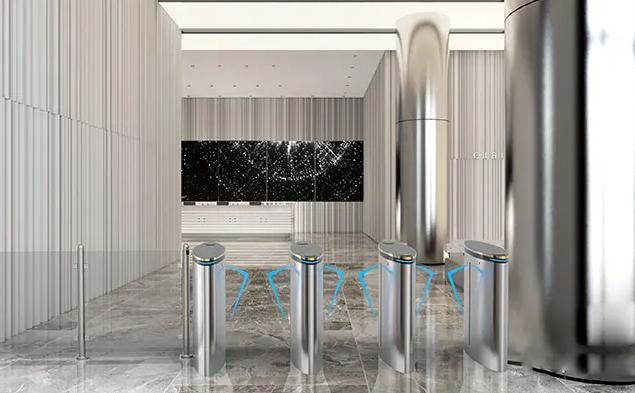
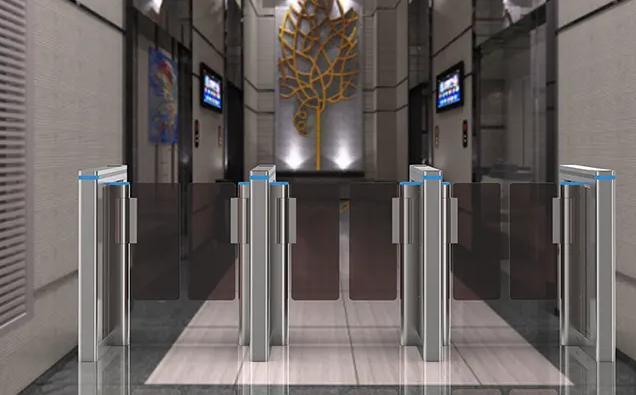
Security Turnstile Gate biometrics are stepping into the spotlight in 2026, not as a gimmick but as a practical way to remove friction at busy entrances. When the morning rush hits, queues grow because too many steps stack up: people hunt for cards, QR codes need perfect alignment, and manual checks slow the lane. Biometrics strip away those extra actions. Your face or fingerprint is always “on hand,” and the match happens in fractions of a second. In a well-tuned Security Turnstile Gate, that translates into steadier flow, fewer retries, and calmer entry for staff and visitors alike.
From a manufacturer’s standpoint, shortening queues isn’t about a single reader – it’s about the whole lane. Fast capture, dependable matching, smart barrier timing, and clear user guidance all work together. Turboo’s design philosophy pairs edge biometric processing with refined gate logic: detect liveness to stop spoofs, make decisions locally to cut network delays, and open the barrier at the right moment to prevent tailgating. The lane moves in a rhythm instead of surging and stalling.
Understanding Biometrics in a Security Turnstile Gate
Biometric turnstiles verify identity via face, fingerprint, iris, or palm vein. During enrollment, samples become templates – compact feature sets ideal for on-device matching, reducing data movement and protecting privacy compared to raw images. At the gate, a new sample is captured and compared against the stored template.
Two Verification Patterns Dominate:
• 1:1 verification: the user presents a credential (IC/ID card or QR), and the system confirms the biometric matches the template bound to that credential. This yields predictable speed and accuracy.
• 1:N identification: the user presents only a biometric, and the system searches an authorized list to find the right template. This enables hands-free access in approved zones, but is slower and depends on list size and compute power.
Modern readers add presentation attack detection (PAD) to block masks, printed photos, or silicone fingers. Liveness analysis draws on micro-motion, texture, IR depth, and multi-spectral cues to confirm a real person is present without adding friction.
Template Security and Liveness Fundamentals
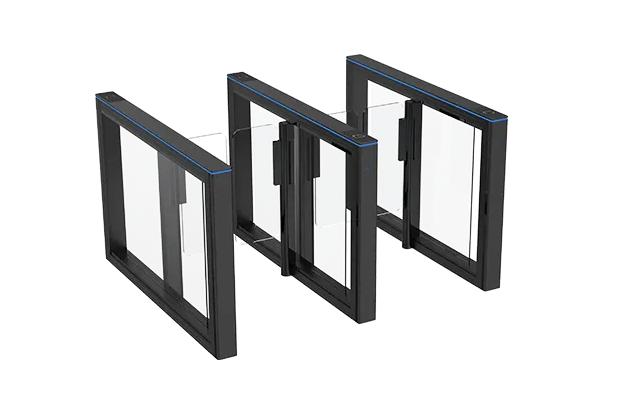
Biometric templates should be encrypted at rest and in transit, with keys isolated from application code. On-device matching – performing inference on the reader – keeps sensitive data local and reduces exposure. Combine encryption, local inference, and PAD, and you have a strong privacy posture for biometric operations in a Security Turnstile Gate.
Choosing Modalities and Planning for Hybrid Credentials
Every site has its own constraints. Outdoor entrances face glare and dust; cleanrooms bring gloves; transit hubs demand speed. The right mix of biometrics plus a hybrid credential strategy solves these challenges.
• Face: Perform on-device matching with IR to reduce latency and avoid streaming raw images.
• Fingerprint: Local template matching keeps data movement minimal and speeds verification.
• Iris: Edge inference delivers high assurance while preserving privacy via template-only handling.
• Palm vein: On-reader processing provides consistent results even with network variability. Useful where gloves are common after entry.
Hybrid compatibility matters because few organizations can switch overnight. A Security Turnstile Gate should support IC/ID cards, QR code scanning, and face recognition in one lane, under one policy. Turboo delivers lanes that blend these methods so you can preserve existing investments while phasing in frictionless biometrics.
Hybrid Flows that Reduce Risk and Keep Traffic Moving
• Primary biometric with automatic fallback: try face first; if capture quality drops (e.g., heavy glare), roll seamlessly to card or QR.
• Role-based policies: employees use biometrics for speed; visitors use QR with desk-side verification; VIPs get hands-free options where policy allows.
• Phased deployment: start with 1:1 verification to build confidence; enable 1:N identification later in suitable areas.
Performance Metrics that Actually Matter at the Gate
Throughput is the headline metric. Face verification on modern edge modules typically returns a decision within hundreds of milliseconds. Lane cycle time – entry to barrier close – depends on capture speed, match latency, and barrier control. With tuned logic and good human guidance (LEDs, voice prompts, and clear display arrows), first-pass success goes up and dwell time goes down.
Accuracy tuning is equally important. Operators adjust thresholds to minimize false acceptance while keeping false rejection comfortable. Public lobbies lean conservative and rely on hybrid fallbacks to avoid delays; high-security zones accept stricter thresholds and may require secondary checks.
Hardware and software alignment keeps things smooth. High-duty motors, responsive controllers, and precise optical sensors prevent hesitation. Edge AI cuts network trips. UI cues help users find the right stance quickly: stand markers, angle prompts, and short voice instructions. Outdoor conditions, masks, and glare can hurt capture quality if you don’t plan for them; IR illumination, anti-glare hoods, and positioning signage mitigate most issues.
Privacy, Compliance, and Integration Without Silos
A Security Turnstile Gate must operate inside your governance framework, not around it. Privacy-by-design choices keep biometric operations contained and auditable.
• Template-first design: no raw images; automate retirement tied to HR/role changes.
• End-to-end crypto: TLS 1.3 on the wire, AES-GCM at rest; keys in HSM with split duties.
• Edge inference: match on the reader to minimize data movement and latency.
• Standards and assurance: align with NIST evaluations and ISO/IEC 30107 PAD; use time-synced, immutable audit logs.
• Interop: OSDP Secure Channel or Wiegand to panels; TCP/IP for PACS; SDKs and REST APIs for ecosystem integrations.
• Event fusion: integrate with VMS (for review) and PSIM (for state/alarms); support anti-tailgating, anti-passback, and emergency handling.
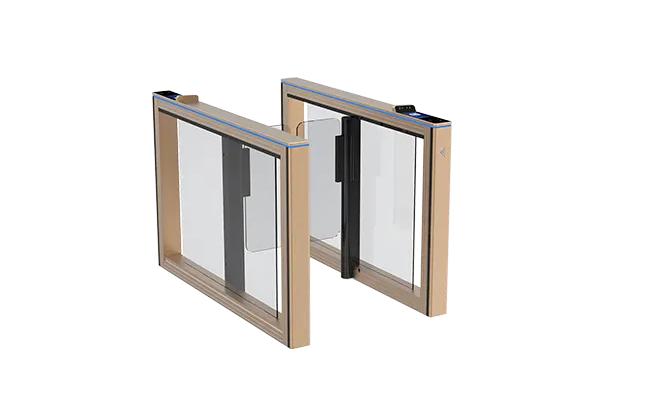
Deploying Without Drama: a Practical Playbook
A structured plan lowers risk and delivers results quickly.
• Site assessment: map lane positions, peak flow, lighting, and user profiles; include ADA requirements and emergency egress.
• Access policy: map user groups to biometric use; document fallback rules; codify retention and purge schedules; zone-level thresholds.
• Pilot validation: one instrumented lane to log dwell time, first-pass acceptance, and intervention frequency.
• Enrollment assurance: enforce ID verification and consent; choose supervised or kiosk flows with quality checks.
• Operational controls: calibrate devices and thresholds; train staff; publish clear user instructions and signage.
• Scaling controls: expand capacity and integrations under ongoing KPI, audit, and privacy monitoring.
Straightforward Answers to Common Questions
• Can biometrics work with existing cards? Yes. Hybrid lanes can combine IC/ID card checks, QR scanning, and face recognition under one policy.
• What about masks or gloves? Face systems with IR assist and tuned liveness handle partial occlusion; gloves are addressed via face, iris, or palm vein.
• Will VIP lines slow down? Properly tuned 1:1 biometric verification speeds VIP access; hands-free modes are available where permitted.
• How do we handle visitors? Pre-registered QR plus desk-side biometric verification gives speed and accountability without heavy enrollment burdens.
A Practical Path to Pilot with Turboo
If you’re planning a Security Turnstile Gate upgrade in 2026, bring Turboo in early. Ask for a biometric readiness checklist, share lane maps and traffic profiles, and book a live pilot in a representative entrance. We’ll help you design hybrid credential policies, tune thresholds and UI cues for first-pass success, and implement privacy-by-design configurations. The goal is simple: shorter queues, smarter lanes, and an entry experience that reflects your brand’s standards.
Biometrics aren’t a silver bullet, but in a Security Turnstile Gate built for edge processing, liveness, and hybrid flexibility, they remove the pain points that actually cause lines. That’s why the shift underway in 2026 feels different: it’s not tech for tech’s sake – it’s a measured way to give people back a few minutes every day, while raising the bar on security and compliance.
Share on Social: