



What Pedestrian Access Turnstile Owners Miss About Maintenance

Pedestrian Access Turnstile maintenance is often treated as an afterthought, until queues grow, alarms chirp, or a gate refuses to open during the morning rush. The good news: most failures are predictable, preventable, and inexpensive to fix if you know where to look. This guide breaks down the blind spots, the simple routines that protect uptime, and the smart features your team should actually maintain – not just admire on a spec sheet.

What Pedestrian Access Turnstile Owners Miss First
Many owners assume “low noise, smooth operation, long service life” means a set-and-forget device. In reality, reliable hardware still needs small, regular care. The most common misses happen in three places.
- Hidden Wear Points You Don’t See
Mechanisms age quietly. A compact servo motor can mask growing friction and misalignment because it compensates – until it can’t. Dust on bearings, loose fasteners around the swing arm, or dried lubricant drives tiny delays that users feel as “hesitation.” Left alone, these micro-faults become jams.
- Sensors And Logic That Drift Over Time
Infrared anti-clip sensors are tuned to prevent pinch hazards when the gate is open or moving. When lenses gather grime or light conditions change, sensitivity slips. The result is false stops, or worse, missed detection. Likewise, “automatic reset” logic – which returns the lane to locked if no one passes within the set time – often keeps factory defaults that don’t fit your real traffic patterns, creating needless rejections and re-swipes.
- Power-Off Behavior No One Tests
In a cut-power event, many Pedestrian Access Turnstile systems are designed to open automatically for a fire-fighting passage. Owners rarely test this under real conditions. Batteries age; wiring changes; panels get replaced. If you have never performed a controlled power-off drill, you are relying on hope, not assurance.
How Simple Maintenance Protects Your Pedestrian Access Turnstile
A thoughtful routine turns “nice features” into measurable uptime. Keep it simple, short, and consistent.
Start with cleanliness. Infrared windows and scanning panels need a weekly wipe with non-abrasive cleaner. This alone restores anti-clip performance and cuts spurious stops. Next, review fasteners and swing geometry monthly. Small torque checks prevent arm wobble that confuses sensors and shortens service life. Finally, align software behavior with reality. If lines spike at 8:45, shorten or lengthen the “no-pass reset” timer for that period to reduce re-swipe frustration.
Systems that support memory and non-memory card modes deserve attention. In “with memory,” the gate queues valid swipes. In “without memory,” it expects a one-to-one pass. Pick the wrong mode and you’ll see tailgating or blocked entries – both blamed on “bad hardware” when the cause is configuration drift. Match the mode to the context: gyms and canteens often benefit from memory during peaks, while secure labs prefer strict one-by-one control.
Compatibility brings convenience – and complexity. Many Pedestrian Access Turnstile units accept IC/ID cards, QR scanning, and face recognition. Treat each reader like a subsystem. Check cables and brackets quarterly. Clean optics. Update firmware on a defined cadence. When one reader lags, users shift to another, creating uneven flow and the illusion of capacity problems.
✅ Quick Owner Checklist
• Clean infrared and scanner windows (weekly)
• Check swing arm fasteners and alignment (monthly)
• Test automatic power-off opening in a drill (quarterly)
• Review reset timers and card memory mode (monthly)
• Update reader firmware and verify logs (quarterly)
• Record noise changes; rising hum = friction (ongoing)
Small steps like these protect the “smooth operation” you paid for and extend real service life instead of just claiming it.
What To Upgrade And When On A Pedestrian Access Turnstile
Not every issue is solved with a wrench. Some are solved with smarter defaults and light modernization.
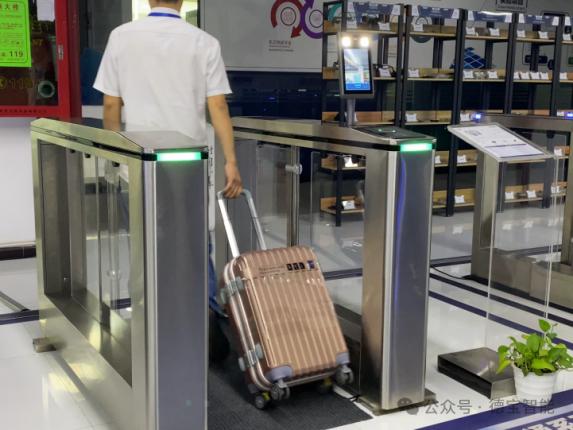
Begin with operating modes. Many gates support both “normally open” and “normally closed.” During peak inflow, a controlled open mode with active anti-clip reduces stop-and-go, while off-peak or reverse flows suit a closed stance. Schedule these shifts; don’t rely on ad-hoc toggles by the guard desk.
Consider two-way vs. one-way card reading. Two-way can double reader wear and double points of failure if unmanaged. If your exit is truly free flow, turn off outbound authentication during specific windows. That cuts reader cycles in half and reduces maintenance without sacrificing security.
Where budget allows, add health-logging. Even basic logs – open time, stop events, anti-clip triggers – reveal patterns: a lane that stops 3x more than its neighbor likely has a dirty sensor or a misaligned arm. Use these signals to plan micro-maintenance instead of calling service after a failure.
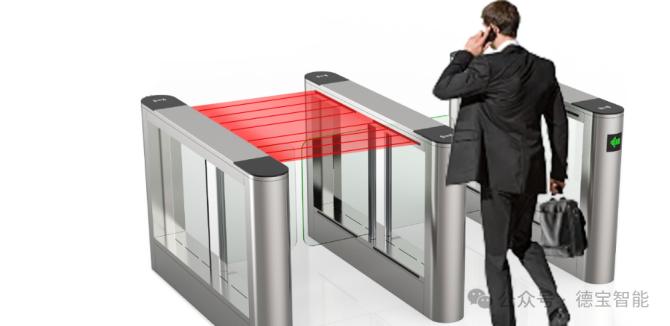
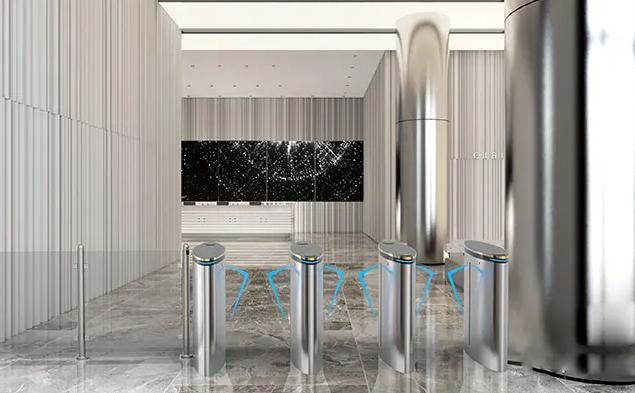
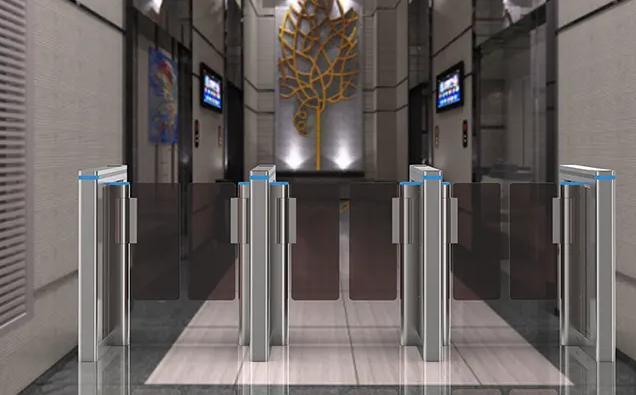
A modern swing gate built on a servo motor platform offers a practical foundation: low noise for lobby environments, smooth motion that is gentle yet decisive, and an emergency design that opens when power is lost. Pair that with automatic reset logic, flexible memory/no-memory card handling, and true multi-credential compatibility – IC, ID, scanning, and face recognition – and you own a capable system. Your job is to keep those strengths tuned: clean sensors, confirm safety features, right-size timers, and verify that anti-clip still reacts during both opening and running.
- If you operate in compliance-sensitive sites, document your quarterly fire-passage test and anti-clip verification.
- If you manage throughput, align mode scheduling to your building’s exact peaks.
- If you fight tailgating, combine strict “without memory” with brief reset windows and clear indicator lights.
Call To Action: If you’d like a concise maintenance plan tailored to your Pedestrian Access Turnstile – complete with mode schedules, sensor care steps, and a quarterly test script – reach out to our team. We’ll review your current settings, map them to your traffic profile, and help you say goodbye to jams, false stops, and costly downtime.