




How to Install a Turnstile for Better Access Control


“How to Install a Turnstile?” is no longer just a technical question for engineers. It is a key step for any building that wants safer, smarter, and more organized access. A turnstile is more than a metal gate. It can guide people, block strangers, and connect directly with your card system or face recognition. But many projects still face noise, frequent faults, and messy wiring during installation. So how do you install it the right way, without hidden risks and future headaches? In the next part, we will walk through it, step by step.
Why a Modern Turnstile Matters More than You Think
In a lot of buildings, “access control” still means a door, a card reader, and a guard waving people through. It works – until it doesn’t. Morning peaks get crowded, people tailgate behind others, and older gates rattle, jam, and create a poor first impression.
A modern entrance control gate from Turboo is designed to solve exactly these headaches. Our compact design saves valuable lobby space while the internal drive runs quietly, so you don’t get the loud clanks and vibrations of traditional barriers. For corporate lobbies, hospitals, and premium offices, this mix of silence and stability really matters.
But a good gate does much more than open and close:
✅ Detects tailgating and reverse passage attempts
✅ Offers “card with memory” or “card without memory” modes for different traffic flows
✅ Resets automatically if someone swipes but does not pass within the set time
✅ Uses infrared sensors to prevent pinching when the wings are moving
✅ Connects easily to IC/ID cards, QR or barcode scanners, and face recognition systems
This flexibility is why many integrators choose Turboo. One core turnstile can serve different projects simply by changing parameters and access devices. You can configure it for free passage in one direction, card-only in another, or strict two-way authentication during sensitive hours.
If your goal is better access control – not just a nicer-looking gate – then understanding how to install a turnstile properly is the next critical step.
How to Install a Turnstile Step by Step on Site
Even the best hardware will underperform if the installation is rushed or improvised. From our experience at Turboo, successful projects always start with careful site preparation and end with thorough testing.
- Prepare the Foundation and Power
Before unpacking the turnstile, check the basics. A servo speed gate is a precise piece of equipment and needs a stable, clean base.
✅ Ensure the floor where the turnstile will stand is level
✅ For outdoor use, install on a solid concrete base with sufficient strength and thickness
✅ Make sure the ground is frost-free and has good load-bearing capacity
✅ Plan a proper grounding point so the turnstile can be safely earthed
✅ Use a power cable with an appropriate cross-section for continuous operation
If the foundation is uneven, the wings may not align perfectly, which leads to noise, premature wear, or even false alarms. Poor grounding also increases the risk of damage during storms or power fluctuations.
- Position, Fix, and Wire The Gate
Once the floor is ready, place the equipment in its intended position according to your channel layout. The passage width should be consistent across all lanes; this looks professional and keeps pedestrian flow predictable.
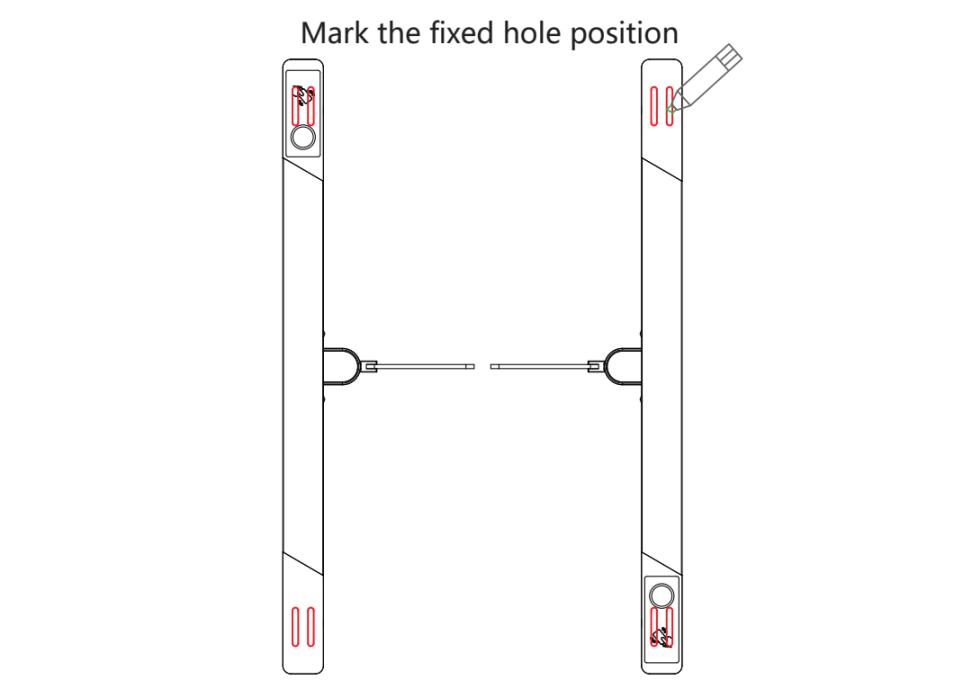
• Position the turnstile and align both ends so the channel width is uniform.
• Mark the positions of the mounting holes on the floor.
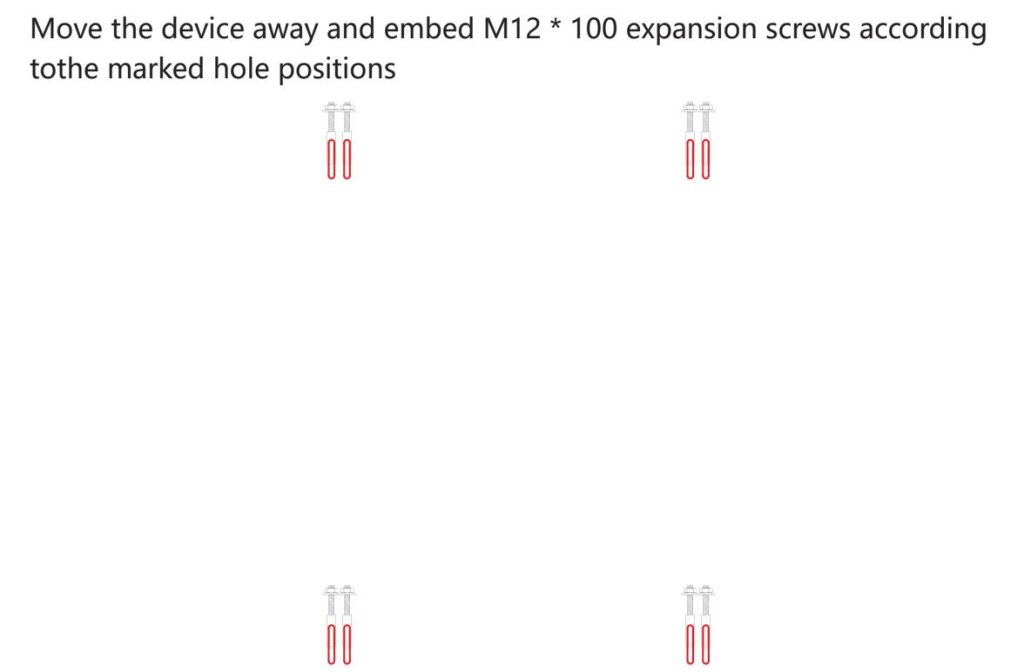
• Move the gate aside, drill the holes, and install expansion bolts.
• Route the power cable to the gate according to the wiring diagram.
If you are adding access control devices (card readers, face terminals, scanners), bring their cables to the connector points as planned.
In many cases, the turnstile itself only needs a power connection. The rest of the system – controller, readers, and backend software – can be wired and configured based on your actual project needs.
- Test and Fine-Tune the Turnstile
Now we reach the part most directly linked to how to install a turnstile for real-world use: testing. Do not skip this stage or rush through it.
Start with the electrical check:
✅ Inspect every power and signal connection against the official wiring diagram
✅ Apply power only after you are fully sure the wiring is correct
✅ Let the turnstile finish its entire self-test cycle with an empty passage
While self-testing, the gate opens and closes several times. This is normal and confirms the motors, sensors, and control electronics work as expected. Be sure that nobody blocks the infrared beams during this stage.
Then move on to sensors and lights:
✅ Check that the infrared transmitter and receiver are properly aligned and show normal status
✅ Configure the access control relay unlock time to a short period, such as 0 – 1 second
✅ Present a valid card and verify that the direction indicator switches to a green arrow
If a correct credential still causes an alarm or the gate shuts too fast, look for direction parameter errors or wrong wiring connections. Often, swapping certain direction terminals on the control board solves this. This kind of fine adjustment is part of Turboo’s typical commissioning workflow.
To truly optimize for daily use, observe actual traffic during busy times. Notice where people hesitate or move too quickly. You may need to adjust:
• Entry/exit modes (one-way vs. two-way reading)
• Alarm conditions for unauthorized entry or staying in the lane too long
• The time window between card swipe and passage
Small changes in these parameters can greatly improve user experience and reduce nuisance alarms.

Keep Your Turnstile Quiet, Clean, and Reliable
Knowing how to install a turnstile is only the beginning. A well-installed gate can still become a problem if it is never cleaned, checked, or lubricated. The good news is that routine care is simple and does not require deep technical skills.
For the housing, use a mild stainless-steel cleaner and a soft cloth or sponge. Avoid harsh acidic or alkaline chemicals; they can damage the surface and gradually lead to rust. After rinsing with water, always dry the surface. Standing water and long-term moisture are a common cause of stains and corrosion, especially in coastal or industrial regions.
Inside, focus on the moving parts. Bearings, locking arms, and transmission joints need regular lubrication to stay smooth and quiet. The right lubricant, applied in small amounts, helps protect moving parts, reduces friction, and keeps the turnstile running quietly over time. While doing this, also confirm that infrared sensors face each other correctly and that the indicator lights respond in a stable way.
A routine service schedule could include:
✅ Overall visual check of the casing, passage wings, and light signals
✅ Careful cleaning of stainless-steel panels and early rust removal
✅ Short operation test: open, close, and check anti-pinch behavior
✅ Verification that every alarm condition starts and clears correctly
Taking care of minor defects early stops them from turning into major breakdowns during peak use, which can harm user trust and your building’s reputation. Turboo designs its turnstiles with clear diagnostic feedback so your team can find and fix problems faster. If you encounter issues such as incorrect direction arrows, one wing not moving, or unexpected alarms, our team can help you trace the cause step by step.
If you are planning a new lobby, factory entrance, or campus gate and want a practical guide on how to install a turnstile for better access control, Turboo is ready to support you – from selecting the right speed gate to on-site commissioning and long-term maintenance advice.
Talk to Turboo today to turn your entrances into safe, smooth, and efficient access points that reflect the quality of your brand.