



How Automatic Reset Enhance Access Control Turnstiles Reliability

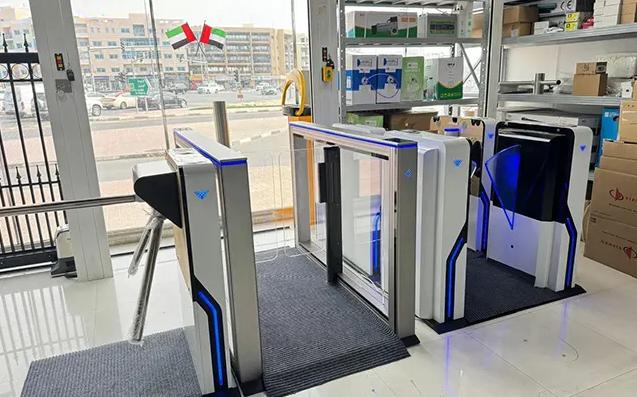
Access Control Turnstiles manage who enters, when, and how. They are automated lanes that open after a valid credential and close again to secure the boundary. The goal is simple: fast, safe, auditable passage. Yet reliability often fails in the seconds after authentication. Doors stay open. Crowds hesitate. Risks rise. What if a small feature could reset the lane at the perfect moment and stop tailgating without staff help? Today we explore automatic reset – and why it may be the quiet force behind truly dependable Access Control Turnstiles.
Why Automatic Reset Lifts Everyday Reliability
If you walk a busy lobby during the morning rush, you’ll notice the real failure point isn’t the steel cabinet or the motor. It’s the second after a user authenticates – when the passage is open, the crowd behind is moving, and hesitation or confusion can leave a lane exposed. From Turboo’s vantage point as a manufacturer, the most practical fix is simple: put the lane back into a safe default automatically, every single time.
Automatic reset is straightforward. After a valid card, code, or face opens the gate, the system returns to the locked state if no one passes within a preset window. No guard has to intervene. No operator has to tap a software override. The lane restores itself to a secure baseline, preventing the “left-open” scenario that invites tailgating or reverse entry. The result is steady flow at peak times and a lower cognitive load for reception teams.
We see the benefits in the small moments that add up over a day. Quieter mechanics and smooth motion reduce user anxiety; people approach, present, and pass with less second-guessing. When behavior becomes predictable, misuse drops, and service calls fall. Over months, that consistency translates into longer service life for the entire lane and fewer costly stop-starts that interrupt operations.
✅ The Pain Points Automatic Reset Removes
- Open-lane exposure: an unattended, still-open lane is an easy target.
- Queue friction: brief hesitations at the reader stall the entire line.
- Operator fatigue: manual resets and ad-hoc fixes drain attention.
- Accelerated wear: misuse and false runs shorten component life.
✅ What Automatic Reset Actually Does
- Self-heals posture: the gate returns to locked if no passage occurs in time.
- Stabilizes flow: clear cause-and-effect encourages brisk, confident movement.
- Clarifies events: each passage is discrete, trimming ambiguity in audit logs.
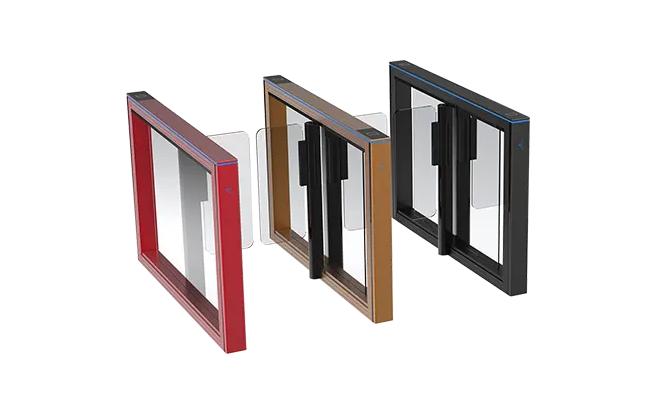
How Turboo Engineers Safer, Quieter Flow
Reliability is a design choice. At Turboo, we start with balanced engineering – low-noise drives, smooth motion profiles, and components selected for long service. On top of the mechanics, we add protective logic that reflects real-world behavior. Our Access Control Turnstiles combine automatic reset with anti-tailgating and anti-reverse features, so attempting to follow a user or push back through the lane is detected and handled. Infrared anti-clip protection guards users whether the wings are opening, running, or closing, reducing the risk of pinches and stops.
Credential handling is flexible because sites vary. You can select “with memory” (multiple valid swipes queue passages for small groups) or “without memory” (strict one-to-one) depending on policy. Both modes work hand in hand with automatic reset: if no one proceeds, the lane closes on schedule and resets counters and alerts. That synergy keeps data clean and prevents lingering open states.
Compatibility is broad by design. Our lanes integrate with IC and ID cards, QR/barcode scanning, and face recognition. You can use two-way card reading for flexible traffic or set one-way during peak flows to simplify crowd guidance. Default open or closed modes are available, with the same reset logic underpinning both so your security posture remains consistent across the day. For facility managers, this means fewer exceptions, less variance between shifts, and a smoother training curve for new staff.
✅ What Facilities Notice First
- Smoother mornings: fewer stalls between 8:00–9:00, shorter lines and clearer pacing.
- Quieter lobbies: low-noise operation lowers perceived friction and stress.
- Cleaner records: discrete “attempt–pass–reset” events support auditing and compliance.
- Fewer emergencies: misuse declines, extending the time between service visits.
Most importantly, the everyday experience improves. Visitors learn quickly: present a valid credential, pass at a steady pace; pause too long, and the gate resets to ready. The rules are simple, transparent, and consistent – exactly what high-traffic sites need.
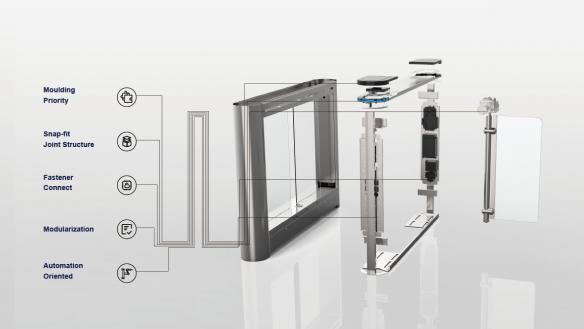
What Automatic Reset Delivers For ROI And Operations
Every avoidable incident at the entry point has a cost – staff attention, a support ticket, or unnecessary mechanical wear. Automatic reset reduces all three by returning the lane to a known good state after each interaction. Over quarters rather than days, that means more uptime, fewer replacement parts, and a calmer reception area where teams focus on service, not firefighting.
Access Control Turnstiles with dependable reset logic also sharpen your data story. Logs show who presented credentials, who passed, and who timed out, with fewer ambiguous events. Investigations go faster, and policy changes are easier to test and measure. When combined with anti-tailgating, anti-reverse, and infrared anti-clip sensors, the system creates a protective envelope that quietly prevents the most common misuse patterns without slowing compliant users.
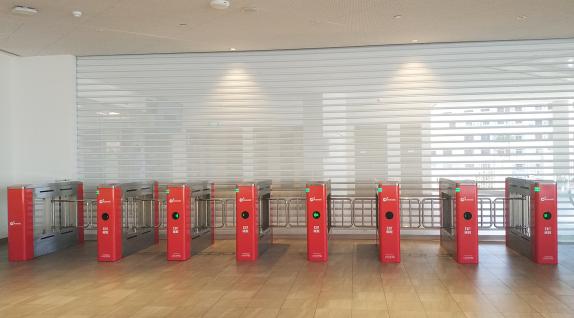
From Turboo’s perspective, reliability is won in the thousands of ordinary passes – not in rare edge cases. That’s why we invest in quiet mechanics, smooth motion, and safety sensors, and then bind them together with automatic reset. The lane doesn’t just open; it opens, monitors, protects, and returns to ready – pass after pass, shift after shift.
✅ Setup Tips That Pay Off
• Tune the timeout: align the reset window to your lobby’s pace – 3–6 seconds suits most sites.
• Match policy to flow: use memory mode for teams moving together; non-memory for higher assurance.
• Balance modes: choose two-way reading for flexibility or one-way to simplify crowd guidance.
• Keep training light: a one-minute briefing with signage removes hesitation for first-time visitors.
If your goal is to cut tailgating attempts, shrink queues, and extend service life without adding headcount, the path is clear: pair robust mechanics with disciplined reset logic. Access Control Turnstiles that reset themselves do more than prevent open-lane risk – they make the entire entry journey feel obvious and calm.
Call To Action
Ready to see the difference on your site? Book a live demo with Turboo to experience automatic reset, low-noise motion, and infrared safety in action. Request a tailored proposal with your traffic peaks, credential types, and policy requirements, and our engineers will recommend the right modes for your environment. Upgrade reliability where it matters most – the everyday pass.