



Why Access Control Turnstile Needs Memory Reset Functions

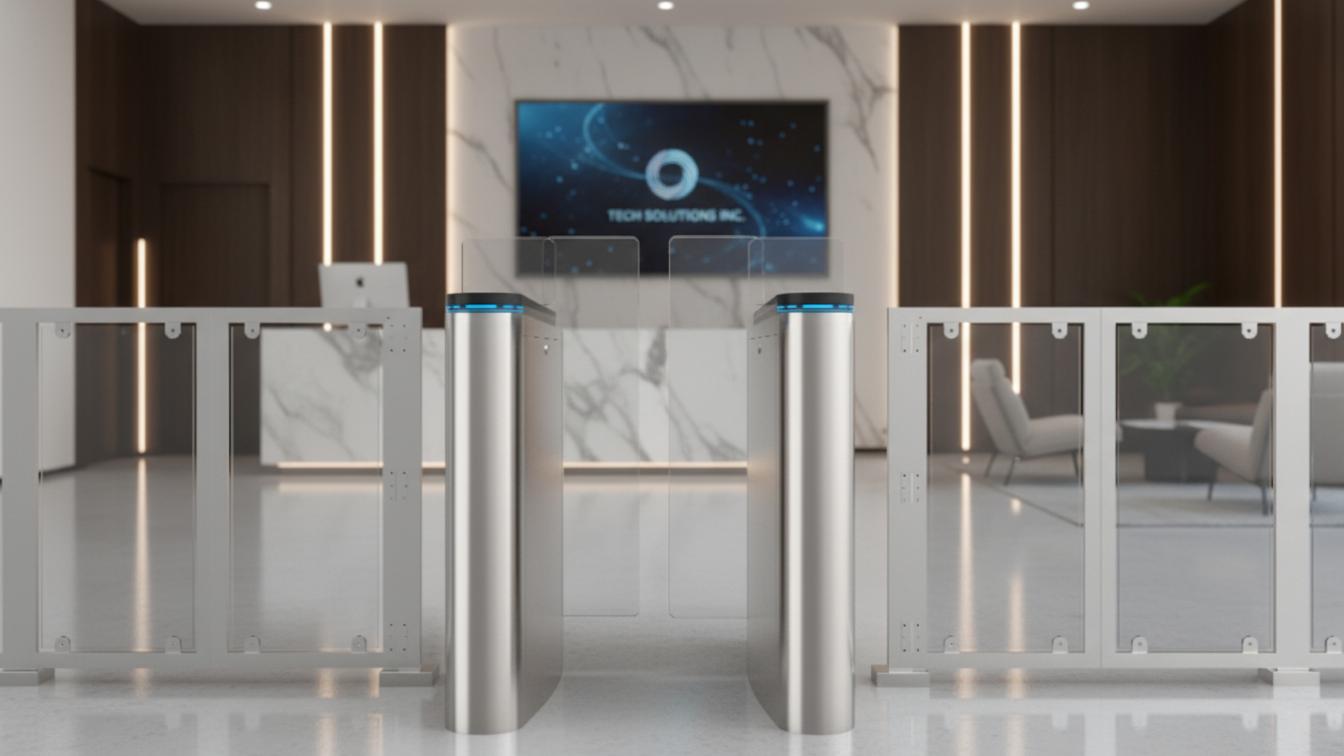
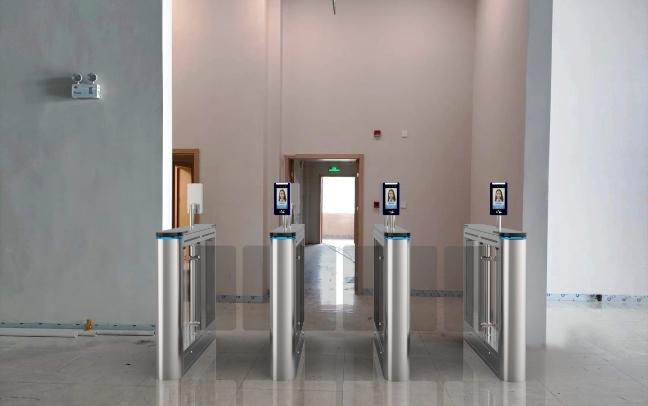
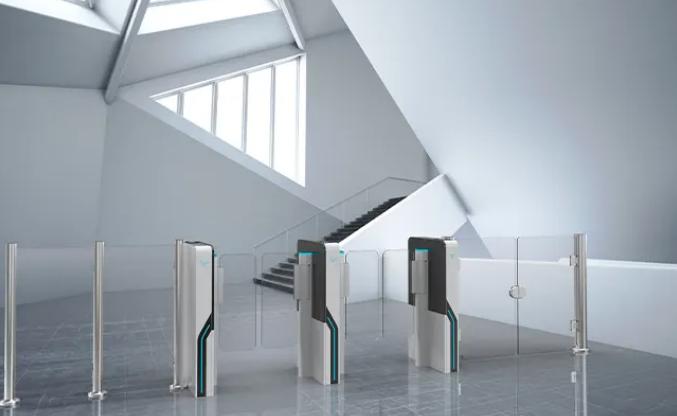
Access Control Turnstile systems quietly keep people moving every day, from office lobbies to factory entrances and metro stations. Most users only see the slim cabinet and moving flaps, but behind that simple appearance, one small feature has a big impact on security and convenience: the memory reset function.
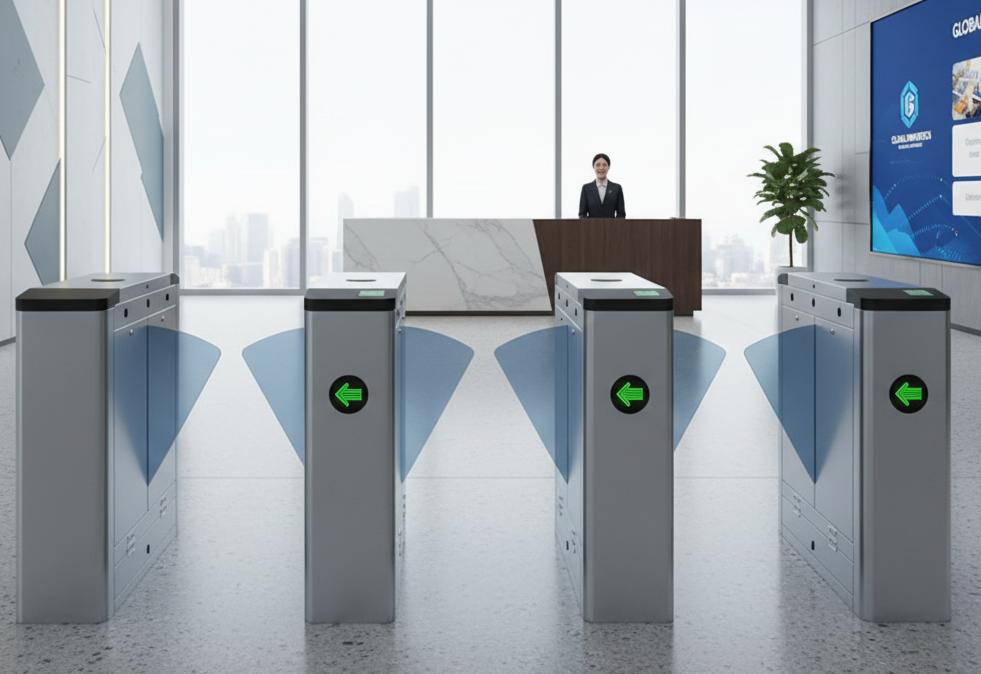
As a manufacturer, Turboo often talks with integrators, security managers and building owners. Many of them ask the same thing: why does a turnstile need “memory”? Why is automatic reset so important? And how does it actually change daily operation at the gate? The answers are very down-to-earth, and they all relate to real people and real traffic flow.
Why Memory Reset Matters in Access Control Turnstile Systems
“Memory reset“ sounds like a software engineer’s term, but the logic is easy to understand.
Every time someone shows a valid credential, such as an RFID card or a QR code, the Access Control Turnstile receives an authorization signal. The system then has to decide how long to keep this permission and how many people can use it.
With a memory function, the turnstile keeps a small queue of valid swipes. If three people badge in one after another, the lane remembers three separate permissions and lets three people pass, one by one. Even if there is a short pause between them, the system does not “forget” the valid swipes. This is very useful at busy times, like morning check-in at an office or shift change in a plant.
Without memory, the turnstile behaves very differently. It treats each swipe as a single chance. If the person hesitates, steps aside, or gets distracted and does not walk through quickly, the gateway returns to locked and the permission is lost. The user has to swipe again. In a quiet lobby that might not be a big deal. At a crowded entrance, it creates queues, frustration, and complaints that “the gate doesn’t work.”
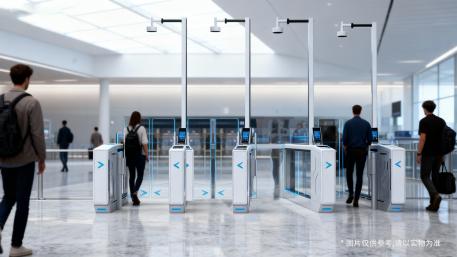
Now add the automatic reset function. After a valid swipe, the Access Control Turnstile stays unlocked for a defined time. If the user does not pass during the allowed window, the flaps close and the system wipes the access right. This avoids “open” lanes based on forgotten swipes and maintains a secure barrier even when staff are busy elsewhere. Working together, memory and auto reset make sure every swipe is either converted into a controlled passage or automatically cancelled. This clarity is what gives your access control system stability.
Real Entrance Problems that Memory Reset Quietly Fixes
To see the value of memory reset, it helps to picture a real scene.
Imagine Monday morning at 9:00. Employees arrive in groups, some holding coffee, some checking messages. One person swipes an RFID card and then stops to talk. A colleague behind tries to slip through without swiping. Another person waves a phone with a QR code and expects the gate to open instantly.
At that moment, several risks and pain points appear at once:
✅ Tailgating and sharing one swipe
If your Access Control Turnstile does not combine memory with anti-tail functions, more than one person can try to pass on a single credential. With proper logic and sensors, the turnstile links one authorization to one user and can detect if a second body tries to follow too closely.
✅ People walking in the wrong direction
In busy buildings, users sometimes try to enter through an exit lane or push back against the normal flow. Anti-reverse logic uses both direction control and memory rules to stop reverse passage, even when there is still a valid entry stored in the system.
✅ Abandoned swipes and open lanes
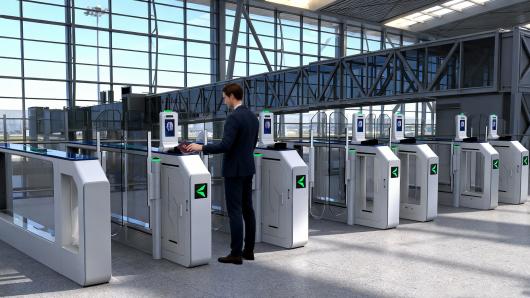
A user may swipe, then turn back to the reception desk, or walk away to take a call. Without automatic reset, the passage can stay open longer than it should, which weakens your perimeter. Auto reset closes the lane again after the set time and cancels the unused permission.
✅ Slow lines and confused users
When people must swipe again and again because the gate “forgot” their card, frustration grows quickly. Memory mode allows the gate to accept several valid swipes in a row while still processing them one by one. The queue moves steadily, which feels more professional and reduces the pressure on guards.
✅ Messy reports and unclear logs
If authorizations do not have a clear result, your access control logs become harder to read. With memory reset, each event is linked to a specific passage or timeout. This makes audits and incident investigations more straightforward.
For building owners and facility managers, these are not theoretical issues. They show up as complaints at reception, calls to the security team, and extra work for IT and integrators. A well-configured Access Control Turnstile with memory reset reduces these problems quietly in the background, day after day.
How Turboo Builds Smarter, User-Friendly Turnstiles
From Turboo’s point of view as a manufacturer, memory reset is not an add-on. It is part of how a modern Access Control Turnstile should work from the start.
We first focus on the basics that users feel every day: a stable structure, low operating noise, smooth motion of the flaps, and a long service life. If the mechanical platform is not reliable, even the best logic will not save the project. A quiet, smooth gate also makes people more willing to use the controlled lane instead of trying to bypass it.
On top of this base, we design the control system to support different identification methods in a single lane. A Turboo turnstile can work with IC or ID cards, QR code scanning, and face recognition when required. That gives integrators freedom to design solutions for visitor management, employee access, or VIP lanes without changing the core device.
Inside the controller, several key functions support real-world use:
Configurable memory modes – Sites can choose to run the lane in “with memory” mode for busy areas or “without memory” mode for very strict one-by-one control. Switching modes allows the same hardware to serve different scenarios over its life cycle.
Automatic reset after a time window – If a user does not pass in time, the gate returns to the locked state and clears the pending permission. This keeps the lane secure without adding work for security staff.
Infrared safety protection – Sensors detect people in the passage and help prevent pinching when the flaps open or close, which increases safety and confidence for users who are new to turnstiles.
Flexible working directions – Lanes can be set for one-way or two-way card reading and different combinations of entry and exit, so system integrators can match the flow of each building.
By integrating these elements, Turboo designs an Access Control Turnstile that is both a security device and a people-flow solution. It shapes how users move through the entrance so the process feels easy, while your rules are still fully enforced. Security teams see fewer crowding issues at the gate and more accurate tracking in the system. End users just tap a card or display a code and walk through, without needing any extra instructions.
Ready to Rethink Your Entrance?
If you are planning a new project or looking at replacing older gates, it is worth asking a few direct questions about your current Access Control Turnstile setup:
❓ Do you still see tailgating during busy periods?
❓ Are there complaints that the gate is “too slow” or “too strict”?
❓ Do abandoned swipes leave the lane open longer than you would like?
If the answer is yes to any of these, memory reset functions are probably part of the solution.
Turboo’s team can work with you to select a turnstile configuration that combines strong security, smooth passage, and intelligent memory reset for your specific site, whether it is an office tower, a factory, a school, or a transport hub.
Reach out to Turboo to discuss your project requirements, and let’s design an entrance that feels easy for users while staying firmly under your control.